天体

Search documents
星空有约丨丙午马年看“天马行空”
Xin Hua She· 2026-02-17 08:47
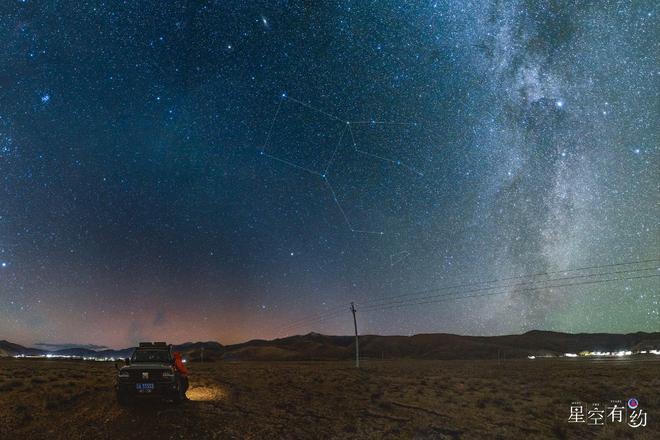
Group 1 - The article discusses various constellations and celestial bodies related to the theme of "horse," particularly highlighting Pegasus, Equuleus, Sagittarius, and Centaurus [1][2] - Pegasus is noted for its prominent quadrilateral shape formed by stars from Andromeda and Pegasus, symbolizing the autumn night sky [1] - Equuleus, the second smallest constellation, is less visible and best observed in areas with low light pollution [1] - Sagittarius is mentioned as a region with a high concentration of deep-sky objects, including 15 Messier objects, the highest among all constellations [1] - Centaurus is home to Proxima Centauri, the closest known star to the solar system [1] Group 2 - The article also mentions other horse-related celestial bodies, such as the Horsehead Nebula in Orion and the Blue Horsehead Nebula in Scorpius [2] - The article emphasizes that the Spring Festival holiday is an excellent time to observe these horse-related constellations and celestial bodies, although some may not be visible due to seasonal changes [2] - Understanding and recognizing these "steeds" of the universe during the Year of the Horse is presented as a meaningful activity, regardless of visibility [2]

星空有约|丙午马年看“天马行空”
Xin Hua She· 2026-02-17 08:31
Group 1 - The article introduces various constellations and celestial bodies related to "horses," particularly focusing on Pegasus, Equuleus, and Sagittarius [1][3][10] - Pegasus is highlighted as a prominent constellation in the autumn sky, forming a quadrilateral known as the "Autumn Quadrilateral" with stars from Andromeda and Pegasus [1][3] - Equuleus, the second smallest constellation, is less noticeable in the autumn sky and is best observed in areas with low light pollution [3][6] - Sagittarius is noted for its proximity to the Milky Way's center, which contains numerous deep-sky objects, ranking first in the number of Messier objects among all constellations [3][6] Group 2 - The article mentions other horse-related celestial bodies, such as the Horsehead Nebula in Orion and the Blue Horsehead Nebula in Scorpius [9] - The article emphasizes that the Spring Festival holiday is an excellent time to observe constellations like Centaurus and the Horsehead Nebula, while Pegasus and Sagittarius are not currently visible due to seasonal changes [10]