天体力学

Search documents
神秘“星际访客”,离地球近了!
Xin Hua Wang· 2025-12-18 08:25
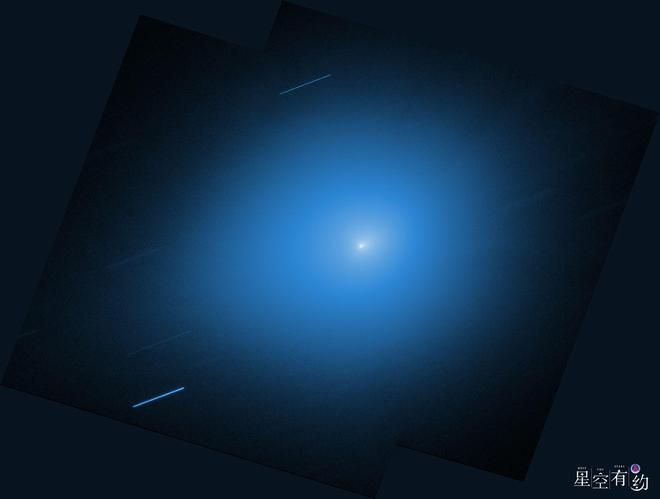
Core Viewpoint - The article discusses the upcoming close approach of the interstellar object ATLAS (3I/ATLAS) on December 19, 2025, highlighting its significance for astronomical observation and research into the early formation of other planetary systems [1][4]. Group 1: Discovery and Characteristics - ATLAS was discovered on July 1, 2025, by a survey telescope in Chile and was initially classified as a long-period comet before being confirmed as an interstellar object with a hyperbolic orbit [1][3]. - It is the third interstellar object identified by humanity, all of which are classified as interstellar comets with open hyperbolic orbits, indicating they will not return after passing through the solar system [3][4]. Group 2: Observational Opportunities - ATLAS reached its perihelion on October 29, 2025, becoming brighter but was not optimally positioned for observation. It will reach its closest point to Earth on December 19, 2025, located near the zodiac in the constellation Leo [4]. - At its closest approach, ATLAS will have a brightness below magnitude 12, making it invisible to the naked eye and requiring professional telescopes for observation [4]. Group 3: Scientific Significance - Observing ATLAS is scientifically significant as it carries materials from another star system's early formation, which could provide insights into the "cradles" of other planets in the Milky Way [5].


星空有约|神秘“星际访客”离地球近了
Xin Hua She· 2025-12-18 02:25
Core Viewpoint - The article discusses the upcoming close approach of the interstellar object ATLAS (3I/ATLAS) on December 19, 2025, highlighting its significance for astronomical observation and research [1][4]. Group 1: Discovery and Characteristics - ATLAS was discovered on July 1, 2025, by a survey telescope in Chile and was initially classified as a long-period comet before being reclassified as an interstellar object [1]. - It is the third interstellar object confirmed to visit the solar system, with a hyperbolic trajectory indicating it will not return after passing through [3][4]. Group 2: Historical Context - The understanding of interstellar objects has evolved over centuries, beginning with Kepler's laws of planetary motion in 1609 and Newton's enhancements in 1687, leading to the first observation of an interstellar object, 'Oumuamua, in 2017 [3]. Group 3: Observation Opportunities - ATLAS reached its perihelion on October 29, 2025, becoming brighter but was not optimally positioned for observation. It will reach its closest point to Earth on December 19, 2025, located near the zodiac in the constellation Leo [4]. - The brightness of ATLAS will decrease rapidly as it moves away from the solar system, making this close approach a critical opportunity for observation using professional telescopes [4]. Group 4: Scientific Significance - Studying ATLAS could provide insights into the materials from another star system, potentially revealing clues about the formation of other planetary systems in the galaxy [8].