哈勃太空望远镜

Search documents
哈勃望远镜捕获25光年外小行星史诗级碰撞
Huan Qiu Wang· 2025-12-26 03:03
Core Insights - Astronomers have observed a rare asteroid collision event in the Fomalhaut star system, located 25 light-years from Earth, using the Hubble Space Telescope, marking a significant breakthrough in astronomical research [1][2] Group 1: Discovery and Observations - The international team discovered two independent bright spots in the Fomalhaut system's observational data in 2004 and 2023, initially misidentified as a gas giant planet named Dagon, which was confirmed in 2012 but disappeared in 2014 [2] - The latest research revealed that Dagon was not a true planet but a massive dust cloud formed from an asteroid collision, now renamed cs1, which is gradually dispersing in space [2] - In 2023, a new light source, named cs2, was identified, initially thought to be a reappearance of Dagon, but confirmed to be a distinct source through precise comparison with historical images [2] Group 2: Implications for Exoplanet Research - The phenomenon poses significant challenges for future exoplanet detection missions, as dust clouds can create false positive signals [3] - The Fomalhaut star system, approximately 440 million years old, is in a "violent growth phase" similar to the early solar system, with an estimated 300 million similar-sized asteroids potentially present in the outer region [3] Group 3: Theoretical Challenges - This discovery challenges existing astrophysical theories, as previous models suggested such large-scale collisions should occur once every 100,000 years, yet two have been observed in just 20 years [3] - The high frequency of impacts indicates that the dynamics within the Fomalhaut system are highly active, providing valuable observational samples for studying the formation and evolution of star systems [3]

香港大学尧中华:挑战太阳系之王木星 深空探测的终极考场与新前沿
Xin Lang Cai Jing· 2025-12-22 07:42
Core Viewpoint - The focus of the discussion is on Jupiter as a significant target for deep space exploration, highlighting its scientific and engineering value, as well as the upcoming missions aimed at studying it and its moons [1][20][22]. Group 1: Importance of Jupiter - Jupiter is the largest planet in the solar system, with the highest mass and strongest magnetic field, making it a key subject for scientific research [24][25]. - The planet has 95 known moons, with three particularly interesting ones: Europa, Ganymede, and Callisto, which may harbor liquid oceans beneath their icy surfaces, making them potential sites for extraterrestrial life [24][25]. - Jupiter's formation and composition provide insights into the early solar system, serving as a natural laboratory for understanding planetary formation and evolution [25][26]. Group 2: Exploration Missions - Human exploration of Jupiter has included 11 missions, with two dedicated missions providing the majority of current knowledge about the planet [23][24]. - Upcoming missions include China's Tianwen-4, which is set to explore Jupiter around 2030, alongside missions from the US and Europe focusing on different moons [18][38]. - The exploration of Jupiter presents significant technical challenges due to its extreme radiation environment, which is thousands of times more intense than that of Earth [27][28]. Group 3: Scientific Discoveries - The study of Jupiter's magnetic field and radiation environment is crucial for understanding its complex space environment, which is influenced by high-energy charged particles [27][29]. - Recent findings have revealed a connection between Jupiter's magnetic field and its X-ray emissions, providing new insights into the planet's atmospheric dynamics [36][37]. - Collaborative efforts among international scientists are increasing, with a growing number of researchers returning to China to contribute to Jupiter exploration initiatives [37][38].

神秘“星际访客”,离地球近了!
Xin Hua Wang· 2025-12-18 08:25
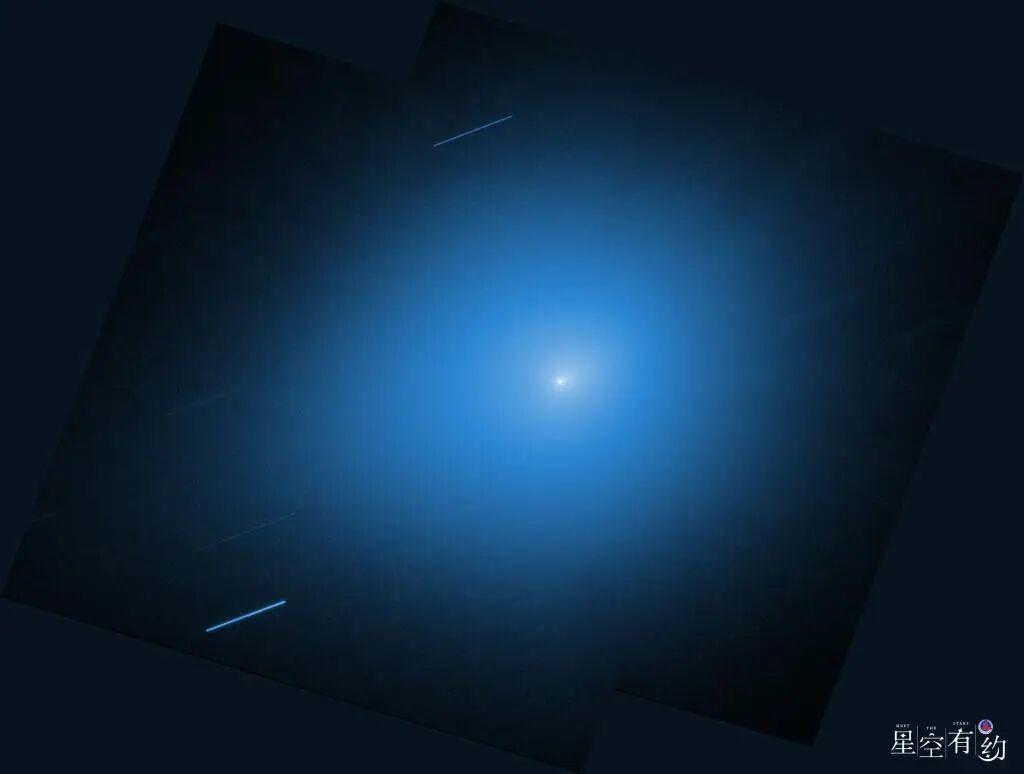
Core Viewpoint - The article discusses the upcoming close approach of the interstellar object ATLAS (3I/ATLAS) on December 19, 2025, highlighting its significance for astronomical observation and research into the early formation of other planetary systems [1][4]. Group 1: Discovery and Characteristics - ATLAS was discovered on July 1, 2025, by a survey telescope in Chile and was initially classified as a long-period comet before being confirmed as an interstellar object with a hyperbolic orbit [1][3]. - It is the third interstellar object identified by humanity, all of which are classified as interstellar comets with open hyperbolic orbits, indicating they will not return after passing through the solar system [3][4]. Group 2: Observational Opportunities - ATLAS reached its perihelion on October 29, 2025, becoming brighter but was not optimally positioned for observation. It will reach its closest point to Earth on December 19, 2025, located near the zodiac in the constellation Leo [4]. - At its closest approach, ATLAS will have a brightness below magnitude 12, making it invisible to the naked eye and requiring professional telescopes for observation [4]. Group 3: Scientific Significance - Observing ATLAS is scientifically significant as it carries materials from another star system's early formation, which could provide insights into the "cradles" of other planets in the Milky Way [5].
真急了,“特朗普要将太阳系拱手让给中国”
Guan Cha Zhe Wang· 2025-07-10 04:02
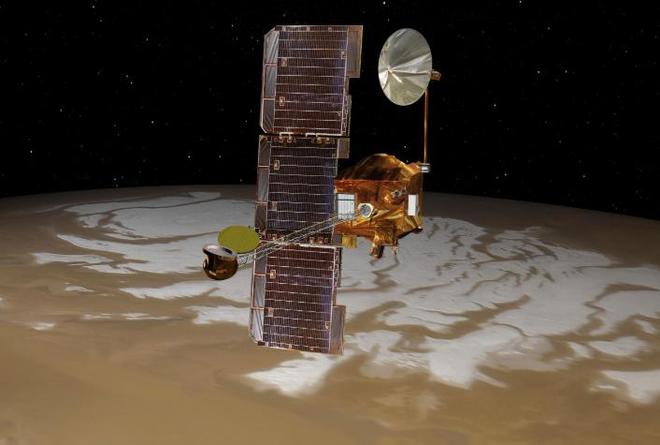
Core Viewpoint - The Trump administration's proposed budget cuts for NASA's science programs could significantly weaken the United States' position in space exploration, potentially allowing China to gain an advantage in the solar system exploration [1][5]. Budget Cuts Impact - The proposed budget cuts would reduce NASA's science budget from $7.33 billion to $3.9 billion, nearly halving the funding and leading to the termination of numerous space projects, including the Mars Odyssey spacecraft [2][4]. - The budget cuts are described as the lowest for NASA in 40 years, with significant reductions in funding for key projects like the Hubble and Webb space telescopes, which will see their budgets cut from $187 million to $140 million and $930 million respectively [5][12]. Opposition from Experts - Seven former NASA science mission directors have publicly opposed the budget cuts, arguing that continued investment in space science is essential for maintaining U.S. leadership in the field [5][9]. - Experts express concerns that the cuts will lead to a decline in NASA's scientific capabilities, with potential job losses at key centers like the Jet Propulsion Laboratory (JPL) and Goddard Space Flight Center [9][11]. Future of NASA Missions - The budget proposal threatens the continuation of existing missions such as the MAVEN Mars orbiter and the Juno spacecraft, which are crucial for future Mars manned missions [11][13]. - The overall trend indicates a decrease in new scientific missions, with NASA scientists facing a shrinking number of new projects even before the proposed cuts [12][15]. Broader Context of Space Competition - The letter from former NASA officials highlights the competitive nature of global space exploration, emphasizing that the U.S. must not retreat in the face of China's ambitious space program [5][6]. - The cuts are seen as detrimental not only to NASA's current projects but also to the future of robotic exploration, which has historically been a strong point for the agency [15][16].