
天然气稳产保供

Search documents
青海油田千里气区保供“争气”
Xin Lang Cai Jing· 2025-12-24 06:29
Core Insights - The natural gas demand in the Qaidam Basin has surged due to temperatures dropping to -18 degrees Celsius, prompting the Qinghai Oilfield to enhance gas production capacity to meet the needs of the Qinghai, Gansu, and Tibet regions [1] Group 1: Production Challenges and Solutions - The Qinghai gas fields face inherent geological challenges, increased water invasion, and inadequate process adaptability, leading to accelerated production decline [3] - The gas field has implemented a "control decline" strategy, focusing on enhancing natural gas production through specialized support teams and meticulous maintenance efforts, achieving a daily production decline control of 23,000 cubic meters [3] - The gas field has adopted sand and water treatment measures, increasing daily maintenance from 736 well times to 858 well times, with the Shabei gas field achieving a daily decline control of 20,000 cubic meters [3][4] Group 2: Technological Innovations - The gas field has made breakthroughs in low-pressure well production enhancement, achieving an increase in daily gas production from 236,000 cubic meters at the end of October to 629,000 cubic meters through the application of a new sand washing technology [4] - The gas field has implemented a large-scale application of a new technique involving 1.25-inch tubing and dual foam generators, achieving a sand washing efficiency of over 75% [4] Group 3: Operational Management - The gas field has established a specialized team for compressor management to address high failure rates and frequent shutdowns, ensuring compliance with operational management requirements to prevent unplanned outages [4] - The gas field has improved leak detection and response times, controlling pipeline leak repairs within four hours [4]

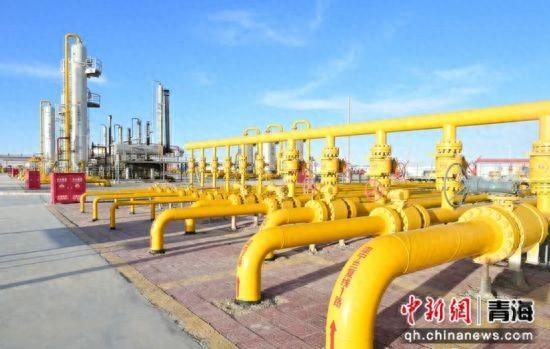
中国石油长庆油田采气三厂对骨架管网开展深度“体检”
Zhong Guo Fa Zhan Wang· 2025-10-28 08:02
Core Viewpoint - The article emphasizes the importance of the skeleton pipeline network in ensuring stable gas supply during winter, highlighting the proactive measures taken by the company to maintain operational efficiency and meet downstream gas demand [1][2]. Group 1: Operational Measures - The company has completed cleaning operations on 11 main pipelines, removing a total of 452.95 cubic meters of accumulated liquid to eliminate transportation bottlenecks [1]. - A comprehensive winter supply plan has been developed, with detailed task indicators and a management mechanism that ensures production tasks are delegated from top to bottom, facilitating stable production and supply [1][2]. Group 2: Technological and Maintenance Efforts - The company organized insulation work on 3,582 meters of pipelines and 1,205 valves, along with timely updates to emergency reserve materials to ensure equipment operates normally during winter [2]. - A digital production command system is utilized for real-time monitoring of gas wells, pipelines, and equipment, with increased frequency of inspections and 24-hour monitoring in key areas [2]. Group 3: Production Optimization - A technical task force has been established to implement targeted strategies for both new and old wells based on their production contributions, focusing on fine maintenance and enhancing production through a lifecycle drainage and gas extraction system [2].
