
太空交规

Search documents
近地轨道“大拥堵”“太空交管”来破局
Xin Lang Cai Jing· 2026-01-31 07:07
Group 1 - The near-Earth orbit has become one of the most crowded and dangerous areas in the solar system, with over 12,000 active satellites and tens of thousands of space debris orbiting the Earth [2] - The altitude range of 400 to 600 kilometers is identified as the most congested zone, where various satellites, including China's space station and the US Starlink satellites, operate at speeds close to 8 kilometers per second, leading to potential collision risks [2] - A collision between two satellites could result in catastrophic consequences, creating thousands of high-speed debris pieces that could further collide with other satellites, leading to a domino effect and potentially forming a lethal debris belt around the Earth [2] Group 2 - In response to the threat of space debris potentially trapping humanity on Earth, China is actively exploring solutions, including the "Star Eye" space awareness constellation plan launched by a Chinese aerospace company [3] - The "Star Eye" plan consists of 156 satellites designed to monitor and track tens of thousands of targets in space, creating real-time digital records for each satellite and debris, and providing collision risk calculations and warnings [3] - Establishing a global unified "space traffic regulation" is deemed essential for ensuring the safety of thousands of satellites and protecting the common interests of humanity [3]

全释硬科技丨近地轨道“大拥堵” “太空交管”有望破局
Huan Qiu Wang Zi Xun· 2026-01-25 03:38
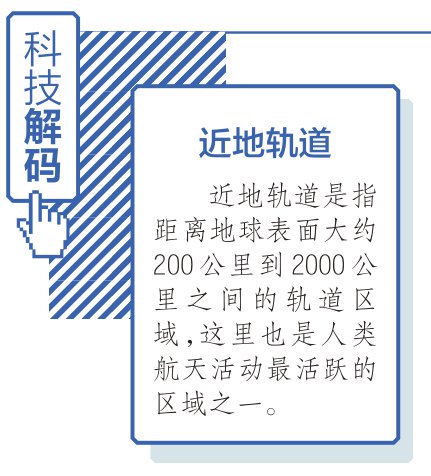
Core Viewpoint - The near-Earth orbit has become one of the most crowded and dangerous areas in the solar system, with over 12,000 active satellites and countless pieces of space debris posing significant risks to space activities [3][10]. Group 1: Current Situation - The near-Earth orbit, located approximately 200 to 2000 kilometers above the Earth's surface, is the most active area for human space activities, particularly between 400 to 600 kilometers where many satellites, including China's space station and the U.S. Starlink satellites, operate [6]. - Satellites in this region travel at nearly 8 kilometers per second, with distances between them potentially as close as several dozen kilometers, increasing the risk of collisions [6][10]. Group 2: Collision Risks - A collision in this crowded space could result in catastrophic outcomes, with two satellites potentially exploding into thousands of high-speed fragments, each acting like a deadly projectile [10]. - The creation of new debris could trigger a domino effect, leading to a lethal ring of space debris around Earth, which could ultimately block humanity's access to space [10]. Group 3: Mitigation Efforts - In response to these threats, China has initiated the "Star Eye" space awareness constellation plan, which aims to establish a "space traffic management" system [10]. - This system consists of 156 satellites designed to monitor and track tens of thousands of objects in space, creating real-time digital records for each satellite and debris, and providing collision risk calculations and warnings to facilitate evasive maneuvers [10]. Group 4: Global Cooperation - Establishing a unified global "space traffic regulation" is deemed essential for ensuring the safety of thousands of satellites and protecting shared human interests in space [13]. - Any uncontrolled collision could jeopardize humanity's aspirations in space, highlighting the need for collaborative efforts in space governance [13].
