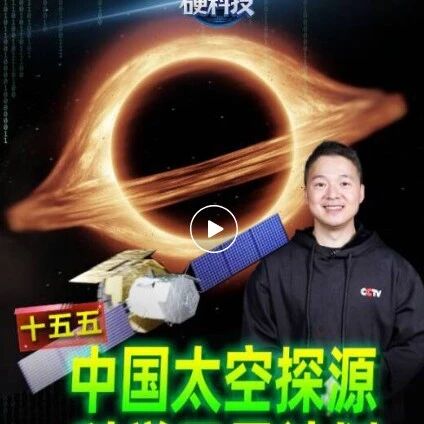
太空探源科学

Search documents
中国将寻找第二颗地球
券商中国· 2025-11-24 15:21
Group 1 - The core viewpoint of the article highlights China's ambitious space exploration plans during the "14th Five-Year Plan" period, focusing on launching four satellites to address significant scientific questions related to the origins of the universe, space weather, and life [1][2] Group 2 - The first satellite, part of the "Hongmeng Plan," consists of a low-frequency radio telescope array made up of 10 satellites, aimed at capturing faint signals from the early universe by operating on the far side of the moon, which acts as a quiet "listening room" [1] - The second satellite, "Kuafu-2," will be the first to orbit the sun's polar regions, allowing for direct observation of solar magnetic field activities, which could enhance predictions of solar storms and deepen the understanding of the relationship between Earth and the sun [1] - The third satellite, the "Exoplanet Survey Satellite," is tasked with searching for Earth-like planets in habitable zones, potentially identifying a second home for humanity [2] - The fourth satellite, the eXTP, will operate outside Earth's atmosphere to observe extreme cosmic phenomena, such as black holes and neutron stars, testing Einstein's predictions and exploring the boundaries of physics [2]

中国将寻找第二颗地球
证券时报· 2025-11-24 11:56
Core Insights - During the "14th Five-Year Plan" period, China plans to launch four satellites focusing on major frontier issues such as the origin of the universe, space weather, and the origin of life [1][2] Group 1: Satellite Missions - The first satellite, the "Hongmeng Plan," consists of a low-frequency radio telescope array of 10 satellites that will be sent to the far side of the moon to capture weak signals from deep space, revealing secrets from the chaotic period before the first stars appeared [1] - The second satellite, "Kuafu II," will be the first to orbit the solar poles, aiming to understand the ultimate secrets of solar magnetic activity and improve predictions of solar storms [1] - The third satellite, the "Exoplanet Survey Satellite," will search for Earth-like planets in the habitable zone, potentially identifying a second home for humanity [2] - The fourth satellite, the eXTP, will observe extreme regions of the universe, such as the event horizon of black holes and the surfaces of neutron stars, to test Einstein's predictions and explore the boundaries of physics [2]