系外地球巡天卫星

Search documents
“鸿蒙”初开 “夸父”追日 星河问源(瞰前沿)
Ren Min Ri Bao· 2025-12-05 22:03
Core Insights - The China Academy of Sciences National Space Science Center held a press conference on November 24, showcasing significant advancements in space science, focusing on cosmic origins, space weather, and the origins of life [3][10]. Group 1: Satellite Missions and Achievements - Since the launch of the space science pilot project in January 2011, eight scientific satellite missions have been completed, including "Wukong," "Shijian-10," "Micius," "Huiyan," "Taiji-1," "Huairou-1," "Kuafu-1," and "Tianguan," achieving multiple "firsts" for China and the world [5]. - "Wukong," launched on December 17, 2015, is China's first dark matter particle detection satellite, which has provided the most precise secondary cosmic ray boron energy spectrum in the TeV/n range based on eight years of data [5]. - "Huiyan," China's first X-ray astronomical satellite, launched on June 15, 2017, has made significant discoveries regarding black hole accretion bursts and neutron star surface nuclear burning [6]. - "Huairou-1," launched on December 10, 2020, has identified new subtypes of gamma-ray bursts and provided insights into the radiation environment near Earth [6]. - "Kuafu-1," launched on October 9, 2022, has revealed a lower-than-expected correlation rate between high-energy C-class flares and coronal mass ejections, offering new insights into solar eruption mechanisms [7]. - "Tianguan," launched on January 9, 2024, has detected 165 significant X-ray transient sources, contributing to the understanding of X-ray phenomena in the galaxy [7]. Group 2: Future Missions and Goals - The "14th Five-Year Plan" will focus on the "Harmonious Plan," which includes a low-frequency radio telescope array of ten satellites aimed at capturing weak signals from the early universe [8]. - "Kuafu-2" will explore solar magnetic activity and its relationship with solar storms by orbiting the sun's poles [9]. - The exoplanet survey satellite aims to find Earth-like planets in habitable zones, while the enhanced X-ray time-variable and polarization space observatory will study extreme conditions in the universe [9]. Group 3: Development and International Collaboration - The space science sector in China has shown robust growth, achieving breakthroughs in various fields, including macro, micro, extreme conditions, and interdisciplinary research [10]. - The project has led to significant advancements in satellite technology and payloads, establishing a national-level X-ray calibration beamline and developing high-sensitivity X-ray telescopes [10]. - International collaborations, such as the "Smile" satellite project with the European Space Agency, have enhanced China's scientific influence and effectiveness in space science [11].

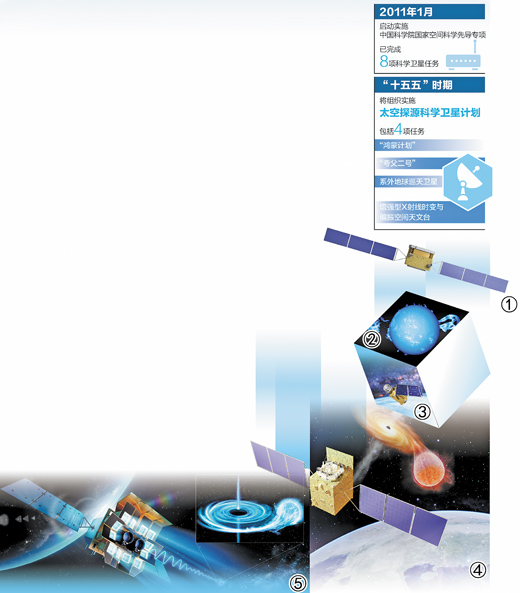
我国空间科学先导专项最新亮点成果发布 “鸿蒙”初开 “夸父”追日 星河问源(瞰前沿)
Ren Min Ri Bao· 2025-12-05 21:59
Core Insights - The recent press conference by the National Space Science Center of China highlighted significant advancements in space science, focusing on the origins of the universe, space weather, and life [2][8] - The "14th Five-Year Plan" will implement the Space Exploration Science Satellite Program, which includes four major missions aimed at achieving breakthroughs in understanding the dark ages of the universe, solar magnetic activity cycles, and exoplanet detection [2][8] Group 1: Satellite Missions and Achievements - Since the launch of the Space Science Pilot Project in 2011, eight scientific satellite missions have been completed, achieving "China's first" and even "world's first" breakthroughs in various fields [3] - The "Wukong" satellite, launched in December 2015, has provided the most precise secondary cosmic ray boron energy spectrum in the TeV/n range, aiding in the understanding of cosmic ray propagation [4] - The "Huiyan" satellite, launched in June 2017, has made significant contributions to understanding black hole accretion bursts and neutron star surface nuclear burning [5] - The "Huairou-1" satellite, launched in December 2020, discovered new subtypes of gamma-ray bursts and provided insights into the radiation environment near Earth [6] - The "Kuafu-1" satellite, launched in October 2022, revealed a lower-than-expected correlation rate between high-energy C-class flares and coronal mass ejections, offering new insights into solar eruptions [7] - The "Tianguan" satellite, launched in January 2024, has detected 165 significant X-ray transient sources, contributing to the understanding of X-ray phenomena in the galaxy [7] Group 2: Future Missions and Goals - The "Hongmeng Plan" aims to capture weak signals from the early universe using a low-frequency radio telescope array consisting of ten satellites [9] - The "Kuafu-2" mission will explore solar magnetic activity and its relationship with solar wind, enhancing understanding of the Earth-sun relationship [9] - The Exoplanet Survey Satellite will search for Earth-like planets in habitable zones, referred to as "Earth 2.0" [9] - The Enhanced X-ray Time-Variable and Polarization Space Observatory will study extreme conditions in the universe, such as black hole event horizons and neutron star surfaces [9] Group 3: Overall Impact and Development - The Space Science Pilot Project has demonstrated a strong development trend in China's space science, achieving breakthroughs across multiple dimensions [10] - The project has led to advancements in satellite technology and international collaboration, enhancing China's influence in global space science [10] - The transition from "catching up" to "keeping pace" and now to "leading" in certain areas reflects the growing importance of China's space science satellite cluster in exploring the unknown universe [10]
当美国启动AI“创世纪”,中国开始寻找第二颗地球
Guan Cha Zhe Wang· 2025-11-26 07:21
Core Viewpoint - China and the United States have proposed different visions for humanity's future, with China focusing on finding a second Earth and the U.S. launching an AI initiative to reshape scientific research [1] Group 1: China's Space Exploration Initiatives - China's announcement to search for a second Earth is part of a larger strategy to explore cosmic mysteries, emphasizing a systematic approach to understanding the universe [3][4] - The four scientific satellites launched by China target the origins of the universe, stellar activity, and the potential for life, forming a comprehensive knowledge chain [4][5] - The "Kuafu-2" mission aims to observe the solar polar regions, filling a critical gap in solar research that has persisted for decades [4][5] Group 2: Technological Advancements in Exoplanet Research - The "Exoplanet Survey Satellite" will utilize advanced techniques to detect low-mass, long-period planets that have been challenging to identify, marking a significant advancement in exoplanet research [11][14] - China's team successfully identified a previously undetected exoplanet, Kepler-725c, using a complex dynamical method, showcasing the country's growing capabilities in this field [11][14] Group 3: Broader Implications of Space Exploration - The search for a second Earth is not merely about finding a new home but understanding humanity's place in the universe and the origins of life [15] - China's initiatives reflect a shift from passive observation to active exploration, aiming to construct a shared knowledge framework for humanity [5][15]

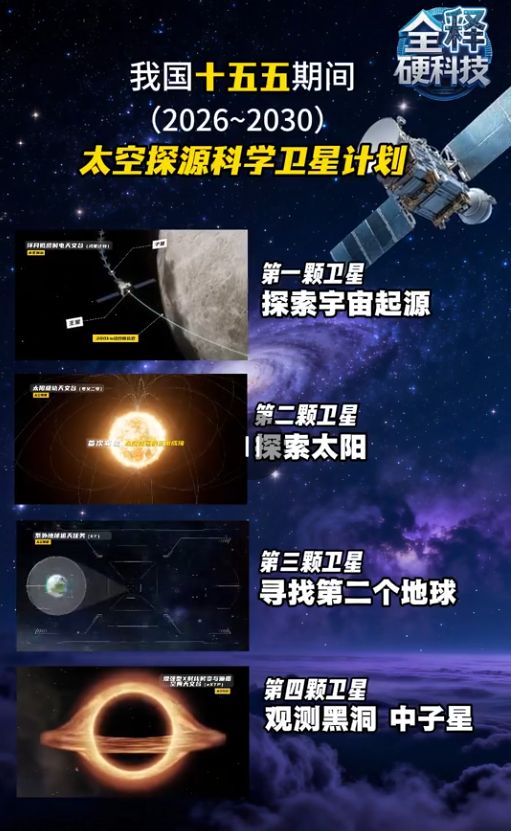
【新华社】再探宇宙奥秘!我国将发射四大科学卫星
Xin Hua She· 2025-11-26 02:48
Core Insights - China's space exploration initiatives are set to advance significantly during the "14th Five-Year Plan" period, with plans to launch four scientific satellite missions aimed at uncovering the mysteries of the universe and expanding human understanding of its boundaries [2] Group 1: Satellite Missions - The "Hongmeng Plan" will deploy its first probe satellite to the far side of the moon, forming a low-frequency radio telescope array with ten satellites to capture faint signals from the universe's early chaotic period [3] - The "Kuafu-2" satellite will be the first to orbit the sun's poles, providing direct observations of solar activity and enhancing understanding of solar storms and their impact on Earth [4] - The exoplanet survey satellite aims to identify Earth-sized planets within habitable zones, potentially leading to the discovery of a "second Earth" [5][6] Group 2: Scientific Objectives - The eXTP space observatory will explore extreme environments near black holes and neutron stars, testing Einstein's theories and searching for new physical laws beyond current frameworks [7] - The overall network of satellites will cover a range of topics from cosmic origins to solar activity, extraterrestrial life, and extreme physics, with each mission having the potential to reshape our understanding of the universe [8]
寻找“地球2.0”
Ke Ji Ri Bao· 2025-11-26 00:15
Core Viewpoint - The Chinese Academy of Sciences announced plans for a space exploration satellite aimed at finding Earth-like exoplanets, referred to as "Earth 2.0," during the latest highlights release of the space science pilot project on November 24 [1] Group 1: Importance of Finding "Earth 2.0" - The search for "Earth 2.0" is driven by human curiosity about the existence of life beyond Earth and the potential for finding a backup home for humanity amid existential threats like resource depletion and climate change [2] - Discovering "Earth 2.0" could provide insights into Earth's past and future, and answer philosophical questions about humanity's uniqueness in the universe [2] Group 2: Criteria for "Earth 2.0" - "Earth 2.0" must meet strict criteria, including being a rocky planet with a radius between 0.8 to 1.25 times that of Earth, ensuring a solid surface and a stable atmosphere [3] - It should orbit a sun-like star within the habitable zone to maintain liquid water, with a suitable atmosphere to filter harmful radiation and support life [3] Group 3: Current Discoveries in Exoplanet Research - The Kepler Space Telescope has discovered over 6,000 exoplanets, but none have been found that are both Earth-sized and within the habitable zone [4] - Significant milestones in exoplanet discovery include the first confirmed exoplanets in 1992 and the identification of Kepler-186f as the first Earth-sized planet in the habitable zone in 2014 [5] - China's contributions to exoplanet research include the discovery of "super-Earth" Kepler-725c, which is about ten times the mass of Earth, showcasing advancements in astronomical detection techniques [5]
中国将寻找第二颗地球
券商中国· 2025-11-24 15:21
Group 1 - The core viewpoint of the article highlights China's ambitious space exploration plans during the "14th Five-Year Plan" period, focusing on launching four satellites to address significant scientific questions related to the origins of the universe, space weather, and life [1][2] Group 2 - The first satellite, part of the "Hongmeng Plan," consists of a low-frequency radio telescope array made up of 10 satellites, aimed at capturing faint signals from the early universe by operating on the far side of the moon, which acts as a quiet "listening room" [1] - The second satellite, "Kuafu-2," will be the first to orbit the sun's polar regions, allowing for direct observation of solar magnetic field activities, which could enhance predictions of solar storms and deepen the understanding of the relationship between Earth and the sun [1] - The third satellite, the "Exoplanet Survey Satellite," is tasked with searching for Earth-like planets in habitable zones, potentially identifying a second home for humanity [2] - The fourth satellite, the eXTP, will operate outside Earth's atmosphere to observe extreme cosmic phenomena, such as black holes and neutron stars, testing Einstein's predictions and exploring the boundaries of physics [2]

中国将寻找第二颗地球
证券时报· 2025-11-24 11:56
Core Insights - During the "14th Five-Year Plan" period, China plans to launch four satellites focusing on major frontier issues such as the origin of the universe, space weather, and the origin of life [1][2] Group 1: Satellite Missions - The first satellite, the "Hongmeng Plan," consists of a low-frequency radio telescope array of 10 satellites that will be sent to the far side of the moon to capture weak signals from deep space, revealing secrets from the chaotic period before the first stars appeared [1] - The second satellite, "Kuafu II," will be the first to orbit the solar poles, aiming to understand the ultimate secrets of solar magnetic activity and improve predictions of solar storms [1] - The third satellite, the "Exoplanet Survey Satellite," will search for Earth-like planets in the habitable zone, potentially identifying a second home for humanity [2] - The fourth satellite, the eXTP, will observe extreme regions of the universe, such as the event horizon of black holes and the surfaces of neutron stars, to test Einstein's predictions and explore the boundaries of physics [2]
中国将寻找第二颗地球
第一财经· 2025-11-24 11:35
Core Viewpoint - Chinese scientists are actively exploring fundamental questions about the universe, including its origin, the emergence of life, and the nature of black holes, through a planned satellite program during the "14th Five-Year Plan" period [1][2]. Group 1: Satellite Missions - The first satellite, part of the Hongmeng Plan, consists of 10 satellites forming a low-frequency radio telescope array aimed at capturing faint signals from the universe's early period, specifically before the first stars appeared [1]. - The second satellite, Kuafu-2, will be the first to orbit the sun's polar regions, aiming to uncover the ultimate secrets of solar magnetic activity and improve predictions of solar storms [1]. - The third satellite is the Exoplanet Survey Satellite, which will search for Earth-like planets in habitable zones, potentially identifying a second home for humanity [1]. Group 2: Extreme Universe Observations - The fourth satellite, eXTP, will operate outside Earth's atmosphere to observe extreme regions of the universe, such as the event horizon of black holes and the surfaces of neutron stars, testing Einstein's predictions and exploring the boundaries of physics [2].

“全”释硬科技书写“中国答案” 空间科学领域成果多点突破、整体迸发
Yang Shi Wang· 2025-11-24 11:12
Core Insights - The Chinese Academy of Sciences has announced significant breakthroughs in space science through its satellite missions, focusing on transient celestial bodies, cosmic ray propagation, and solar eruptions [1][14] Group 1: Satellite Discoveries - The Tian Guan satellite has discovered a new type of X-ray transient source, providing crucial insights into these mysterious celestial bodies [5][4] - The satellite's unprecedented wide field of view and sensitivity have transitioned China's cosmic research from capturing "static images" to recording "dynamic movies," leading to breakthroughs in the study of black holes, neutron stars, and gamma-ray bursts [4][5] Group 2: Future Missions - During the 14th Five-Year Plan, China will implement a space exploration satellite program, launching four scientific satellite missions aimed at exploring the origins of the universe, space weather, and life [14][15] - The first satellite, part of the Hongmeng plan, will consist of a low-frequency radio telescope array to be deployed on the far side of the moon, capturing faint signals from the early universe [17] - The second satellite, Kua Fu II, will orbit the sun's poles, aiming to uncover the ultimate secrets of solar magnetic activity [19] - The third satellite will search for Earth-like exoplanets in habitable zones, potentially identifying a "second home" for humanity [21] - The fourth satellite, eXTP, will observe extreme regions of the universe, such as black hole event horizons and neutron star surfaces, to test Einstein's predictions and explore the boundaries of physics [23]
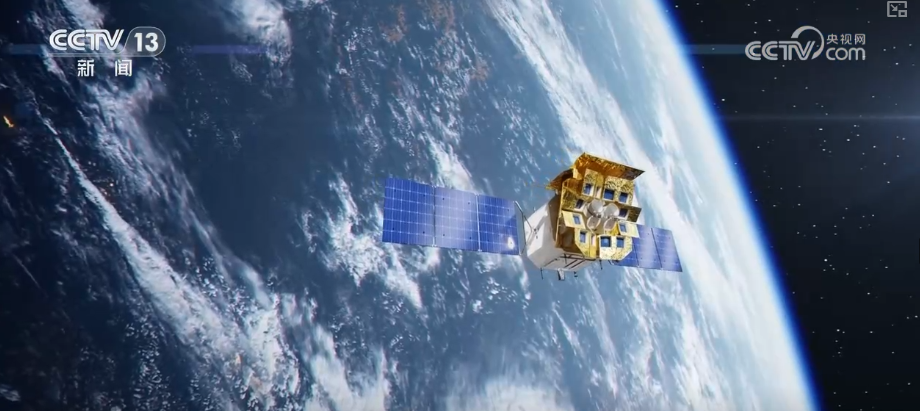
中国将寻找第二颗地球
财联社· 2025-11-24 09:52
Core Viewpoint - The article discusses China's ambitious space exploration plans during the "14th Five-Year Plan" period, focusing on the launch of four scientific satellites aimed at uncovering the mysteries of the universe and the origins of life [1][3]. Group 1: Satellite Missions - The first satellite, the Hongmeng Plan, consists of a low-frequency radio telescope array made up of 10 satellites that will be deployed to the far side of the moon to capture faint signals from the universe, revealing secrets from the chaotic period before the first stars appeared [1]. - The second satellite, Kua Fu II, will be the first to orbit the sun's polar regions, aiming to understand the ultimate secrets of solar magnetic activity and improve predictions of solar storms that affect Earth [1]. - The third satellite, the Exoplanet Survey Satellite, is tasked with searching for Earth-like planets in habitable zones, potentially identifying a second home for humanity in the universe [1]. - The fourth satellite, the eXTP space observatory, will observe extreme environments such as black hole event horizons and neutron star surfaces, testing Einstein's predictions and exploring the boundaries of physics [2]. Group 2: Significance of the Missions - These satellites represent a significant step in humanity's quest to understand the universe, from its birth to the origins of life, and will contribute to writing a unique chapter in China's space exploration narrative [3].