宇宙起源

Search documents
AI天文模型“星衍”突破天文观测深度极限
Ke Ji Ri Bao· 2026-02-24 07:46
Core Insights - The AI astronomical observation enhancement model "ASTERIS" has significantly improved the detection capabilities of the James Webb Space Telescope, overcoming traditional observational depth limits [1][2] - The model employs an innovative photometric adaptive filtering mechanism to jointly model noise and celestial brightness, enhancing signal-to-noise ratio while ensuring scientific rigor in astronomical data [1] Group 1: Technological Advancements - "ASTERIS" increases the detection depth of the Webb Telescope by one magnitude and boosts photon collection efficiency by nearly an order of magnitude, effectively increasing the equivalent observational aperture from 6.4 meters to nearly 10 meters [1] - The model has enabled the discovery of over 160 high-redshift candidate celestial bodies from 200 to 500 million years after the Big Bang, tripling the number found in previous studies [1] Group 2: Broader Implications - The model demonstrates strong generalization capabilities, requiring no manual labeling and adapting to various telescopes and multi-band observations, thus facilitating a shift in astronomical observation from hardware reliance to intelligent enhancement [2] - This advancement provides critical technological support for exploring fundamental scientific questions regarding the origins of the universe [2]
江门中微子实验:藏在地下700米的国之重器 捕捉“幽灵粒子”的超级工程
Xin Lang Cai Jing· 2026-02-12 23:44
Core Insights - The Jiangmen Neutrino Experiment aims to capture neutrinos, which are fundamental particles that can provide insights into the origins of the universe and support future technological advancements in human life [1][4]. Research and Development - The experiment is located 700 meters underground in a granite layer, which serves as a protective barrier against cosmic rays and other interference, creating an ideal environment for neutrino detection [2]. - The core device of the experiment is a giant acrylic sphere, over 35.4 meters in diameter, filled with 20,000 tons of liquid scintillator that can detect faint light signals produced when neutrinos interact with the liquid [3]. - The experiment began construction in 2015 and is expected to officially start data collection by August 26, 2025, with initial results anticipated by November 2025 [3]. Scientific Breakthroughs - The experiment's design allows for a significant increase in measurement precision of neutrino oscillation parameters, achieving a 1.5 to 1.8 times improvement in accuracy within just 59 days of data analysis [3]. - The results from this experiment could lead to a better understanding of neutrino mass ordering and validate frameworks for three types of neutrino oscillations, potentially achieving in two months what similar international experiments have accomplished in 10 to 20 years [3]. Practical Applications - Neutrino research could fill gaps in the standard model of particle physics and may lead to new theories, aiding in the exploration of dark matter and dark energy [4]. - In the energy sector, neutrino detection technology can enhance nuclear power plant efficiency and safety, while in geological exploration, it can improve the accuracy of subsurface structure assessments [4]. - Medical applications may arise from neutrino-related technologies, potentially leading to advancements in early disease diagnosis and imaging techniques [4][5]. - The experiment's technological innovations, such as photomultiplier tubes and the giant acrylic sphere, could have broader applications in aerospace and precision instruments, contributing to high-quality industrial development [5].
“鸿蒙”初开 “夸父”追日 星河问源(瞰前沿)
Ren Min Ri Bao· 2025-12-05 22:03
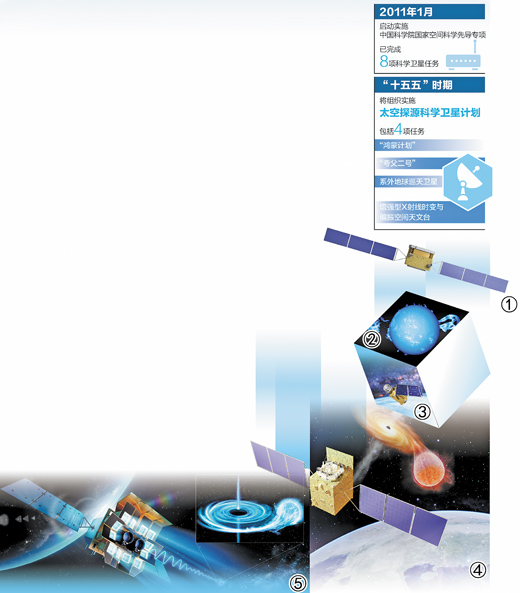
Core Insights - The China Academy of Sciences National Space Science Center held a press conference on November 24, showcasing significant advancements in space science, focusing on cosmic origins, space weather, and the origins of life [3][10]. Group 1: Satellite Missions and Achievements - Since the launch of the space science pilot project in January 2011, eight scientific satellite missions have been completed, including "Wukong," "Shijian-10," "Micius," "Huiyan," "Taiji-1," "Huairou-1," "Kuafu-1," and "Tianguan," achieving multiple "firsts" for China and the world [5]. - "Wukong," launched on December 17, 2015, is China's first dark matter particle detection satellite, which has provided the most precise secondary cosmic ray boron energy spectrum in the TeV/n range based on eight years of data [5]. - "Huiyan," China's first X-ray astronomical satellite, launched on June 15, 2017, has made significant discoveries regarding black hole accretion bursts and neutron star surface nuclear burning [6]. - "Huairou-1," launched on December 10, 2020, has identified new subtypes of gamma-ray bursts and provided insights into the radiation environment near Earth [6]. - "Kuafu-1," launched on October 9, 2022, has revealed a lower-than-expected correlation rate between high-energy C-class flares and coronal mass ejections, offering new insights into solar eruption mechanisms [7]. - "Tianguan," launched on January 9, 2024, has detected 165 significant X-ray transient sources, contributing to the understanding of X-ray phenomena in the galaxy [7]. Group 2: Future Missions and Goals - The "14th Five-Year Plan" will focus on the "Harmonious Plan," which includes a low-frequency radio telescope array of ten satellites aimed at capturing weak signals from the early universe [8]. - "Kuafu-2" will explore solar magnetic activity and its relationship with solar storms by orbiting the sun's poles [9]. - The exoplanet survey satellite aims to find Earth-like planets in habitable zones, while the enhanced X-ray time-variable and polarization space observatory will study extreme conditions in the universe [9]. Group 3: Development and International Collaboration - The space science sector in China has shown robust growth, achieving breakthroughs in various fields, including macro, micro, extreme conditions, and interdisciplinary research [10]. - The project has led to significant advancements in satellite technology and payloads, establishing a national-level X-ray calibration beamline and developing high-sensitivity X-ray telescopes [10]. - International collaborations, such as the "Smile" satellite project with the European Space Agency, have enhanced China's scientific influence and effectiveness in space science [11].

我国空间科学先导专项最新亮点成果发布 “鸿蒙”初开 “夸父”追日 星河问源(瞰前沿)
Ren Min Ri Bao· 2025-12-05 21:59
Core Insights - The recent press conference by the National Space Science Center of China highlighted significant advancements in space science, focusing on the origins of the universe, space weather, and life [2][8] - The "14th Five-Year Plan" will implement the Space Exploration Science Satellite Program, which includes four major missions aimed at achieving breakthroughs in understanding the dark ages of the universe, solar magnetic activity cycles, and exoplanet detection [2][8] Group 1: Satellite Missions and Achievements - Since the launch of the Space Science Pilot Project in 2011, eight scientific satellite missions have been completed, achieving "China's first" and even "world's first" breakthroughs in various fields [3] - The "Wukong" satellite, launched in December 2015, has provided the most precise secondary cosmic ray boron energy spectrum in the TeV/n range, aiding in the understanding of cosmic ray propagation [4] - The "Huiyan" satellite, launched in June 2017, has made significant contributions to understanding black hole accretion bursts and neutron star surface nuclear burning [5] - The "Huairou-1" satellite, launched in December 2020, discovered new subtypes of gamma-ray bursts and provided insights into the radiation environment near Earth [6] - The "Kuafu-1" satellite, launched in October 2022, revealed a lower-than-expected correlation rate between high-energy C-class flares and coronal mass ejections, offering new insights into solar eruptions [7] - The "Tianguan" satellite, launched in January 2024, has detected 165 significant X-ray transient sources, contributing to the understanding of X-ray phenomena in the galaxy [7] Group 2: Future Missions and Goals - The "Hongmeng Plan" aims to capture weak signals from the early universe using a low-frequency radio telescope array consisting of ten satellites [9] - The "Kuafu-2" mission will explore solar magnetic activity and its relationship with solar wind, enhancing understanding of the Earth-sun relationship [9] - The Exoplanet Survey Satellite will search for Earth-like planets in habitable zones, referred to as "Earth 2.0" [9] - The Enhanced X-ray Time-Variable and Polarization Space Observatory will study extreme conditions in the universe, such as black hole event horizons and neutron star surfaces [9] Group 3: Overall Impact and Development - The Space Science Pilot Project has demonstrated a strong development trend in China's space science, achieving breakthroughs across multiple dimensions [10] - The project has led to advancements in satellite technology and international collaboration, enhancing China's influence in global space science [10] - The transition from "catching up" to "keeping pace" and now to "leading" in certain areas reflects the growing importance of China's space science satellite cluster in exploring the unknown universe [10]
中国将寻找第二颗地球
证券时报· 2025-11-24 11:56
Core Insights - During the "14th Five-Year Plan" period, China plans to launch four satellites focusing on major frontier issues such as the origin of the universe, space weather, and the origin of life [1][2] Group 1: Satellite Missions - The first satellite, the "Hongmeng Plan," consists of a low-frequency radio telescope array of 10 satellites that will be sent to the far side of the moon to capture weak signals from deep space, revealing secrets from the chaotic period before the first stars appeared [1] - The second satellite, "Kuafu II," will be the first to orbit the solar poles, aiming to understand the ultimate secrets of solar magnetic activity and improve predictions of solar storms [1] - The third satellite, the "Exoplanet Survey Satellite," will search for Earth-like planets in the habitable zone, potentially identifying a second home for humanity [2] - The fourth satellite, the eXTP, will observe extreme regions of the universe, such as the event horizon of black holes and the surfaces of neutron stars, to test Einstein's predictions and explore the boundaries of physics [2]
中国将寻找第二颗地球
第一财经· 2025-11-24 11:35
Core Viewpoint - Chinese scientists are actively exploring fundamental questions about the universe, including its origin, the emergence of life, and the nature of black holes, through a planned satellite program during the "14th Five-Year Plan" period [1][2]. Group 1: Satellite Missions - The first satellite, part of the Hongmeng Plan, consists of 10 satellites forming a low-frequency radio telescope array aimed at capturing faint signals from the universe's early period, specifically before the first stars appeared [1]. - The second satellite, Kuafu-2, will be the first to orbit the sun's polar regions, aiming to uncover the ultimate secrets of solar magnetic activity and improve predictions of solar storms [1]. - The third satellite is the Exoplanet Survey Satellite, which will search for Earth-like planets in habitable zones, potentially identifying a second home for humanity [1]. Group 2: Extreme Universe Observations - The fourth satellite, eXTP, will operate outside Earth's atmosphere to observe extreme regions of the universe, such as the event horizon of black holes and the surfaces of neutron stars, testing Einstein's predictions and exploring the boundaries of physics [2].
科普写作,从“知识驱动”到“故事驱动”(序与跋)
Ren Min Ri Bao· 2025-10-30 22:37
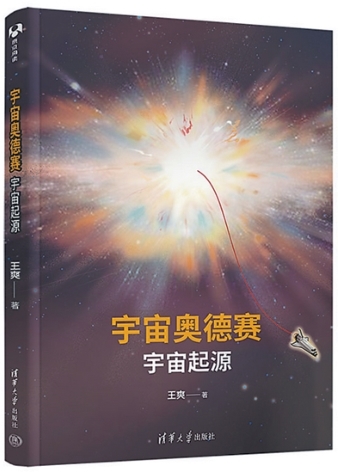
Core Viewpoint - The book "Cosmic Odyssey: The Origin of the Universe" adopts a "story-driven" approach rather than a "knowledge-driven" one, aiming to engage readers, especially young audiences, in the exploration of modern cosmology [2][3]. Summary by Sections Book Structure and Themes - The fourth installment of "Cosmic Odyssey" begins with the moment of cosmic creation and flows through time to 380,000 years after the universe's birth, covering three key topics: inflation, the Big Bang, and cosmic microwave background, with a total of 30 articles [3]. Historical Context - The book details two significant "wars" in cosmology: the first involving the inflationary theory and the second focusing on the Big Bang theory, highlighting the struggles and achievements of prominent cosmologists over the past 40 years [3]. Educational Objective - The aim is to spark interest in modern cosmology among young readers by presenting the historical narrative of human exploration into the universe's origins, emphasizing the importance of storytelling in science communication [3].
从“一锅基本粒子粥”到星辰大海
Ren Min Ri Bao· 2025-06-12 22:10
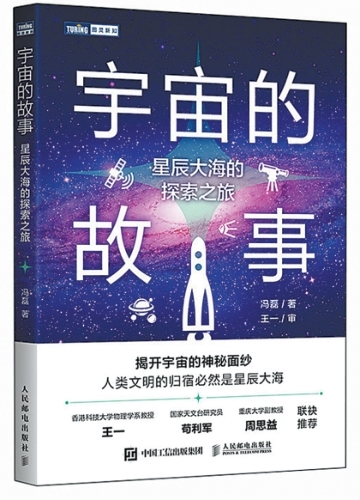
Core Viewpoint - The book "The Story of the Universe: An Exploration Journey through Stars and Seas" by Feng Lei presents the latest advancements in cosmology, emphasizing the evolution of human understanding of the universe from vague speculation to precise measurement and verification [2][3][4]. Group 1: Historical Context - In the early 20th century, physicist Kelvin claimed that physics was complete, but challenges like the Michelson-Morley experiment and the ultraviolet catastrophe of black body radiation led to revolutions in physics, namely relativity and quantum mechanics [2]. - In the early 21st century, scientists identified new challenges in physics, categorized as "two dark, one black, and three origins," which include dark matter, dark energy, black holes, and the origins of the universe, celestial bodies, and life [2]. Group 2: Cosmological Concepts - The book discusses how measurements of cosmic expansion led to the Big Bang cosmology model, predicting that the universe originated from a monumental explosion 13.8 billion years ago, evolving from a primordial state of basic particles to stars and galaxies [3][4]. - The narrative emphasizes the philosophical implications of cosmology, linking the vastness of the universe to the fundamental particles that constitute it, thus presenting cosmology as a unified field of study [3]. Group 3: Modern Cosmology - Modern cosmology has transitioned from philosophical speculation to an independent scientific discipline, with the Big Bang model providing numerous testable predictions that have been increasingly confirmed by precise experimental measurements [4][5]. - The book aims to make complex astrophysical processes and new cosmological knowledge accessible through descriptive language, avoiding mathematical formulas to engage a broader audience [5].