太阳活动研究

Search documents
【新华社】再探宇宙奥秘!我国将发射四大科学卫星
Xin Hua She· 2025-11-26 02:48
Core Insights - China's space exploration initiatives are set to advance significantly during the "14th Five-Year Plan" period, with plans to launch four scientific satellite missions aimed at uncovering the mysteries of the universe and expanding human understanding of its boundaries [2] Group 1: Satellite Missions - The "Hongmeng Plan" will deploy its first probe satellite to the far side of the moon, forming a low-frequency radio telescope array with ten satellites to capture faint signals from the universe's early chaotic period [3] - The "Kuafu-2" satellite will be the first to orbit the sun's poles, providing direct observations of solar activity and enhancing understanding of solar storms and their impact on Earth [4] - The exoplanet survey satellite aims to identify Earth-sized planets within habitable zones, potentially leading to the discovery of a "second Earth" [5][6] Group 2: Scientific Objectives - The eXTP space observatory will explore extreme environments near black holes and neutron stars, testing Einstein's theories and searching for new physical laws beyond current frameworks [7] - The overall network of satellites will cover a range of topics from cosmic origins to solar activity, extraterrestrial life, and extreme physics, with each mission having the potential to reshape our understanding of the universe [8]


俄建造国内最大望远镜
Huan Qiu Wang Zi Xun· 2025-09-28 23:44
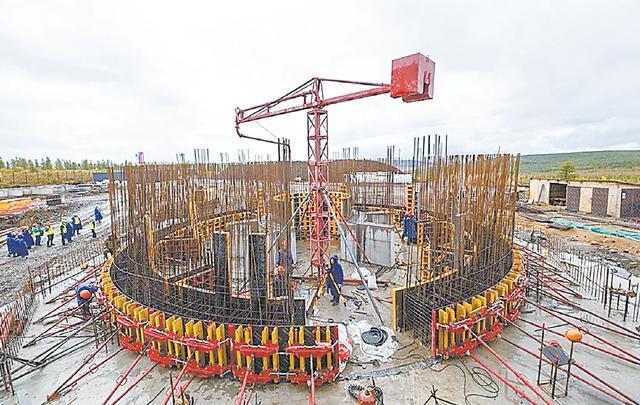
Core Insights - The construction of Russia's largest solar telescope is underway in the Buryat Republic, with significant expectations from the scientific community regarding its capabilities to enhance understanding of solar activities and improve predictions of solar flares that could impact Earth's infrastructure [3][6]. Construction Progress - The project is ahead of schedule by four months, with all foundation work completed and the construction of the technical floors currently in progress. The construction site has been utilizing favorable weather conditions to maintain progress [3][4]. - The telescope's foundation is built on solid rock using high-strength concrete, ensuring structural stability against seismic activity [4][6]. Telescope Specifications - The telescope, known as KST-3, features a 3-meter primary mirror equipped with an adaptive optics system, aiming for a resolution of 0.1 arc seconds. This will allow for high-precision observations of solar magnetic fields and sunspot formation [3][5]. - The optical system will consist of approximately 30 components, with the main mirror's manufacturing expected to take three to four years due to its complex non-spherical design [5][6]. Future Plans - The telescope is projected to be completed by 2030, at which point the workforce at the Siberian Branch of the Russian Academy of Sciences will double to 1,000 personnel. KST-3 is one of seven facilities within the National Solar and Terrestrial Physics Complex [6]. - The total construction cost is estimated at 36 billion rubles, with the telescope structure reaching a height of 42 meters and weighing 120 tons [6].