
婚姻家庭纠纷调解

Search documents
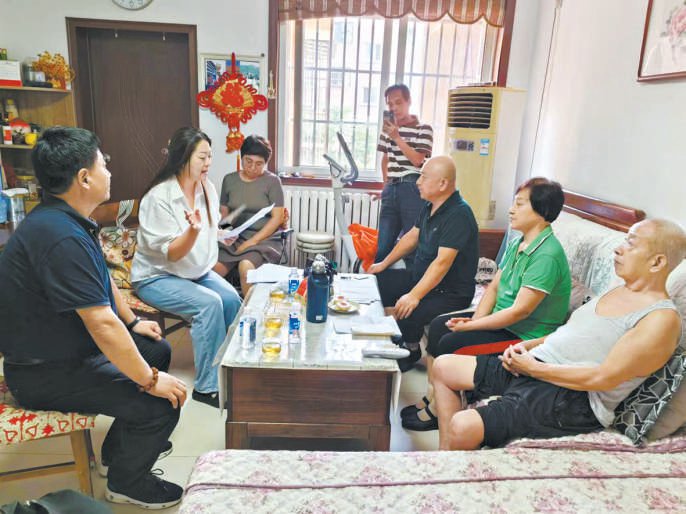
巧解“家长里短”
Xin Lang Cai Jing· 2026-02-25 21:01
Core Viewpoint - The article highlights the effective mediation work of Liu Hong, a mediator in Fangshan District, who has resolved over 2,000 family disputes in nine years, emphasizing the importance of balancing legal principles with human emotions in mediation [3][5]. Group 1: Mediation Approach - Liu Hong employs a compassionate approach in mediation, focusing on understanding the emotional and practical needs of the parties involved, which is crucial in resolving family disputes [4][6]. - The mediation process involves separate discussions with each party to understand their perspectives and facilitate a constructive dialogue, ultimately leading to agreements that consider the well-being of children involved [5][7]. Group 2: Case Examples - A case involving a divorced couple highlighted the importance of vehicle ownership in the context of child-rearing, where Liu successfully negotiated the transfer of a car to the mother, emphasizing the child's needs [4][6]. - Another case of a father-daughter relationship showcased Liu's ability to address past grievances while facilitating a path toward reconciliation, resulting in the daughter agreeing to provide financial support for her father [6][7]. Group 3: Systemic Improvements - Liu has contributed to establishing mechanisms for resolving disputes related to property inheritance and relocation, ensuring that families can navigate complex legal situations without escalating conflicts [7]. - The focus on proactive mediation strategies, such as educating families about property division and inheritance rights, aims to prevent disputes from arising in the first place [7].

男子发现女儿非亲生提出离婚 法院:非亲生父亲,没有抚养义务
Xin Lang Cai Jing· 2025-12-25 10:11
Core Viewpoint - The Supreme People's Court, along with the All-China Women's Federation and the Ministry of Justice, has released typical cases of mediation in marriage and family disputes, highlighting a case involving non-biological child custody disputes, emphasizing the responsibilities of biological parents and the use of digital mediation tools [2][3][4]. Group 1: Case Overview - The case involves a man, Wang, who suspected that his daughter, Wang Er, was not his biological child, confirmed by a paternity test [2]. - Following the discovery, Wang filed for divorce and disputes arose regarding custody and child-rearing expenses [2][3]. - The mediation process was initiated through a digital platform, "Chongqing Mediation Online," allowing for efficient case management and evidence submission [2][3]. Group 2: Mediation Process - The mediation utilized remote communication tools to facilitate discussions between the parties, addressing emotional tensions and providing legal clarity [3][4]. - Legal responsibilities were clarified, indicating that the biological mother, Li, is responsible for the child's upbringing, while Wang has no obligation to provide support [3][4]. - The mediation concluded with an agreement that Wang Er would live with her mother, and Wang would not seek reimbursement for past expenses, demonstrating a resolution that prioritized the child's welfare [4]. Group 3: Digital Mediation Tools - The mediation process incorporated features such as electronic documentation, real-time legal reference, and online signatures, streamlining the resolution process [4]. - The use of digital applications allowed for effective communication and collaboration among various stakeholders, including local women's federations and legal advisors [3][4]. - The case exemplifies the potential of digital mediation platforms in resolving family disputes efficiently and effectively [3][4].

涵盖婚姻纠纷、子女抚养纠纷等 婚姻家庭纠纷调解工作典型案例发布
Yang Shi Wang· 2025-12-24 10:40
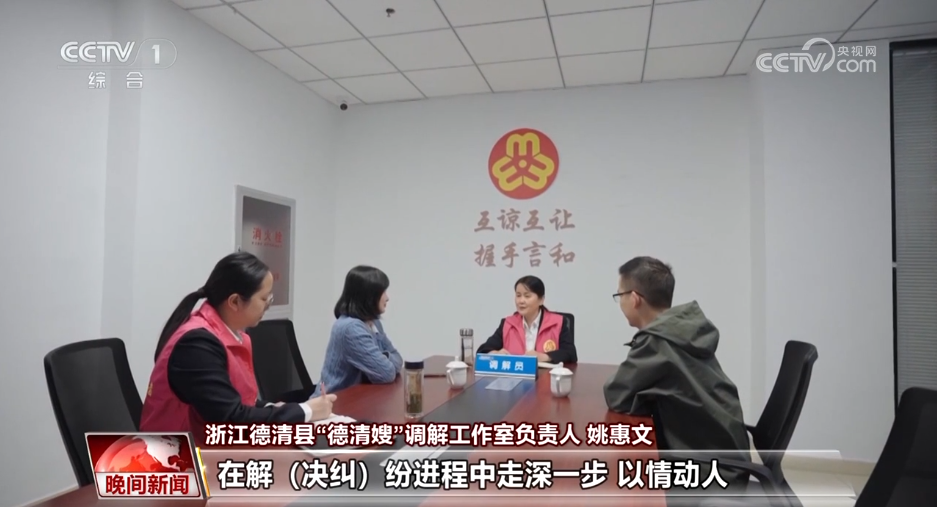
Core Viewpoint - The Supreme People's Court, in collaboration with the All-China Women's Federation and the Ministry of Justice, has compiled ten typical cases that highlight the importance of mediation in resolving family disputes, showcasing innovative methods and the integration of various resources to promote social harmony and stability [1]. Group 1: Case Summaries - Case 1: The "Deqing Sister" utilized a "Four-Step Diagnosis Method" to resolve inheritance disputes among children from multiple marriages, emphasizing the balance of legal principles and emotional considerations [3][5]. - Case 2: A couple, facing communication issues and educational disagreements regarding their child, engaged in a systematic intervention through a "Three-Dimensional Linkage" mechanism, leading to improved family dynamics and conflict resolution [6][8]. - Case 3: The "Law Protection Family Safety" integrated application facilitated a divorce case where the core issues were lack of communication and parenting conflicts, resulting in a mutual agreement to continue living together and share parenting responsibilities [10][12]. - Case 4: A rural elderly woman's maintenance dispute was resolved through a multi-agency collaboration, ensuring her children fulfilled their support obligations while restoring family relationships [13][15]. - Case 5: A family dispute involving educational disagreements was addressed using big data warnings and a "Three-Color Management" approach, leading to effective conflict resolution and improved family harmony [16][19]. - Case 6: The "Eight-Step Method" was employed to mend a marriage on the brink of divorce, focusing on emotional healing and family unity, resulting in a reconciliatory agreement [20][23]. - Case 7: The "Kuerban Uncle" mediation room successfully resolved a child support dispute by integrating cultural elements and legal education, leading to emotional reconciliation and agreement on support payments [24][27]. - Case 8: The "Accompanying Home" initiative addressed visitation issues for divorced parents, ensuring the child's well-being and emotional stability through structured support [28]. Group 2: Key Insights - The integration of various administrative and social resources in mediation processes enhances the effectiveness of family dispute resolution [1][5]. - Utilizing technology and data-driven approaches allows for proactive identification and management of family conflicts, improving intervention outcomes [16][19]. - Emotional support and psychological counseling are critical components in resolving family disputes, facilitating better communication and understanding among parties [10][12][20].
以小家的和睦撑起大家的和谐
Yang Shi Wang· 2025-11-28 17:40
Core Viewpoint - The national competition for marriage and family dispute mediation showcases innovative practices and emphasizes the importance of mediation in maintaining family harmony and social stability [1][8]. Group 1: Event Overview - The national marriage and family dispute mediation competition was held in Changsha, Hunan, organized by the All-China Women's Federation and the Ministry of Justice [1]. - The finals featured 32 teams with 96 mediators, including activities such as knowledge quizzes and simulated mediation [1]. Group 2: Mediation Techniques - The "Deqing Sister" mediation studio from Zhejiang shared their "Four Steps and Four Diagnoses" method developed over ten years [3]. - The method includes: 1. "Observation of Form" for early detection and intervention 2. "Listening to Emotion" to deepen understanding during dispute resolution 3. "Inquiry into Source" to identify key issues during communication 4. "Diagnosis of Symptoms" to tailor solutions and continuously improve the mediation process [3]. Group 3: Digital Innovations - The "Chongqing Mediation Online" digital platform integrates AI technology to automate the generation of legal opinions and mediation agreements, facilitating quick online processing [5]. - Users can submit applications by scanning a QR code, with real-time acceptance by the mediation committee [5]. Group 4: Current Landscape - As of now, China has established 3,690 marriage and family dispute mediation committees at the county level, along with 270,000 grassroots studios and 78,500 mediators [7]. - These mediators play a crucial role in fostering family harmony and social stability [7][8].
全国婚姻家庭纠纷调解工作展示活动在长沙举行
Xin Hua She· 2025-11-28 13:43
Core Viewpoint - The national competition for marriage and family dispute mediation, organized by the All-China Women's Federation and the Ministry of Justice, aims to enhance social harmony and stability through effective mediation practices [1] Group 1: Event Overview - The event took place in Changsha, Hunan from November 26 to 27, featuring 32 teams and 96 mediators from 31 provinces and regions, culminating in the awarding of 1 first prize, 5 second prizes, 10 third prizes, and 80 excellence awards [1] - The theme of the competition was "Guarding the Happiness of Marriage and Family, Promoting Social Harmony and Stability" [1] Group 2: Key Initiatives - The event showcased typical cases of national marriage and family dispute mediation and introduced an online mediation mechanism for comprehensive dispute resolution [1] - The establishment of a "National Talent Pool for Marriage and Family Dispute Mediation" was announced, highlighting the integration of family culture and grassroots governance [1] Group 3: Future Directions - The All-China Women's Federation emphasized the need for local women's federations to adopt and develop the "Fengqiao Experience" in mediation work, integrating it with family education and values [1] - There is a push to enhance legal education and convert mediation outcomes into tangible improvements in family happiness and grassroots governance effectiveness [1] Group 4: Participation and Scale - This competition marks the first nationwide skills contest in the field of marriage and family dispute mediation, with 98,000 mediators participating in the selection process over 8 months [1]
全市14支队伍开展婚调技能大比武
Hang Zhou Ri Bao· 2025-07-17 03:12
Group 1 - The core theme of the event is to enhance the skills of marriage and family dispute mediators to promote social harmony and stability [1] - The competition involved various activities such as written tests, knowledge quizzes, and situational simulations, with experts scoring the participants [1] - The top three teams from the competition will be recommended for a provincial-level competition, indicating a structured approach to improving mediation skills [1] Group 2 - The city has successfully mediated 4,166 marriage and family disputes in the first half of the year, with a 7.6% decrease in non-police-related family disputes compared to the previous year [2] - The Women's Federation and the Judicial Bureau plan to focus on a "three ones" project, which includes a set of operational guidelines, a dedicated team, and a brand matrix to strengthen the prevention and resolution of marriage and family disputes [2] - Various innovative brands and support stations have been established to provide professional and compassionate mediation services, contributing to the resolution of complex family issues [2]