婚恋服务升级

Search documents
中国婚恋市场真实状况:结构变迁与多元重构,畸形困局如何破
Sou Hu Cai Jing· 2025-12-17 17:26
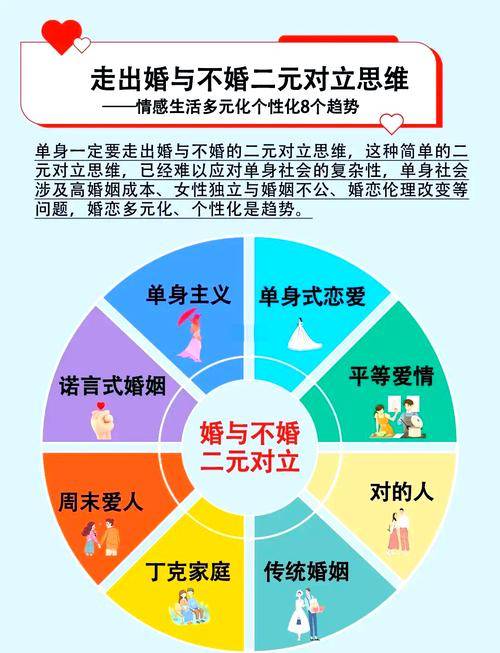
Core Insights - The article discusses the evolving landscape of the marriage and dating market in China, highlighting the shift from traditional views to more diverse and personalized approaches to relationships [4][8][12] Group 1: Key Trends in Marriage and Dating - The marriage rate is declining, with the average age of first marriage for men at approximately 29.38 years and for women at 27.95 years, indicating a trend towards late marriage [5] - The unmarried rate among individuals aged 25-29 has reached 51.3%, reflecting a significant demographic shift [5] - The social dating market is projected to exceed 240 billion yuan by 2025, with a year-on-year growth of 27.8% [5] Group 2: Structural Contradictions - There is a notable urban-rural divide in marriage dynamics, with rural men facing difficulties in finding partners due to gender imbalances, while educated women in county areas struggle to find suitable matches [6][7] - The gender disparity in marriage intentions shows that 68.9% of men wish to marry compared to only 31.1% of women, with women prioritizing equality in relationships [7] Group 3: Changing Values and Attitudes - Nearly 49.7% of young people adopt a "let it be" attitude towards marriage, with only 41.4% viewing it as a necessary life goal, indicating a shift in perception [8] - Over 70% of youth prefer partners based on shared values and interests rather than material conditions, with 78% emphasizing the importance of value alignment [9] Group 4: Service Innovations in the Dating Industry - The traditional matchmaking model has evolved into eight main operational forms, including personalized services and themed social events, driven by technological advancements [10] - The number of marriage service outlets has reached 18,000 across over 300 cities, with a significant increase in local service demand [10] Group 5: Policy Support and Social Initiatives - The government has introduced various policies to support the marriage and dating industry, including the establishment of trustworthy platforms and community matchmaking initiatives [11] - Local initiatives, such as the "public matchmaker" programs, have successfully facilitated numerous marriages, reflecting a growing commitment to fostering a supportive environment for relationships [11] Group 6: Future Directions - The marriage market is transitioning from a phase of rapid expansion to one focused on quality and individual choice, with non-traditional relationship models gaining acceptance [12] - The integration of technology, such as AI matching and blockchain for identity verification, is expected to enhance the efficiency and reliability of dating services [12]