婴幼儿配方食品研发

Search documents
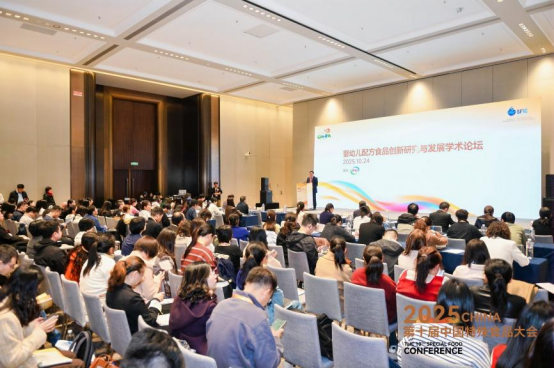
婴幼儿配方食品创新研究与发展学术论坛举办
Xin Hua Wang· 2025-10-28 03:34
Core Insights - The forum on infant formula food innovation and development was held in Xi'an, supported exclusively by Inner Mongolia Yili Industrial Group Co., Ltd [2] - The event is part of the 10th China Special Food Conference, focusing on quality improvement and policy discussions in infant food [2] Group 1: Research and Development - Researcher Yin Yulong from the Chinese Academy of Agricultural Sciences highlighted the use of pig models to study nutrition for premature and low-birth-weight infants, noting that the global premature birth rate is 10%-15% and 7%-10% in China [3] - The model has shown that hydrolyzed protein formula can enhance tolerance and nutrient absorption, with plans for standardization to aid infant food development [3] - Recommendations for improving infant formula quality include optimizing nutrient ratios and reducing heat treatment, with a focus on fresh milk content [3] Group 2: Regulatory Updates - Fang Haiqin from the National Center for Food Safety Risk Assessment discussed the new GB25596-2025 standards for special medical purpose infant formula, which includes adjustments to nutritional content and the introduction of new product categories [4] - The new regulations impose a two-year transition period and aim to better meet the growth and development needs of infants with special medical conditions [4] Group 3: Clinical Studies and Innovations - Dr. Zhuang Jialu from Shanghai Children's Medical Center presented a clinical study on preterm infant formula, indicating that the experimental group achieved full enteral nutrition earlier and had shorter hospital stays without milk protein allergies [5] - Research on low-temperature processing techniques to reduce advanced glycation end products (AGEs) in infant formula was discussed, emphasizing the need for "low AGEs" standards in the industry [6] - Zhao Ai from Tsinghua University presented findings on the health benefits of lactoferrin in infant formula, showing effects similar to breastfeeding in promoting growth and reducing feeding difficulties [6]