
婴幼儿配方食品

Search documents
新疆乌苏市市场监管局筑牢食品安全底线在行动
Zhong Guo Shi Pin Wang· 2026-02-14 09:08
Core Viewpoint - The article emphasizes the proactive measures taken by the Urumqi Market Supervision Bureau in Xinjiang to ensure food safety during the peak of holiday consumption, highlighting a comprehensive approach involving early deployment, strict inspections, precise sampling, and public education. Group 1: Early Deployment and Responsibility - The Urumqi Market Supervision Bureau organized a special meeting on December 21, 2025, to detail specific measures for controlling key food categories and conducting risk inspections [1] - The bureau engaged 17 key food production enterprises for administrative discussions to guide compliance and highlight food safety risks, aiming to enhance preventive measures [1] Group 2: Strict Inspections and Risk Management - The bureau focused on major food categories such as bulk foods, seasonal foods, infant formula, health foods, and tofu products, targeting large supermarkets and catering services for New Year's Eve [2] - A total of 386 food production and operation entities were inspected, resulting in 11 rectification notices and 3 cases filed for violations [2] Group 3: Precise Sampling and Monitoring - The bureau conducted a "public inspection for food safety" initiative, emphasizing supervision and quick testing of popular New Year's Eve catering services, particularly for high-concern items like meat and eggs [2] - 26 batches of food were supervised and tested, with 92 batches undergoing on-site quick tests [2] Group 4: Public Education and Community Involvement - The bureau collaborated with regulatory bodies, industry, and the public to enhance food safety awareness, focusing on restaurants and catering services for New Year's Eve [3] - Two issues of a food business "red and black list" were published to expose illegal activities, alongside 7 educational events reaching 3,000 people with 1,200 informational materials distributed [3]
“年货”火爆! 杭州市场监管部门抽检131批次
Mei Ri Shang Bao· 2026-02-09 22:17
Group 1 - The Hangzhou Market Supervision Administration conducted a special inspection of New Year food products, sampling a total of 131 batches, all of which passed the quality tests [1] - In the production phase, 31 batches of dairy products and infant formula were tested, with all samples meeting the standards [1] - In the circulation phase, 55 batches of various food categories including condiments, nuts, and meat products were tested, all passing the inspection [1] Group 2 - In the catering service phase, 45 batches of food including seafood, meat, and frozen products were sampled, with all samples found to be compliant [1] - Consumers are advised to purchase food from licensed supermarkets or markets and to check for quality certifications on fresh produce [1] - Recommendations include avoiding "three-no" products and ensuring packaging is intact and within the expiration date [1]
滨州市强化春节食品安全监管保障百姓“舌尖安全”
Qi Lu Wan Bao· 2026-02-08 11:33
Core Viewpoint - The city market supervision system is intensifying food safety regulation during the Spring Festival to ensure public safety and prevent food-related risks [1] Group 1: Food Safety Regulation Measures - The market supervision bureau is enhancing collaboration with agriculture and fisheries departments to strengthen oversight of food sources and ensure traceability and quality of agricultural products [3] - Focus is placed on major food categories such as grains, meat, dairy, and infant formula, with increased inspections in supermarkets, wholesale markets, and rural areas to combat counterfeit and substandard products [3] - In the catering sector, special attention is given to areas like tourist attractions and service areas, ensuring strict management of raw material procurement and food preparation to prevent cross-contamination [3] Group 2: Risk Assessment and Enforcement - The bureau is conducting risk assessments in key areas such as centralized dining units and food delivery platforms, ensuring compliance with food safety standards [4] - A special inspection campaign for popular food items during the Spring Festival has been organized, with 350 batches of meat and meat products tested [4] - Strict actions are being taken against illegal practices such as the excessive use of food additives and non-food materials in food production, with criminal cases being referred to law enforcement [4] Group 3: Emergency Response and Monitoring - The market supervision bureau is implementing emergency response protocols to ensure quick and effective handling of food safety incidents [5] - Continuous monitoring and reporting systems are established to maintain communication and coordination during food safety emergencies [5]

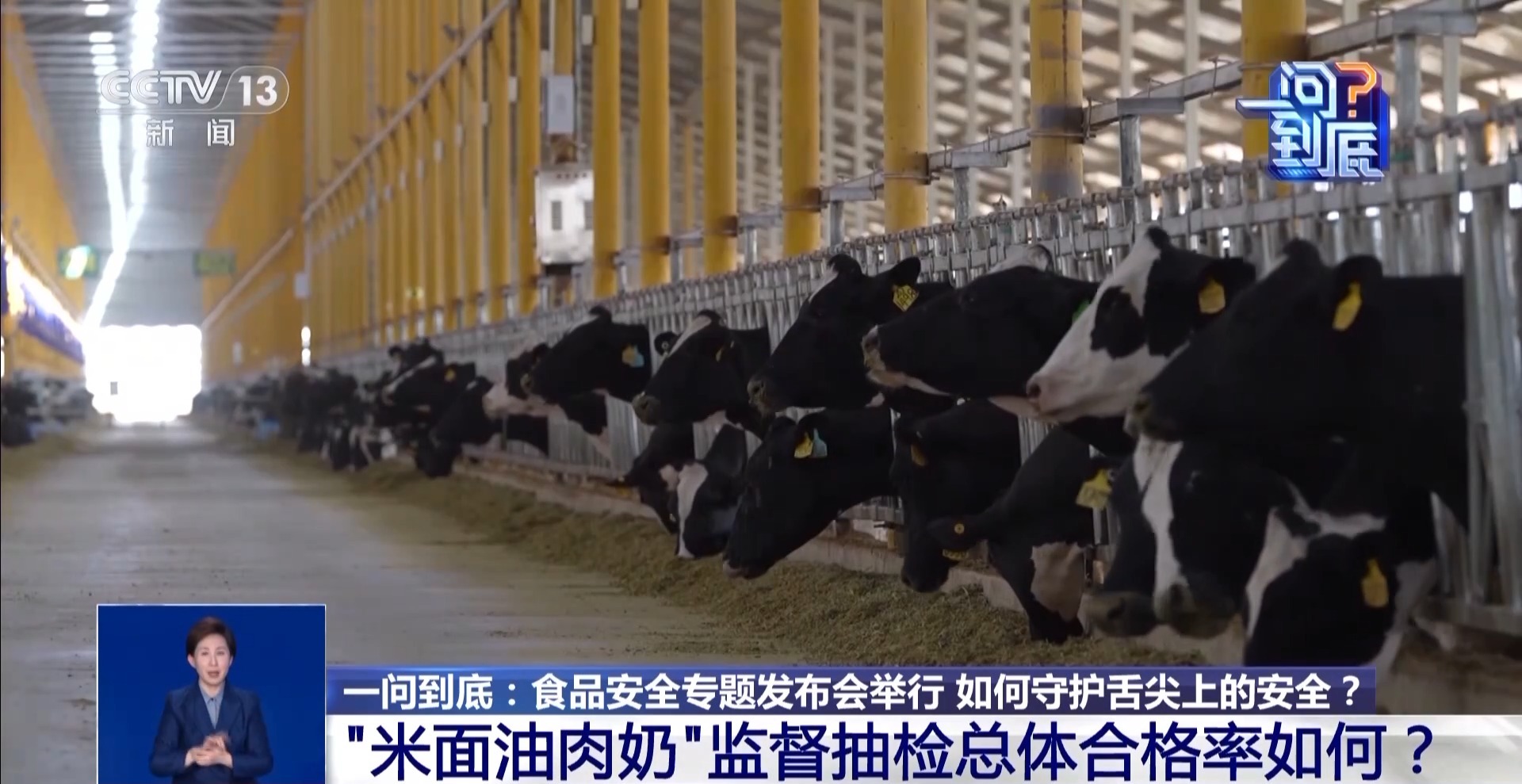
一问到底丨如何守护舌尖上的安全?聚焦食品添加剂、校园餐、直播售卖等
Yang Shi Wang· 2025-12-23 15:48
Core Viewpoint - The National Market Supervision Administration (NMSA) has conducted a comprehensive food safety inspection, revealing a stable overall food safety situation in China, with specific focus on meat products and edible oils, and has implemented new regulations to enhance food safety in various sectors, including e-commerce and school cafeterias [1][4][11]. Group 1: Food Safety Inspection Results - As of November this year, the NMSA completed 6.1769 million batches of food safety inspections, detecting 172,300 non-compliant batches, resulting in a non-compliance rate of 2.79% [1] - Among 39 categories of inspected foods, 24 categories had a non-compliance rate of less than 1%, with staple foods like rice, flour, oil, meat, and milk showing low non-compliance rates of 0.17%, 0.01%, 0.66%, 0.52%, and 0.08% respectively [1][3]. Group 2: Special Rectification of Meat Products and Edible Oils - The NMSA has focused on rectifying issues related to adulteration in meat products and edible oils, inspecting 2.45 million meat production and operation entities, leading to 35,529 cases filed and 1,511 cases referred for criminal investigation [4] - For edible oils, 1.892 million entities were inspected, resulting in 2,581 cases being filed, indicating significant progress in addressing these issues [4]. Group 3: Improvement in Infant Formula Safety - The compliance rate for domestic infant formula has remained above 99.95% for four consecutive years, with inspections covering all registered production and sales enterprises [3]. Group 4: Issues with Food Additives and Counterfeit Products - The NMSA has intensified efforts against counterfeit and substandard food products, filing 129,600 cases and seizing 2,071 tons of counterfeit food, while also addressing the misuse of food additives with 13,180 cases investigated and fines totaling 90.38 million yuan [7]. Group 5: Enhancements in Campus Food Safety - New measures have been implemented to strengthen food safety in schools, including the establishment of a dual food safety supervisor system for contracted school cafeterias to prevent management responsibility from being shifted [10][11]. Group 6: New Regulations for E-commerce and Chain Stores - The NMSA is set to release new regulations for live-streaming e-commerce, clarifying the food safety responsibilities of platforms and streamers, and enhancing consumer protection against substandard products [11][17] - Regulations for chain stores require headquarters to manage food safety across all branches, ensuring accountability and compliance with safety standards [19][21].
我国米面油等大宗食品抽检不合格率连续5年处于低位
Xin Hua Wang· 2025-12-23 11:39
Core Insights - The overall food safety situation in China is stable, with low non-compliance rates for major food categories over the past five years [1] - Significant improvements have been observed in the non-compliance rates for specific food safety indicators, particularly in edible oils and infant formula [1] Group 1: Food Safety Status - Major food categories such as rice, flour, oil, meat, and milk have maintained low non-compliance rates for five consecutive years [1] - The non-compliance rate for ethyl maltol (commonly known as "one drop fragrance") in edible vegetable oils decreased from 2.08% in 2020 to 0.08% in 2023 [1] - The non-compliance rate for aflatoxin B1 in peanut oil has dropped from 3.33% in 2021 to 0.76% in 2023 [1] Group 2: Regulatory Actions - The State Administration for Market Regulation has completed 190,000 cases of non-compliant food investigations this year, with fines totaling 451 million yuan [2] - A total of 57,540 inspections of school canteens and off-campus catering units were conducted, resulting in 12,067 legal cases filed [2] - The regulatory body has intensified efforts against counterfeit and substandard food in rural areas and has taken action against fraudulent practices in meat products and edible oils [2]
泰州市硕泰健康科技有限公司成立 注册资本100万人民币
Sou Hu Cai Jing· 2025-12-16 23:01
Group 1 - The establishment of Taizhou Shuotai Health Technology Co., Ltd. has been officially registered with a legal representative named Zhi Chaozong and a registered capital of 1 million RMB [1] - The company's business scope includes the production of special medical purpose formula foods, infant formula foods, food production, food additive production, and food sales, which require approval from relevant authorities [1] - Additional services offered by the company include technical services, technical development, technical consulting, and marketing planning, among others [1] Group 2 - The company is also involved in the sales of special medical purpose formula foods and infant formula milk powder, as well as the sale of health foods and food additives [1] - The company is permitted to engage in domestic trade agency, import and export of goods, and internet sales of pre-packaged foods [1] - Manufacturing of plastic products is included in the company's general business activities, which can be conducted independently with a business license [1]
盐城豪创食品有限公司成立 注册资本500万人民币
Sou Hu Cai Jing· 2025-12-11 22:55
Company Overview - Yancheng Haochuang Food Co., Ltd. has been established with a registered capital of 5 million RMB [1] - The legal representative of the company is Zhang Bo [1] Business Scope - The company is involved in various licensed projects including food production, food sales, prepared dish processing, and prepared dish sales [1] - It also engages in general projects such as food import and export, internet sales of food (only pre-packaged food), and sales of food additives [1] - Additional activities include retail of pet food and supplies, sales of infant formula and other infant food, and sales of health food (pre-packaged) [1] Agricultural Activities - The company is involved in the acquisition of primary agricultural products, sales of agricultural by-products, and grain purchasing [1] - It provides grain and oil storage services, wholesale and retail of edible agricultural products, and initial processing of edible agricultural products [1] - The company also engages in the cultivation of various crops including fruits, vegetables, and oilseeds, as well as the operation of agricultural horticultural services [1]
全链条抽检守护“舌尖安全”
Jing Ji Ri Bao· 2025-12-02 02:02
Core Insights - Food safety inspections are crucial for identifying issues and mitigating risks in the food supply chain, with a total of 5.7 million batches inspected and a non-compliance rate of 2.74% as of mid-November this year [1] Group 1: Inspection Coverage and Effectiveness - The food safety inspection system has expanded its reach from production to consumption, covering various sales channels and food types, resulting in a nearly 50% decrease in the number of companies with multiple non-compliance cases since 2020 [2] - The inspection has encompassed 39 categories of food and 2066 testing indicators, ensuring comprehensive coverage of daily consumer food [2] Group 2: Collaborative Regulatory Efforts - Multiple government departments, including the Market Supervision Administration and the Ministry of Agriculture, have collaborated to enhance inspection efforts, leading to over 60,000 batches of non-compliant food identified this year [3] Group 3: Targeted Risk Focus - Inspections are strategically focused on vulnerable groups and high-risk areas, such as infant formula and school food services, with 100% coverage of infant formula production enterprises and bi-weekly inspections of school canteens [4] Group 4: Agricultural Product Monitoring - The Ministry of Agriculture conducts quarterly risk monitoring of key agricultural products, ensuring comprehensive coverage across various production and distribution points [5] Group 5: Technological Advancements in Inspections - The regulatory body has developed 106 supplementary testing methods to address food adulteration issues, significantly enhancing detection capabilities [7] - A total of 1725 national standards have been established to support the inspection process, ensuring that regulations are based on solid benchmarks [7]
全链条抽检守护“舌尖安全” 截至11月中旬完成抽检570万批次
Jing Ji Ri Bao· 2025-12-02 00:47
Core Insights - Food safety inspections are crucial for identifying issues and mitigating risks in the food supply chain, with a total of 5.7026 million batches inspected and a non-compliance rate of 2.74% as of mid-November this year [1] Group 1: Inspection Coverage and Effectiveness - The food safety inspection system has expanded its reach from production to consumption, covering various sales channels and food types, resulting in a nearly 50% decrease in the number of non-compliant enterprises since 2020, with a 57.47% year-on-year decline in the first three quarters of this year [2] - Inspections now encompass 39 categories of food, including fruits, vegetables, and processed products, with 2,066 testing indicators to ensure reliable results [2] Group 2: Collaborative Regulatory Efforts - Multiple regulatory bodies, including the Market Supervision Administration and the Ministry of Agriculture, are collaborating to enhance inspection efforts, particularly for key products like bulk food and school canteen supplies, leading to over 60,000 batches of non-compliant food identified this year [3] Group 3: Targeted Risk Management - Inspections are focused on high-risk areas, such as infant formula and school food services, with 100% coverage of infant formula production and bi-weekly inspections of school canteens to ensure safety [4] - The inspection strategy also targets previously problematic food categories and responds to public complaints, enhancing risk assessment and monitoring [4] Group 4: Technological Advancements in Inspections - The regulatory authorities are addressing challenges in food safety detection by developing 106 supplementary testing methods to identify adulterated food products, significantly improving detection capabilities [7] - A total of 1,725 national standards have been established to support the inspection process, ensuring that regulations are comprehensive and enforceable [7] Group 5: Innovation in Detection Techniques - The "reveal and take charge" model has been adopted to leverage societal research capabilities for breakthroughs in detection technology, with nearly 100 proposals received for enhancing food safety monitoring [8]
截至11月中旬,完成抽检570万批次——全链条抽检守护“舌尖安全”
Xin Hua Wang· 2025-12-01 23:41
Core Insights - Food safety inspections are crucial for identifying issues and mitigating risks in the food supply chain, with a total of 5.7 million batches inspected and a non-compliance rate of 2.74% as of mid-November 2023 [1] Group 1: Inspection Coverage and Effectiveness - The food safety inspection system has expanded its reach from production to consumption, covering various sales channels and food types, resulting in a nearly 50% decrease in the number of non-compliant enterprises since 2020, with a 57.47% year-on-year decline in the first three quarters of 2023 [2] - Inspections now encompass 39 categories of food, including fruits, vegetables, and processed products, with 2,066 testing indicators to ensure accurate and reliable results [2] Group 2: Collaborative Regulatory Efforts - Multiple government departments, including the Market Regulation Administration and the Ministry of Agriculture, are collaborating to enhance inspection efforts, particularly for bulk food and school canteen products, leading to over 60,000 batches of non-compliant food identified this year [3] Group 3: Targeted Risk Focus - Inspections are strategically focused on high-risk areas, such as infant formula and school food services, with 100% coverage of production enterprises for infant formula and bi-weekly inspections of school canteens [4] - The inspection strategy also targets previously high non-compliance food categories and responds to public complaints and concerns [4] Group 4: Quality Control and Monitoring - The Ministry of Agriculture conducts quarterly risk monitoring in key regions and products, ensuring comprehensive coverage of production bases and markets, with adjustments made based on social concerns and actual production practices [5] Group 5: Technological Advancements in Inspections - The regulatory body is addressing challenges in food safety inspections by developing 106 supplementary testing methods to detect adulteration in various food categories, significantly enhancing detection capabilities [7] - A total of 1,725 national standards have been established to support the inspection process, ensuring that regulations are based on solid guidelines [7]