宏观经济动荡

Search documents
油价下跌难掩期权市场焦虑 美股新高与长期隐忧并存
智通财经网· 2025-06-30 00:03
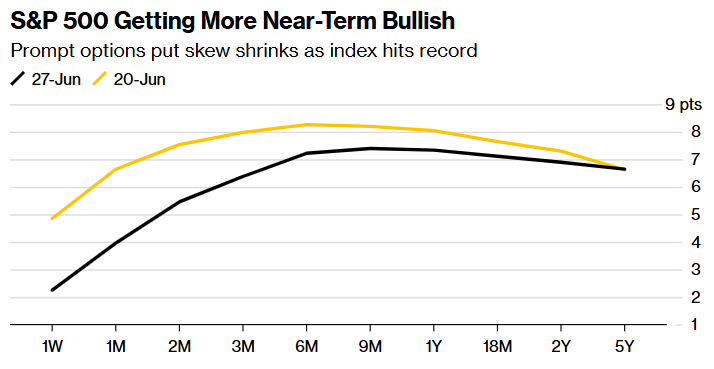
Group 1 - The U.S. stock market reached a historical high last week, while energy futures prices declined due to easing tensions in the Middle East [1] - Investors are showing increased optimism in the short term, as the premiums for put options are decreasing, but long-term sentiment remains cautious with little change in market preferences [1][2] - The Chicago Board Options Exchange Volatility Index (VIX) long-term contracts are still at elevated levels, indicating ongoing concerns about the economic impact of tariffs [1] Group 2 - There are signs of investors buying VIX options, with the VVIX index dropping below 90, a level not seen since July of the previous year [2] - The oil market has not fully recovered from the Israel-Iran conflict, with Brent crude implied volatility returning to levels seen in early June, indicating no strong bullish or bearish sentiment [2] - A mixed trading strategy involving stocks and oil has been suggested, as geopolitical tensions could lead to rising oil prices while high interest rates may pressure stock prices [2] Group 3 - Hedge funds and large asset managers have significantly reduced their net long positions in Brent crude futures and options, marking the largest decline since early April [5] - In the European gas market, the net short position of trend-following commodity trading advisors (CTAs) increased from 9% to 18%, complicating market operations for traders holding physical assets [5] Group 4 - There is unprecedented interest in crude oil futures spread trading, with open interest in related options reaching a historical high [6] - Traders anticipate a potential reversal from short-term supply tightness to oversupply due to increased output from OPEC and other producers, alongside uncertain economic prospects [6] Group 5 - A significant decrease in geopolitical risk premium reflects traders' experiences in managing major geopolitical shocks without significant oil supply disruptions, alongside a trend of moving from substantial inventory reductions to increases [7]