
宗教信仰自由

Search documents
坚持我国宗教中国化方向 团结引导广大信教群众携手共筑中国梦
Si Chuan Ri Bao· 2026-01-06 07:00
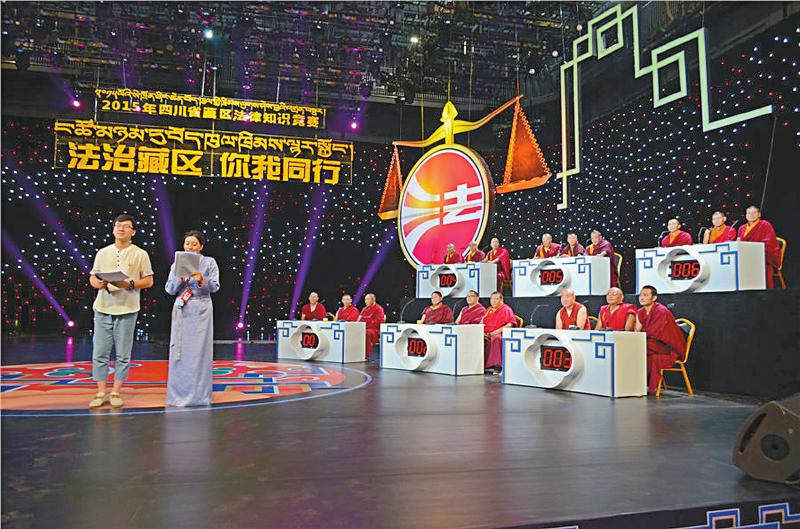
Core Viewpoint - The article highlights the development and management of religious affairs in Sichuan Province over the past 70 years, emphasizing the importance of patriotism, legal governance, and the integration of religion with socialist values. Group 1: Religious Activities and Celebrations - Sichuan Province's religious community celebrated the 70th anniversary of the founding of the People's Republic of China with various activities, including flag-raising ceremonies across over 3,000 religious venues [5] - A "I Love You China" song and dance gala was held by the Christian community to commemorate the anniversary [6] Group 2: Legal Governance of Religious Affairs - The province has prioritized legal governance in religious affairs, with the implementation of the "Regulations on Religious Affairs" in 2005 and its revision in 2017, which are crucial for advancing the legal framework for religious work [8] - Sichuan was the first province to establish its own "Regulations on Religious Affairs" in 2000, and has since developed various local regulations to ensure the safety and management of religious venues [8] Group 3: Promotion of Religious Freedom - The province has consistently upheld the policy of religious freedom, ensuring the basic faith needs of approximately 10 million believers are met, and supporting the construction of patriotic religious organizations [7] - There are over 380 religious organizations established across five major religions in the province, reflecting a commitment to fostering a harmonious relationship between the government and religious communities [7] Group 4: Education and Training in Religious Context - Since 1983, Sichuan has established seven religious schools to train patriotic religious personnel, contributing to the leadership of various religious organizations [7] - The province has implemented legal education programs within religious communities to enhance awareness of laws and regulations related to religious practices [9] Group 5: Integration of Religion with Socialism - The article emphasizes the importance of aligning religious practices with socialist values, encouraging religious communities to adapt their teachings to contemporary Chinese development [12][14] - Various educational activities have been organized to promote the integration of religious teachings with the core socialist values, fostering a positive societal impact [13][15] Group 6: Contributions to Social Welfare - Religious organizations in Sichuan actively participate in charitable activities, providing support to vulnerable groups and contributing to disaster relief efforts during natural calamities [15] - The religious community has engaged in poverty alleviation initiatives, demonstrating their commitment to social responsibility and community support [15] Group 7: International Relations and Cultural Exchange - Sichuan supports independent and respectful international exchanges among religious communities, promoting a positive image of Chinese religions abroad [11] - The province's religious representatives have participated in international conferences, sharing Chinese religious perspectives and countering extremist ideologies [11]

“以族定葬”的困局与出路:论公墓管理的公共性回归
Zheng Quan Ri Bao· 2025-11-02 23:34
Core Viewpoint - The article discusses the need to reform the management model of Hui Muslim cemeteries in Guangzhou, advocating for a shift from ethnicity-based burial practices to a system that respects individual religious beliefs and funeral wishes, thereby promoting equality and inclusivity in burial practices [2][6][7]. Group 1: Current Management Issues - The current management of Hui Muslim cemeteries by the Islamic Association stems from historical policies aimed at respecting the burial customs of the Islamic minority, but this model has become problematic as it binds ethnic identity to religious affiliation [6]. - The "ethnicity-based burial" approach undermines individual religious freedom, as it assumes that all Hui individuals must adhere to Islamic burial practices, disregarding those who may not practice Islam or who may have converted to other religions [6][7]. - Allowing religious organizations to manage public burial facilities blurs the lines between religion and government, which contradicts the principle of separation of church and state [6]. Group 2: Proposed Reforms - The article calls for the gradual adjustment of the Hui Muslim cemetery management model, suggesting the elimination of single-ethnicity cemeteries and their incorporation into the public management framework of civil affairs [2][7]. - It proposes that access to Hui cemeteries should be based on the deceased's religious beliefs or funeral wishes rather than their ethnic identity, allowing for a more inclusive approach [2][7]. - Religious organizations should be permitted to provide religious services under government supervision but should not have control over cemetery management, ensuring the protection of minority rights while maintaining legal uniformity [2][7].
点赞新疆发展成果 领略文化交融魅力——活力新疆让参访外媒记者印象深刻
Xin Hua Wang· 2025-07-10 01:40
Core Insights - The article highlights the positive development outcomes in Xinjiang, showcasing the harmonious life of its diverse ethnic groups and the economic growth driven by new productive forces [1][3]. Group 1: Happiness and Harmony of Ethnic Groups - The anti-terrorism and de-radicalization efforts in Xinjiang are seen as beneficial for the interests of all ethnic groups, leading to a peaceful and stable environment [2]. - Journalists from various countries expressed admiration for the religious freedom enjoyed by the local population, as observed during visits to mosques and cultural sites [2]. - The transformation of local communities, such as the improvement in access to clean drinking water, was highlighted as a significant achievement contributing to the well-being of residents [2]. Group 2: Economic Development Driven by New Productive Forces - New productive forces, including modern agricultural practices and advanced industrial technologies, are crucial for Xinjiang's economic and social development [3]. - Innovations in agriculture, such as the use of high-temperature conditions for vehicle testing and the cultivation of salt-tolerant rice, were noted as impressive advancements [3]. - The application of high-end technologies is creating jobs and improving living standards, with Xinjiang's potential as a core area of the Silk Road Economic Belt being emphasized [3]. Group 3: Cultural Heritage and Diversity - The cultural richness and diversity of Xinjiang were highlighted, with foreign journalists praising performances that showcase the region's artistic heritage [4]. - The preservation and transmission of cultural history were recognized as vital, with local museums serving as educational platforms for younger generations [5]. - The overall experience of visiting historical sites and cultural landmarks left a lasting impression on international visitors, enhancing their appreciation for China's cultural efforts [5].