
文化传承与保护

Search documents
中央民族大学原创舞剧《她的龟兹》登台国家大剧院 演绎千年龟兹乐舞
Xin Lang Cai Jing· 2026-01-20 08:38
Core Viewpoint - The original dance drama "Her Kucha" by Minzu University of China showcases the cultural heritage of Kucha through a modern narrative, blending traditional elements with contemporary expression [1] Group 1: Cultural Integration - The drama incorporates Kucha murals and musical dance heritage, telling the story of a mural restorer witnessing the glory of ancient Kucha [1] - It achieves a fusion of traditional and modern elements, creating a narrative that transcends time and space while expressing profound cultural themes [1] Group 2: Artistic Inspiration - The creative team conducted multiple field trips to Xinjiang to study the dance postures, clothing styles, and musical instruments depicted in Kucha murals [1] - The character of a restorer from the Kumtura Grottoes serves as inspiration, guiding the audience to experience the beauty and history of Kucha murals [1] Group 3: Cultural Awareness - The drama encourages viewers to reflect on their role in cultural preservation and transmission, emphasizing that Kucha is not just "her" Kucha but everyone's Kucha [1] - It serves as a vivid practice in strengthening the consciousness of the Chinese national community through artistic expression [1]
展现中华文化多元之韵
Ren Min Ri Bao Hai Wai Ban· 2025-12-25 01:20
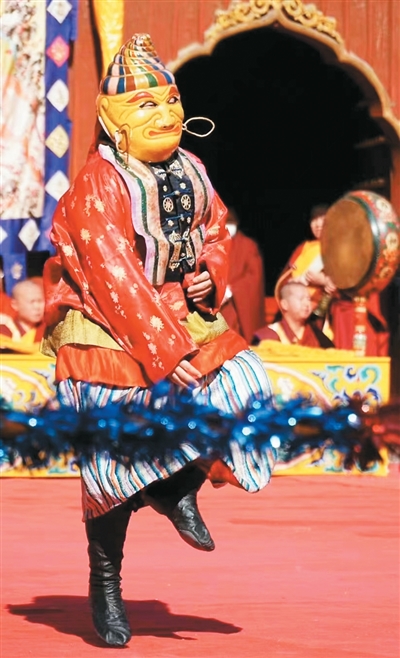
Core Viewpoint - The article highlights the significance of the Qiangmu dance as a cultural heritage of Tibet, emphasizing its historical roots, artistic value, and ongoing efforts for preservation and promotion in contemporary society [6][7]. Group 1: Historical Significance - Qiangmu, with origins tracing back to the 8th century, was established by Padmasambhava during the consecration of Samye Monastery, initially serving purposes of purification and blessing [6]. - The dance has evolved over centuries, integrating elements from folk dances and becoming a cultural treasure that embodies religious beliefs and local customs [6]. Group 2: Preservation Efforts - In the 1990s, Qiangmu faced a crisis of transmission, with few young practitioners remaining and mask-making skills nearing extinction [7]. - The government and local authorities have implemented various measures for preservation, including identifying inheritors, establishing training centers, and incorporating Qiangmu into intangible cultural heritage tourism routes [7]. Group 3: Cultural Exchange and Promotion - Qiangmu has gained wider recognition through cross-regional exchanges and cultural tourism, with performances in Hong Kong and Macau attracting significant attention [7]. - The dance has been featured in international tourism expos, showcasing its blend of religious solemnity and folk vibrancy, leading to interest from cultural tourism organizations for collaboration [7]. Group 4: Performance Elements - Each movement and gesture in Qiangmu is highly structured, reflecting the daily lives of Tibetan people, with specific steps designed to create atmosphere and engage the audience [8][9]. - The performance incorporates various traditional instruments, such as the horn and drum, which enhance the ceremonial ambiance and are considered essential for communication with the divine [10]. Group 5: Mask Craftsmanship - Qiangmu masks are intricate works of art that symbolize the fusion of craftsmanship and belief, with colors representing different virtues and roles within the performance [11][12]. - The creation of these masks involves meticulous processes, taking months or even years to complete, and they are treated with great reverence [11]. Group 6: Modern Adaptations - Qiangmu performances have adapted to modern contexts, such as at Yonghe Temple in Beijing, where traditional elements are preserved while also being tailored to contemporary audiences [12][13]. - The "sending away of evil" ritual has become a distinctive cultural activity in Beijing, reflecting the integration of Qiangmu into local customs and community life [13].

铺展故宫博物院百年长卷
Ren Min Ri Bao Hai Wai Ban· 2025-10-20 22:53
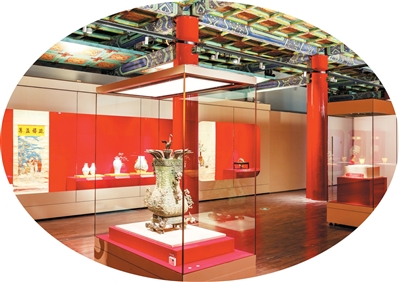
Core Viewpoint - The Palace Museum is celebrating its 100th anniversary with a major exhibition titled "Centennial Guardianship - From the Forbidden City to the Palace Museum," showcasing 200 selected cultural relics that highlight the museum's century-long journey and its commitment to cultural preservation and innovation [8][9]. Group 1: Exhibition Overview - The exhibition is divided into three sections: "Cultural Heritage," "Centennial Legacy," and "Diverse Manifestations," featuring a total of 200 artifacts [8]. - The narrative combines artifacts and archival documents to comprehensively present the development of the Palace Museum over the past century [9]. Group 2: Historical Significance - The Palace Museum was established on October 10, 1925, transforming from a restricted imperial palace into a cultural institution open to the public [11]. - During the Second Sino-Japanese War, the museum undertook the largest and longest cultural relic relocation in history, successfully preserving thousands of artifacts [11]. Group 3: Notable Artifacts - The exhibition includes significant pieces such as the "Five Cows" painting, which is the earliest existing paper painting, and the "Qingming Shanghe Tu," a famous silk scroll depicting life in the Northern Song Dynasty [12][13]. - The "Baiyuan Tie," a calligraphy work from the Eastern Jin Dynasty, is highlighted as a rare treasure that was repurchased from Hong Kong in 1951 [12]. Group 4: Cultural Representation - The exhibition emphasizes the importance of the Palace Museum in promoting Chinese civilization and cultural identity, showcasing artifacts that reflect the rich history and diversity of Chinese culture [16][17]. - Key artifacts like the "Golden Cup of Eternal Stability" symbolize the stability and prosperity of the nation, while others illustrate the cultural exchanges along the ancient Silk Road [17].
点赞新疆发展成果 领略文化交融魅力——活力新疆让参访外媒记者印象深刻
Xin Hua Wang· 2025-07-10 01:40
Core Insights - The article highlights the positive development outcomes in Xinjiang, showcasing the harmonious life of its diverse ethnic groups and the economic growth driven by new productive forces [1][3]. Group 1: Happiness and Harmony of Ethnic Groups - The anti-terrorism and de-radicalization efforts in Xinjiang are seen as beneficial for the interests of all ethnic groups, leading to a peaceful and stable environment [2]. - Journalists from various countries expressed admiration for the religious freedom enjoyed by the local population, as observed during visits to mosques and cultural sites [2]. - The transformation of local communities, such as the improvement in access to clean drinking water, was highlighted as a significant achievement contributing to the well-being of residents [2]. Group 2: Economic Development Driven by New Productive Forces - New productive forces, including modern agricultural practices and advanced industrial technologies, are crucial for Xinjiang's economic and social development [3]. - Innovations in agriculture, such as the use of high-temperature conditions for vehicle testing and the cultivation of salt-tolerant rice, were noted as impressive advancements [3]. - The application of high-end technologies is creating jobs and improving living standards, with Xinjiang's potential as a core area of the Silk Road Economic Belt being emphasized [3]. Group 3: Cultural Heritage and Diversity - The cultural richness and diversity of Xinjiang were highlighted, with foreign journalists praising performances that showcase the region's artistic heritage [4]. - The preservation and transmission of cultural history were recognized as vital, with local museums serving as educational platforms for younger generations [5]. - The overall experience of visiting historical sites and cultural landmarks left a lasting impression on international visitors, enhancing their appreciation for China's cultural efforts [5].