官员腐败

Search documents
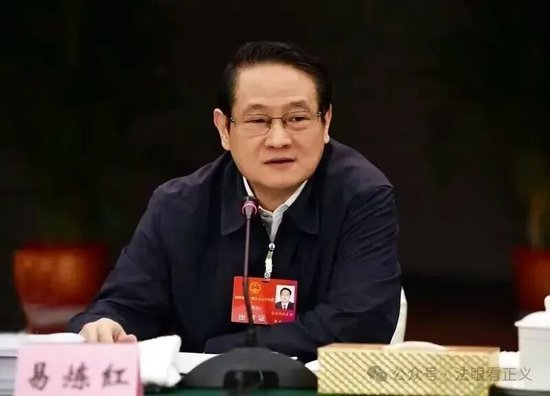
易炼红之子浮出水面!越挖越狗血
Xin Lang Cai Jing· 2026-02-23 14:22
Core Viewpoint - The fall of Yi Lianhong, a prominent official known for his eloquence and scholarly background, has shocked many, revealing issues of nepotism and corruption within his family [1][14]. Group 1: Background and Career - Yi Lianhong had a strong theoretical foundation and administrative experience, starting from a grassroots teaching position and holding significant roles across various provinces [3][16]. - During his tenure in Hunan, Jiangxi, and Zhejiang, he was known for his impactful speeches and writings, often quoting a poem to express his commitment to integrity [3][19]. Group 2: Allegations and Family Involvement - Reports indicate that Yi Lianhong engaged in nepotism, promoting close associates and allowing his family to benefit from his position, particularly his son, Yi Shiwei, who became known as one of Hunan's "seven young masters" [6][20]. - Yi Shiwei transitioned from a government role to the private sector, establishing a company that secured lucrative contracts, raising questions about the influence of his father's position [8][22]. Group 3: Financial Implications - Yi Shiwei's financial gains from his father's influence were substantial, with bonuses exceeding millions, contrasting sharply with typical public servant salaries [10][24]. - The relationship between Yi Lianhong's political power and his son's business success exemplifies a troubling intertwining of governance and personal gain [12][27]. Group 4: Consequences and Reflections - The narrative suggests that the pursuit of wealth and power through familial connections ultimately leads to personal and familial ruin, as illustrated by Yi Lianhong's downfall [29][30]. - The story serves as a cautionary tale about the long-term implications of using power to create shortcuts for one's children, emphasizing the need for integrity and foresight in parenting [28][29].

湖北F4之周先旺
Xin Lang Cai Jing· 2026-01-16 08:07
Core Viewpoint - The article reveals serious corruption and misconduct by former Wuhan mayor Zhou Xianwang, detailing his illicit activities, including bribery, abuse of power, and personal enrichment during his tenure from 2018 to 2021 [1][2][3]. Group 1: Corruption and Misconduct - Zhou Xianwang was found to have stored 290 boxes of Maotai liquor, 160 bottles of Lafite wine, and large sums of cash, including RMB 6.3 million, USD 580,000, and HKD 320,000 [1][2]. - He directly intervened in the adjustment of 41 positions at the department level and received "thank you fees" totaling over RMB 52 million, turning the selection of officials into a "bidding war" [1][3]. - During the COVID-19 pandemic, he sought a "sealing charm" to silence media criticism and public complaints, demonstrating a disregard for transparency [2][3]. Group 2: Abuse of Power - Zhou appointed 19 "connected individuals" to state-owned enterprises, with some lacking even a college degree [3][9]. - In June 2020, a hospital vice president position was filled based on bribes of RMB 300,000, RMB 500,000, and RMB 800,000, with the highest bidder winning the role [3][10]. - His wife, who was a teacher, received RMB 43 million in consulting fees from 15 companies that required his approval for government projects [3][10]. Group 3: Personal Enrichment - Zhou's son registered a shell company in the U.S. to handle procurement orders for epidemic prevention materials, making a profit of 30% and accumulating RMB 120 million in just three months [3][10]. - Zhou maintained inappropriate relationships with 11 women, with some allegedly exchanging sexual favors for contracts, including a notable case where a project manager secured an 800 million RMB contract [4][10]. - He facilitated the sale of 12,000 acres of land at a price of RMB 30 million per acre, significantly below the market rate of RMB 120 million, leading to a loss of at least RMB 9 billion in state assets [4][11].
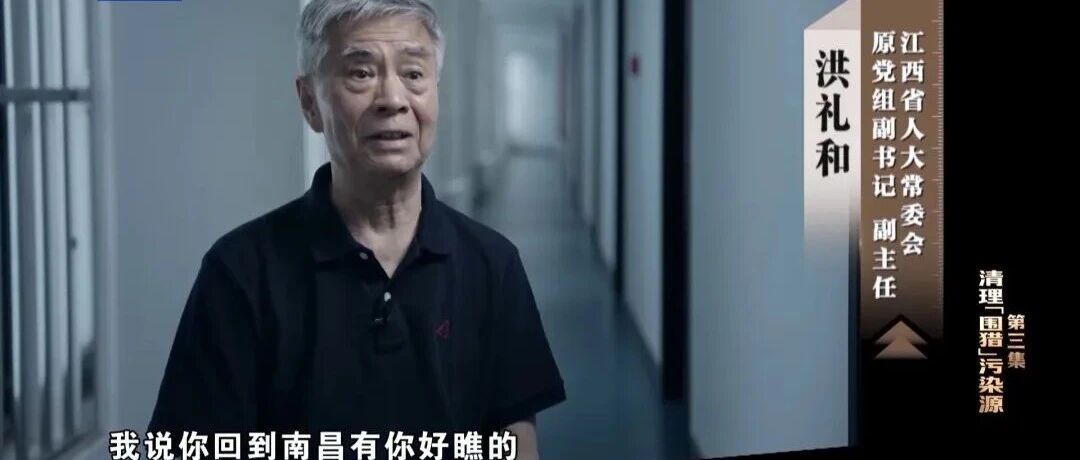
当过副省长,曾在机场与乘客对骂!副部级洪礼和还恶狠狠地威胁女拍照者:回到南昌,有你好瞧的
中国基金报· 2026-01-13 14:17
Core Viewpoint - The article discusses the case of Hong Lihe, a former deputy director of the Jiangxi Provincial People's Congress, highlighting his corruption and abuse of power, which led to his downfall and the broader implications for governance and anti-corruption efforts in China [2][6][38]. Group 1: Case Analysis - Hong Lihe's corruption stemmed from personal greed and a sense of invincibility, leading him to misuse public power for personal gain [3][10]. - He was involved in a significant bribery case with businessman Deng Kaiyuan, who used financial incentives to corrupt officials for his business interests [8][15]. - The investigation revealed that Hong Lihe facilitated illegal business dealings, including allowing a company to bypass regulations to acquire state assets [14][20]. Group 2: Network of Corruption - Hong Lihe created a "small circle" of officials who benefited from mutual support and corruption, undermining the integrity of the political ecosystem in Jiangxi [32][36]. - Key members of this circle, such as Wang Shuiping and Yao Diming, were involved in various corrupt activities, including facilitating land deals and promotions in exchange for favors [30][34]. - The article emphasizes the interconnectedness of these corrupt relationships, illustrating how they perpetuated a cycle of corruption and favoritism [36][37]. Group 3: Consequences and Reforms - Following the exposure of his corruption, Hong Lihe was expelled from the party and faced legal consequences, serving as a warning to others involved in similar activities [37][38]. - The article highlights the Chinese government's commitment to combating corruption through legal reforms and stricter penalties for bribery and related crimes [38].
商人多付数百万元买贪官的老房子
Xin Lang Cai Jing· 2026-01-13 00:14
Group 1 - The article reveals a corruption case involving former official Luo Baoming, who engaged in a scheme to exchange old properties for new ones with a businessman, Zhang, as a means of concealing illegal transactions [1] - Luo Baoming's wife indirectly initiated the property exchange by mentioning their old houses, leading to a high-priced sale that masked the corrupt dealings [1] - The transaction involved a significant markup, with the businessman purchasing Luo's old property at a price several million higher than the market value, indicating a clear abuse of power for personal gain [1] Group 2 - Luo Baoming used his official position to facilitate business opportunities for another businessman, Du, in exchange for financial benefits disguised as real estate transactions [1] - The article highlights the broader implications of corruption within government officials, showcasing how personal relationships and power can lead to unethical practices in public service [1] - The case exemplifies the ongoing issues of corruption in China, particularly among high-ranking officials, and the methods used to obscure illicit activities [1]
靠电力吃电力,贾振国被“双开”
Zhong Guo Qing Nian Bao· 2025-12-25 13:12
Core Viewpoint - The article reports on the expulsion of Jia Zhengguo, a former official in Inner Mongolia's power sector, due to serious violations of party discipline and law, including corruption and abuse of power [1][3]. Group 1: Violations and Disciplinary Actions - Jia Zhengguo was found to have lost his ideals and violated political discipline by resisting organizational investigations [3]. - He disregarded the central government's eight-point regulations by accepting gifts and extravagant hospitality beyond normal social customs [3]. - His actions included using his position to benefit others in employment and accepting bribes, leading to severe violations of multiple disciplinary codes [3]. - The disciplinary actions taken against him included expulsion from the party and removal from public office, with his case being forwarded to the prosecution for criminal investigation [3]. Group 2: Background and Career - Jia Zhengguo, born in July 1964, has a long history in the power sector, having held various positions since the 1980s, including roles in the Inner Mongolia Electric Power Company and Baotou Steel Group [4]. - He served as the chairman of Inner Mongolia Electric Power Company from 2019 until his recent downfall in June 2023 [4]. - His career trajectory highlights a significant connection between his roles in the power industry and the corruption charges he faced [5].