实时全球支付结算(RTP)

Search documents
AI时代的超级连接器:蚂蚁国际想象Fintech 3.0
Xin Lang Cai Jing· 2025-12-11 10:10
Core Insights - The core mission of fintech in the Asia-Pacific region is to connect transactions and enable all markets and businesses to overcome long-term economic turbulence, gaining access to global reach previously reserved for multinational corporations [2][20]. Group 1: Financial Services Challenges - Emerging markets, particularly in the Asia-Pacific region, face multiple financial service challenges, including high local payment barriers, fragmented global liquidity, and decreased visibility in multi-market fund management [2][18]. - These obstacles particularly hinder small and medium-sized enterprises (SMEs), widening the competitive gap with large multinational companies [2][18]. Group 2: Fintech 3.0 Vision - Ant Group is accelerating investments in a Fintech 3.0 vision characterized by an open ecosystem, multi-dimensional payment innovations, and trusted security technology [5][20]. - The focus is on establishing cross-border and cross-system connectivity to create a compliant, low-friction, and high-efficiency global payment ecosystem [6][21]. Group 3: Payment Innovations - Ant Group's Alipay+ has partnered with 40 major e-wallets and over 10 national QR code networks, covering more than 100 markets, allowing over 150 million merchants to seamlessly access mainstream payment methods in the Asia-Pacific region [6][21]. - The introduction of real-time payment pathways between mobile payment systems and traditional card banking systems is a significant breakthrough, enabling users to make contactless payments through NFC technology [7][22]. Group 4: AI and Payment Technology - AI and blockchain technologies are driving profound changes in the payment sector, with Ant Group focusing on agentic payments that assist in complex tasks beyond simple transactions [9][24]. - The company is developing an AI service platform, GenAI Cockpit, to provide customized solutions for fintech companies in countries like Malaysia and Pakistan [10][25]. Group 5: Real-Time Payment and Forex Management - Real-time global payment settlement (RTP) is a key area of focus, allowing businesses to achieve 24/7 settlement and significantly reduce delays and costs associated with traditional banking networks [10][26]. - Ant Group's AI model, Falcon, is designed to manage foreign exchange needs, processing $15 trillion in funds by 2025 and helping clients reduce hedging costs by 40% [11][26]. Group 6: Security and Trust - Ant Group is investing in advanced privacy computing architectures to ensure data protection while sharing business insights securely [15][30]. - The introduction of the Alipay+ GlassPay smart glasses payment solution incorporates advanced biometric verification methods, enhancing security in digital transactions [12][27]. Group 7: Empowering SMEs - The launch of the AI operational app EPOS 360 aims to provide SMEs with insights and responsiveness comparable to large institutions, representing a significant opportunity for inclusive financial growth [16][31].

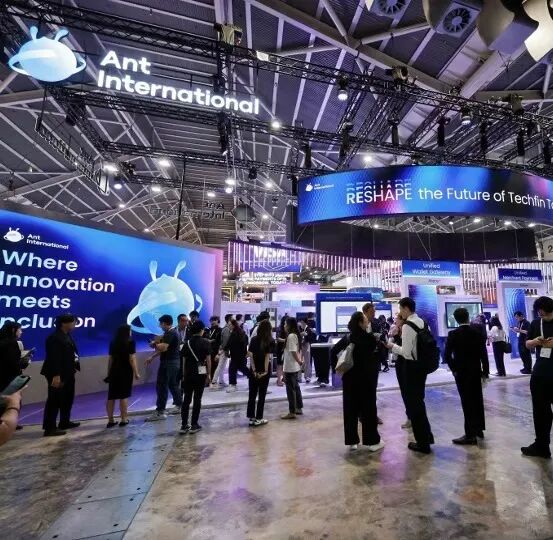
AI时代的超级连接器:蚂蚁国际想象Fintech 3.0
经济观察报· 2025-12-11 08:38
Core Insights - The core mission of fintech in the Asia-Pacific region is to connect transactions and enable all markets and enterprises to overcome long-term disruptions, achieving true economic growth and global reach previously reserved for multinational corporations [2][4]. Group 1: Financial Services Challenges - Emerging markets, particularly in the Asia-Pacific region, face multiple financial service challenges, including high local payment barriers, fragmented global liquidity, and decreased visibility in multi-market fund management [2]. - These challenges particularly hinder small and medium-sized enterprises (SMEs), widening the competitive gap with large multinational companies [2]. Group 2: Fintech 3.0 Vision - Ant Group is accelerating investment in a Fintech 3.0 vision characterized by an open ecosystem, multi-dimensional payment innovations, and trusted security technology [4]. - The company aims to establish a compliant, low-friction, and high-efficiency global payment ecosystem by promoting collaboration between public and private sectors across different regions and payment systems [5]. Group 3: Payment Innovations - Ant Group's Alipay+ has partnered with 40 major e-wallets and over 10 national QR code networks, covering more than 100 markets, allowing over 150 million merchants to seamlessly access major payment methods in the Asia-Pacific region [5]. - The introduction of real-time payment pathways between mobile payment systems and traditional banking systems is a significant breakthrough, enabling users to make instant payments at POS networks [6]. Group 4: AI and Payment Transformation - AI and blockchain technologies are driving profound changes in the payment sector, with Ant Group focusing on developing agentic payment solutions that assist in complex tasks beyond simple transactions [7]. - The company has launched Antom Copilot, an AI assistant for merchants, which simplifies onboarding and payment integration processes [8]. Group 5: Real-Time Payment and Forex Management - Real-time global payment settlement (RTP) is a key area for Fintech 3.0, allowing businesses to achieve 24/7 real-time settlements and improve liquidity management [9]. - Ant Group's Falcon AI model processed $15 trillion in funds in 2025, helping clients reduce forex hedging costs by 40% [9]. Group 6: Security Innovations - Ant Group introduced Alipay+ GlassPay, a smart glasses payment solution featuring advanced biometric identification methods, enhancing security in payment transactions [11][13]. - The company has developed the AI SHIELD TRANSFORMER risk control model, which processes over 720,000 transactions per minute with a high accuracy rate in identifying high-risk transactions [14]. Group 7: Privacy and Data Protection - Ant Group is investing in advanced privacy computing architectures to ensure data protection while sharing business insights securely [15]. - The establishment of the "Digital Wallet Guardians Alliance" aims to promote security technology sharing and best practices among partners [15]. Group 8: The Future of Fintech - The emergence of Fintech 3.0 represents a "super connector" era, integrating various payment tools and accounts, AI practices, transaction processes, and growth resources [16]. - Ant Group's new AI operational app, EPOS 360, aims to provide SMEs with insights and responsiveness comparable to large institutions, promoting inclusive growth [16].