隐私计算

Search documents
中国新闻网:国家超算互联网武汉节点实现全载接入
Zhong Guo Xin Wen Wang· 2026-02-12 06:58
Core Viewpoint - The Wuhan node of the National Supercomputing Internet officially achieved full-load access and is now operational, aiming to enhance regional computing power supply quality [1] Group 1: Computing Power and Applications - The Wuhan node can provide over 100 PFlops of computing power services, supporting strategic emerging industries such as artificial intelligence, biomedicine, and high-end manufacturing [1] - An intelligent scheduling system will enable efficient collaboration with other computing power hubs across the country, optimizing resource allocation efficiency [1] Group 2: Research and Innovation - The Network Space Security Academy (under preparation), Wuhan University, and Huazhong University of Science and Technology are the first experience units for the Wuhan node, focusing on cutting-edge research in privacy computing, intelligent security, and interdisciplinary innovation [1] - The National Cybersecurity Base Industry Alliance and Sugon are collaborating to build a domestic computing power security ecosystem, aiming to develop a domestic supercomputing security protection system [1] Group 3: Future Development - The Wuhan node will continue to expand its application scenarios in scientific research, industrial transformation, and social governance, empowering intelligent upgrades across various industries [1]
创新集团一体化服务体系 支持科技金融发展
Jin Rong Shi Bao· 2026-02-11 01:43
Core Viewpoint - The Bank of Communications is focusing on technology finance as a key business feature and development direction, aiming to build an integrated service system to support technology-driven enterprises [1] Group 1: Integrated Technology Finance Service System - The construction of the integrated technology finance service system began in August 2022, with a target framework of "1+3+N" [1] - "1" refers to establishing a unified collaborative mechanism across the group, leveraging its full license advantages [1] - "3" indicates the creation of three core advantages, including the "Jiao Yin Ke Chuang" brand and a "4+3" product service system [1] - "N" signifies the development of personalized marketing solutions for technology enterprises based on intelligent technology [1] Group 2: Technical Architecture and Business Functions - The system is built on a data platform that integrates risk control, operations, and marketing capabilities, creating over 800 model indicators [2] - It incorporates technologies such as artificial intelligence, blockchain, and privacy computing to provide comprehensive financial service solutions [2] - The bank emphasizes security across five areas: system, network, data, AI applications, and compliance [2] Group 3: Product and Service Offerings - The bank offers tailored financial products and services for different stages of enterprise development, including quick loans and equity investments for startups [3] - For growing enterprises, it provides customized services that link investment and loans, while mature enterprises receive comprehensive financial solutions [3] Group 4: Technical Innovations in Service System - The bank utilizes privacy computing and blockchain to break down data barriers, enabling efficient and compliant data transmission [4] - It employs layered example graphs to assess risks and identify low-risk target enterprises, optimizing marketing paths through knowledge graphs [4] - Over 800 rule models and more than 20 AI application scenarios have been developed to enhance service efficiency across the entire process [4] Group 5: Marketing Intelligence for Technology Enterprises - The bank has created a marketing intelligence system for technology enterprises, enabling real-time marketing decision-making tailored to enterprise lifecycle and regional characteristics [5] - Client managers can quickly generate marketing reports that include customer information and business opportunities, while also monitoring risks and discovering new opportunities [5]

中国电子信息产业发展研究院院长张立:完善面向未来产业的要素供给体系
Ren Min Ri Bao· 2026-02-10 00:46
Group 1 - The core viewpoint emphasizes the need for a comprehensive supply system of capital, talent, data, and policies to drive the breakthrough development of future industries [1] - Future industries require traditional factors like capital and talent to upgrade their connotations, while new factors such as data and policies play a crucial role [1] - The development cycle of future industries is long and risky, necessitating patient capital that can tolerate uncertainties and accept failures for long-term investment returns [1] Group 2 - Initial achievements have been made in the supply of factors for future industries, but challenges remain, including insufficient patient capital and mismatches between capital and industry cycles [2] - The talent cultivation system is accelerating but faces issues such as a shortage of interdisciplinary talent and inadequate evaluation mechanisms for long-term, high-risk research [2] - The top-level design for data factors is taking shape, yet the assetization of data is hindered by unclear property rights and barriers to cross-institutional sharing [2] Group 3 - Policies should create an inclusive and safe institutional environment, guiding capital to gather resources in high-potential areas, while data empowers intelligent innovation and industrial collaboration [3] - Agile governance policies should be optimized, including the implementation of "regulatory sandboxes" and negative list management to establish dynamic rule generation mechanisms [3] - Long-term capital should be leveraged to attract resources, with increased fiscal support for basic research and incentives for funds that successfully cultivate core enterprises in future industries [3]
2025海外仓融资企业实力排名重磅发布
Sou Hu Cai Jing· 2026-02-03 04:47
Core Insights - The article highlights that Zhangjin Technology has been recognized in the "2025 Overseas Warehouse Financing Enterprise Strength Ranking" for its innovative integration of technology, data, and finance, placing it among industry leaders like JD Technology and Ping An Bank [1] Group 1: Company Overview - Zhangjin Technology has developed a unique competitive advantage by creating a complete closed-loop for "financial services + industry going overseas" [1] - The company has established a physical service center that has attracted over 60 financial institutions and major industry players, providing a one-stop solution for foreign trade and cross-border e-commerce [1] Group 2: Product Offerings - The company has launched three core products to address financing pain points in overseas warehouse scenarios, including an import e-commerce credit loan for sellers on platforms like Tmall International and JD International, which does not require collateral [3] - It offers a financing solution for import traders to address procurement cash flow issues and a pledge service for imported goods stored in bonded warehouses, which helps to activate static assets [3] Group 3: Technological Support - The products are supported by advanced technologies such as big data, blockchain, and privacy computing, ensuring the authenticity and traceability of pledged assets through blockchain tracking [3] - Artificial intelligence is utilized to analyze cross-border transaction and warehousing data, allowing for precise credit assessments and reduced risk management costs [3] Group 4: Market Positioning - Zhangjin Technology's comprehensive service model is particularly beneficial for manufacturing and consumer goods companies looking to expand into emerging markets while solidifying their presence in established European markets [3] - The recognition in the ranking underscores the company's leading capabilities in the field of data and physical integration, providing new financing options that are more adaptable to specific scenarios for cross-border enterprises [3]


天融信:目前腾讯元宝暂未应用到公司产品
Zheng Quan Ri Bao Wang· 2026-01-28 14:11
Group 1 - The company Tianrongxin (002212) is engaging in deep cooperation with Tencent across multiple areas including threat intelligence, large model security, cloud security, privacy computing, and smart cities [1] - Currently, Tencent's Yuanbao has not been applied to the company's products, but the company has initiated collaboration with Tencent's Hongyuan large model [1]

医渡科技宫如璟达沃斯之行:密集开展国际对话,释放AI医疗价值与全球合作战略
Sou Hu Cai Jing· 2026-01-26 08:01
Core Insights - The founder and chairwoman of the company participated in the World Economic Forum's 56th Annual Meeting, engaging in high-level discussions on the intelligent transformation of the healthcare industry and the role of AI in addressing global health challenges [1][3][5]. Group 1: AI and Healthcare Resilience - The company emphasized the importance of AI and big data in enhancing public health system resilience and addressing new health challenges driven by climate change [1]. - AI healthcare enterprises can leverage technology to monitor climate-sensitive disease trends and innovate chronic disease management, thereby improving societal health resilience [1]. Group 2: AI in Health Security - The company highlighted the critical role of AI in infectious disease monitoring, drug development, and health management during discussions on reconstructing health security [3]. - The use of federated learning and privacy computing technologies is being implemented to enhance data security while improving model training efficiency across regions [3]. Group 3: China's AI Healthcare Development - The company discussed China's unique advantages in AI healthcare, including rich application scenarios, an improving data ecosystem, and strong policy support [5]. - The global value of China's experience lies not only in technological breakthroughs but also in systematic implementation capabilities and efficient localization models [5]. Group 4: Global Collaboration and Innovation - The company is actively building and expanding its collaboration network through bilateral meetings with key stakeholders, including government officials and industry leaders [7]. - A significant partnership was announced with Novartis for a cardiovascular disease prevention project, showcasing the company's commitment to AI-driven healthcare solutions [7]. Group 5: Contribution to Global AI Healthcare Ecosystem - The company's presence at the forum underscored the role of new-generation Chinese tech entrepreneurs in contributing to global wisdom and fostering cross-sector collaboration for a resilient future [8].

毕马威:2025年毕马威中国金融科技企业双50报告
Sou Hu Cai Jing· 2026-01-13 01:52
Core Insights - The 2025 KPMG China FinTech Dual 50 Report marks the 10th anniversary of the selection, showcasing the industry's development during the critical period of the "14th Five-Year Plan" [1] - FinTech is transitioning from "digitalization" to "intelligentization," becoming a vital engine for serving the real economy, with "pragmatism" and "deepening" as the main themes of industry development [1][2] - The report highlights a significant concentration of companies in major urban areas, with Beijing, Shanghai, and Shenzhen leading the first tier, and the Yangtze River Delta, Guangdong-Hong Kong-Macau, and Beijing-Tianjin-Hebei regions accounting for 88% of the total [1][2] Company Composition - 90% of the listed companies have been established for over five years, while the proportion of companies founded within the last three years has increased to 6%, indicating a collaborative development between established and emerging players [1] - Over 80% of the listed companies have more than 40% of their workforce in technology roles, emphasizing the importance of core technical talent as a support for industry innovation [1][2] Technology Application - Artificial intelligence continues to lead, with 92% of the listed companies utilizing technological elements, collaborating deeply with big data and blockchain technologies, and penetrating core scenarios such as investment research and risk control [2] - The application of large models and intelligent agents is moving beyond conceptual phases, with a "collaborative model" reducing costs and improving response times, while multi-agent collaboration significantly enhances the accuracy of complex task handling [2] Industry Trends - FinTech services are penetrating the entire lifecycle of technology companies, utilizing intelligent credit assessments to meet diverse financing needs at different stages [2] - The industry is entering a 2.0 era of going global, forming a "dual market" model that promotes inclusive financial services in emerging markets while building competitive advantages through technology exports in mature markets [2] Capital Market Insights - 63% of the listed companies have IPO plans, with Hong Kong and domestic markets being the primary destinations for listings, and some companies adopting multi-location listing strategies [2] - As technological innovation deepens and regulatory frameworks improve, FinTech is expected to continue advancing in core technological breakthroughs, application scenario expansions, and enhancements in self-controllable capabilities, injecting lasting momentum into high-quality industry development [2]





数字金融发展之路的科技创新与实践要求
Jin Rong Shi Bao· 2026-01-12 03:52
Core Insights - The article discusses the transformation of digital finance driven by advanced technologies such as big data, artificial intelligence, and blockchain, moving from "connected finance" and "intelligent finance" to "trusted finance" [1] - It highlights the Chinese government's initiatives to accelerate innovation in artificial intelligence and digital technologies, aiming to establish a modern financial system that aligns with the digital economy by 2027 [1][2] - The evolution of digital finance in China is characterized by a shift from quantity-driven growth to quality-driven development, emphasizing the importance of meeting the public's aspirations for better financial services [2] Group 1: Digital Finance Development - Digital finance in China has evolved from early electronic finance to internet finance and now to a quality-oriented digital finance ecosystem, reflecting the adaptability of production relations driven by technology [2] - The introduction of digital currency by the People's Bank of China serves as a foundational infrastructure for digital finance, optimizing financial markets and preventing financial crimes [2] - The 20th National Congress of the Communist Party of China has established the goal of building a strong financial nation, positioning digital finance as a core component of the mainstream financial system [2] Group 2: Technological Innovations - Advanced technologies such as quantum technology, generative artificial intelligence, and virtual reality are reshaping the underlying architecture and service models of digital finance [4] - The rapid iteration of large model technologies is driving the evolution of digital finance, enhancing capabilities in customer service, risk management, and transaction processing [5] - Privacy-enhancing computation technologies are enabling data value circulation while ensuring data security, supporting risk assessment and targeted marketing in financial institutions [5] Group 3: Financial Services and User Experience - Virtual reality technology is transforming user interactions with financial services, providing immersive experiences and enhancing remote financial service delivery [6] - Quantum technology offers efficient solutions for complex financial calculations, improving risk assessment and investment portfolio optimization [6] - Multi-modal biometric authentication technologies are being developed to enhance security and convenience in identity verification for emerging financial scenarios [6] Group 4: Data Integration and Asset Management - Data is recognized as a core production factor in the digital economy, with policies promoting the integration of data elements into financial services to enhance the level of service to the real economy [8] - High-quality financial data sets are essential for the development of digital finance, enabling compliance, risk management, and operational efficiency [9] - The establishment of a trusted data space is crucial for secure data circulation, addressing safety and trust issues in the development of digital finance [9] Group 5: Future Development Paths - The future of digital finance will focus on five development paths: integration of industry and technology, inclusive services, digital infrastructure, original innovation, and open collaboration [11] - The integration of advanced technologies in financial services aims to enhance service delivery and operational efficiency, while also addressing social financing issues [14] - Open collaboration in the financial ecosystem will facilitate cross-border cooperation and the development of innovative financial products for international investors [16]
上海中广云智投:区块链存证技术护航交易透明化
Sou Hu Cai Jing· 2026-01-06 02:41
Core Insights - The digital transformation in the investment sector has shifted from an optional path to a survival imperative, driven by the need for data as a core production factor in investment decisions [1] - Blockchain notarization technology is emerging as a solution to address issues such as data silos, information asymmetry, and trust deficits, facilitating a transition from an "information internet" to a "value internet" [1] Group 1: Blockchain Technology Value - The core value of blockchain notarization technology lies in reconstructing the data trust mechanism, addressing the inefficiencies caused by data being stored in centralized systems [1] - Blockchain's distributed ledger and cryptographic algorithms ensure the authenticity and integrity of transaction records, making data tampering nearly impossible [1] Group 2: Transparency and Traceability - Blockchain notarization technology enables full-process traceability and multi-party governance, allowing real-time verification of transaction authenticity by regulatory bodies, exchanges, intermediaries, and investors [2] - In supply chain finance, blockchain can integrate data from core enterprises, suppliers, financial institutions, and logistics, effectively preventing risks such as duplicate financing and fraudulent trades [2] Group 3: Technological Advancements - The integration of privacy computing technologies like zero-knowledge proofs and homomorphic encryption allows blockchain to maintain data transparency while protecting sensitive information [2] - Breakthroughs in cross-chain interoperability address data silos between different blockchain systems, enhancing asset circulation and value connectivity [2] Group 4: Future Outlook - Blockchain notarization technology is expected to become the "new infrastructure" for digital transformation in the investment sector, moving from pilot applications to large-scale implementation [3] - The convergence of blockchain with technologies like artificial intelligence and the Internet of Things will drive investment transactions towards greater intelligence, automation, and globalization [3]

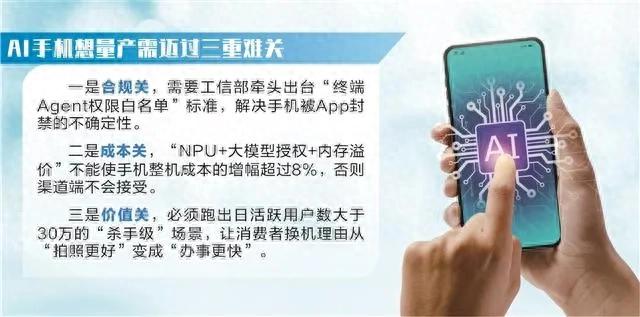
“AI手机”元年将至,量产还需迈过三重难关
Bei Jing Ri Bao Ke Hu Duan· 2025-12-31 07:07
Core Viewpoint - The emergence of AI Agent smartphones is set to revolutionize the mobile industry by 2026, with significant advancements in technology and collaboration among major players [1][10]. Group 1: Industry Trends - The collaboration between Doubao and ZTE has led to the launch of the Doubao AI smartphone, marking a significant step in the development of AI Agent technology [1][4]. - Major smartphone manufacturers, including Huawei, Vivo, and Lenovo, are integrating AI Agent capabilities into their flagship devices, indicating a competitive landscape for AI smartphones [4][5]. - The AI Agent smartphone is seen as a "ticket" to a new era in mobile technology, especially as traditional smartphone sales stagnate [4][5]. Group 2: Development Paths - The industry is divided into two distinct paths: the "radical" approach represented by Doubao, which integrates high-level system permissions, and the "conservative" approach taken by companies like Huawei, which adheres to existing development standards [5][6]. - ZTE's willingness to explore aggressive strategies in AI Agent development is attributed to its lower market share, allowing for more flexibility in innovation [6]. Group 3: Challenges and Concerns - The development of AI Agent smartphones raises concerns regarding user privacy and security, particularly with the potential for malicious exploitation of system permissions [7][8]. - Major applications, including WeChat and banking apps, have begun to block access to Doubao's AI assistant due to security fears, highlighting the tension between innovation and safety [7][8]. - The industry faces multiple hurdles, including compliance, cost, and value, that must be overcome for AI Agent smartphones to achieve mass production by 2026 [10][11]. Group 4: Future Outlook - The successful mass production of AI Agent smartphones hinges on meeting specific technological benchmarks, including processing power and cost efficiency [10][11]. - Experts suggest that the future of AI Agent smartphones will depend on resolving fundamental issues related to data privacy, network latency, and economic sustainability of cloud computing [11].