实际利率差

Search documents
日美央行政策“逆行”,日元仍难走强?
日经中文网· 2025-12-08 02:43
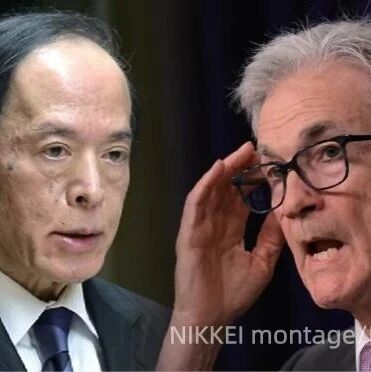
Core Viewpoint - The article discusses the rare occurrence of the Bank of Japan (BOJ) and the Federal Reserve (Fed) implementing opposite monetary policies in the same month, with Japan expected to raise interest rates while the U.S. is anticipated to lower them, impacting the exchange rate of the yen against the dollar [2][4]. Group 1: Monetary Policy Changes - The Fed is expected to lower interest rates by 0.25 percentage points, with about 90% of market participants anticipating this outcome [4]. - The BOJ is projected to raise interest rates with a probability of approximately 90% for a rate hike in December [4][7]. - This simultaneous policy divergence is noted as unprecedented since the current Bank of Japan Law was enacted in 1998 [2][4]. Group 2: Exchange Rate Dynamics - Despite expectations for the yen to appreciate due to Japan's rate hike and the U.S. rate cut, the yen has remained stable around 155 yen per dollar since late November, indicating a lack of movement in the exchange rate [2][4]. - The actual long-term interest rate differential between Japan and the U.S. has narrowed from around 4% to approximately 2%, yet the yen has not strengthened as anticipated [7]. Group 3: Economic and Inflation Concerns - There are growing concerns about inflation in Japan, driven by the expansionary fiscal policies of the current administration, which may lead to sustained inflationary pressures [7]. - In the U.S., the government is considering measures such as lowering certain tariffs to mitigate inflation impacts [7]. - The market's perception of future interest rate differentials between the two countries is cautious, with expectations that they may not narrow significantly [7]. Group 4: Market Predictions and Diverging Views - Analysts have differing views on the future of the yen, with some predicting it will weaken to 158 yen per dollar by the end of 2026, while others foresee a strengthening to 140 yen per dollar [8]. - The BOJ's upcoming policy meeting is seen as a potential turning point for the yen, with expectations that any signals of continued rate increases could shift market sentiment [8].

FT中文网精选:平常心看外资变化:外资因何而来,又因何而去?
日经中文网· 2025-03-06 03:34
Group 1 - The article emphasizes the importance of viewing changes in foreign capital as part of China's overall foreign business model transformation, rather than in isolation [3] - Recent data from the State Administration of Foreign Exchange shows that foreign direct investment liabilities (net inflow of foreign capital) amounted to 32.7 billion yuan (4.5 billion USD), a dramatic decrease of 98.6% compared to 332.3 billion USD in 2021 [4] - The article suggests that the most significant factor influencing cross-border capital flows is the interest rate differential between regions, which affects the actual interest rates and ultimately determines the direction of capital movement [4][5] Group 2 - The article discusses how differences in interest rates can also lead to currency exchange rate differences, where higher interest rates in one region can cause capital to flow into that region and appreciate its currency [5]