实际控制人不当控制风险

Search documents
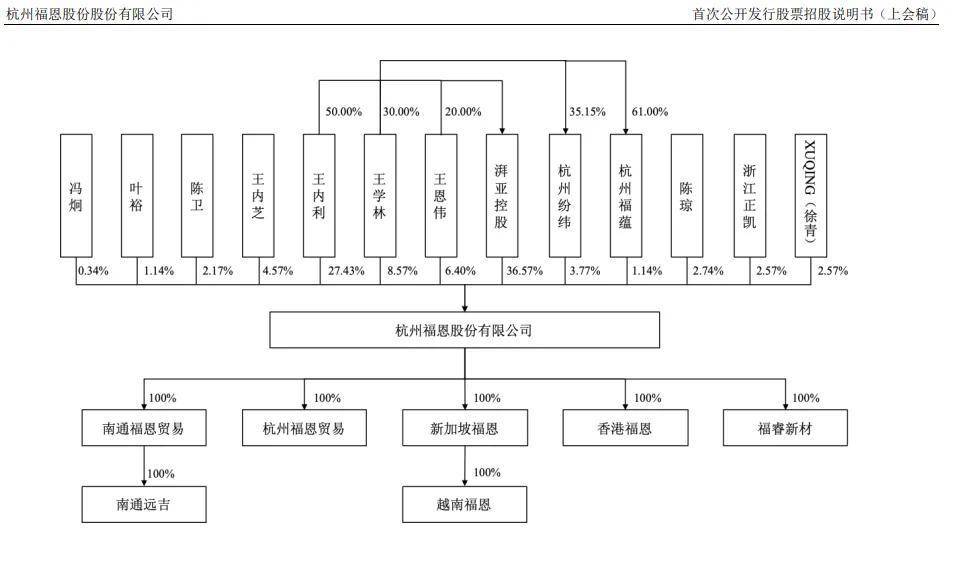
晨光电机IPO:夫妻表决权超93%,沈燕儿曾拆借资金超2600万元
Sou Hu Cai Jing· 2026-01-06 02:46
Company Overview - Zhoushan Chenguang Electric Motor Co., Ltd. (Chenguang Electric) successfully passed the listing review on the Beijing Stock Exchange on January 5, with Guojin Securities as the sponsor [1] - Chenguang Electric specializes in the research, production, and sales of micro-special motors, primarily used in cleaning appliances such as vacuum cleaners, serving clients like Kate Li, Chuanou Electric, and others [1] Corporate Structure - The company was established in December 2001 as Chenguang Limited and completed its shareholding reform in September 2023, currently listed on the innovation tier of the New Third Board [2] - The controlling shareholders are Wu Yongkuan and Shen Yan'er, who together hold over 93% of the voting rights, with Wu directly owning 53.13% and Shen 35.42% [2] Governance and Control Risks - Despite having a relatively sound corporate governance structure, the actual controllers can significantly influence company decisions, which poses risks to minority shareholders [5] - The company plans to issue up to 2 million shares at a price of 12.8 yuan each to raise 25.6 million yuan for working capital, with a single natural person, Chen Qiwei, as the subscriber [5] Financial Position - As of the end of 2023, the company had cash reserves of 166 million yuan and no short-term or long-term borrowings, raising questions about the necessity of raising additional working capital [7] - The actual controllers have previously borrowed over 26 million yuan from the company for personal use, which raises compliance and governance concerns [7][9] Related Party Transactions - In 2022, Shen Yan'er borrowed 18.06 million yuan and later 8.3 million yuan from the company for personal financial needs, with repayments made within the same year [8][9] - The company needs to clarify the compliance of these related party transactions and ensure that similar occurrences are prevented in the future [9]

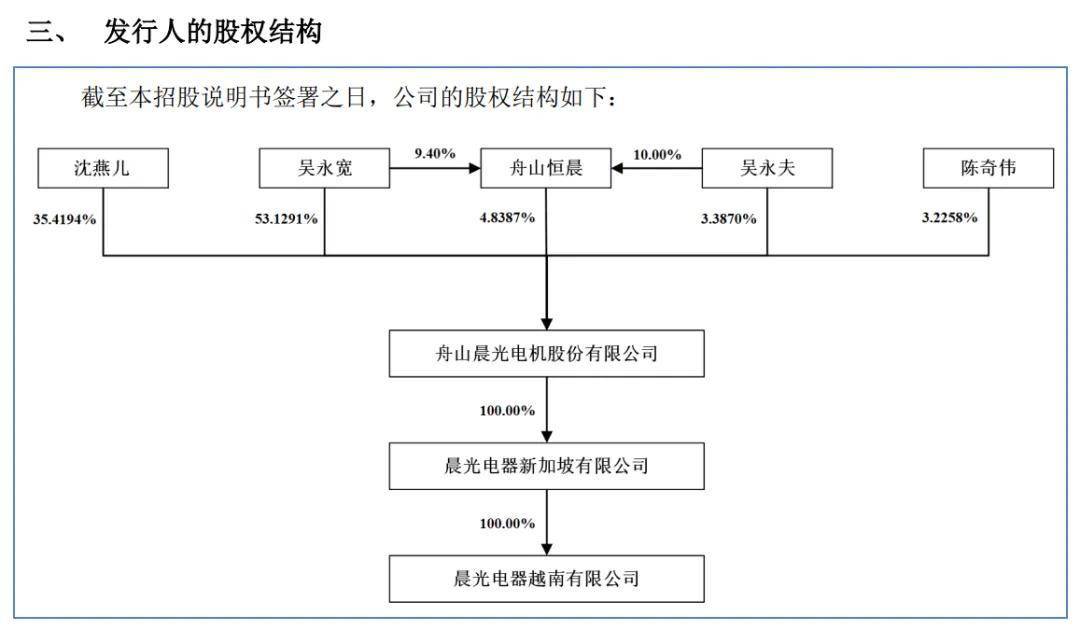
福恩股份IPO:一家三口表决权超八成,控股股东旗下企业遭股权冻结
Sou Hu Cai Jing· 2025-12-26 06:31
Core Viewpoint - Fuen Co., Ltd. is set to go public on the Shenzhen Stock Exchange, focusing on the research, production, and sales of eco-friendly fabrics, with major clients including well-known global apparel brands [1] Group 1: Company Overview - Fuen Co., Ltd. has evolved from its establishment in January 1997 to a large enterprise integrating fabric design, research, spinning, weaving, dyeing, finishing, and sales [1] - The major shareholders include Paiya Holdings, Wang Neili, Wang Xuelin, and Wang Enwei, with respective ownership stakes of 36.57%, 27.43%, 8.57%, and 6.4% [1] - The controlling shareholders, Wang Neili, Wang Xuelin, and Wang Enwei, collectively control 83.89% of the company [1][2] Group 2: Management Background - Wang Enwei, born in 1955, has held various leadership roles since founding the company and currently serves as a board member [5] - Wang Neili, born in 1981, has been with the company since 2005 and is currently the chairman [5] - Wang Xuelin, also born in 1981, joined the company in 2005 and currently serves as the general manager and board member [5] Group 3: Financial Transactions - Fuen Co., Ltd. has engaged in significant transactions involving large-denomination certificates of deposit, transferring amounts of 20.59 million yuan and 30 million yuan to Paiya Holdings in 2024 and the first half of 2025, respectively [6][7] - The company also plans to acquire 50 million yuan in large-denomination certificates of deposit from Paiya Holdings in October 2024 [6][7] Group 4: Compliance Issues - Fuen Co., Ltd. has faced multiple fines for non-compliance, including a fine of 128,322.84 yuan for unauthorized construction activities in May 2023 [7] - The company’s subsidiary in Vietnam incurred fines for incorrect customs declarations and late tax submissions, highlighting the need for improved compliance management [8] Group 5: Related Party Transactions - The company has been involved in related party transactions with Paiya Holdings, including the transfer and acquisition of large-denomination certificates of deposit, raising questions about the purpose of these transactions given the company's strong cash position [7]