
纺织业

Search documents
天虹国际20230331
2026-04-01 09:59
Company and Industry Summary Company Overview - **Company**: Tianhong International - **Industry**: Textile Key Points Financial Performance and Projections - The company aims to achieve profitability by 2025, with supply chain inventory levels reduced to medium-low, and a capacity utilization rate exceeding 90% in Q1 2026, with full operation in the Vietnam factory [2][3] - Gross margin is expected to fluctuate between 8% and 15%, reaching a high of 14% in 2025, with potential for slight improvement through cost reduction and debt reduction initiatives [2][3] - The financial structure is continuously optimized, targeting a debt ratio of 40% by 2026-2027, with a temporary suspension of dividends in 2025, but potential for resuming dividends in 2026 if performance is strong [2][3][13] Market Demand and Economic Outlook - The textile industry is expected to experience subdued demand in 2025 due to high inventory levels following significant market fluctuations in 2023 and 2024, with a gradual return to normal replenishment cycles anticipated [3][4] - The company maintains a conservative outlook for 2026 due to geopolitical uncertainties impacting macroeconomic conditions and consumer demand [3][4] - The company primarily exports, with a focus on the European and American markets, which are crucial for demand recovery; however, current demand signals remain weak [3][4] Raw Material and Cost Management - The company primarily uses foreign cotton, with a stock reserve cycle of 3-4 months, and anticipates stable or rising cotton prices in 2026, supported by low-cost inventory and price differentials [2][5] - Energy cost increases have a limited direct impact on the company, as it primarily uses cotton rather than synthetic fibers, although indirect effects on logistics costs are noted [3][4][16] Production Capacity and Strategy - The company’s production capacity is distributed with approximately 60% in China and 35% in Vietnam, with no large-scale expansion plans but ongoing technical upgrades with annual investments of 800-1,000 million [2][11] - The company’s yarn business achieved a gross margin of over 14% in 2025, supported by high capacity utilization and reduced financial costs [6][10] Product and Market Differentiation - Domestic products focus on mid-to-high-end and differentiated offerings, while overseas production in Vietnam targets simpler, volume-driven products, leading to varying profitability levels [7][8] - The company is exploring new market opportunities in regions like Africa and Southeast Asia, contingent on favorable political and economic conditions [11][12] Technological Advancements and Efficiency - Ongoing technical upgrades are expected to yield significant cost savings, particularly in labor, with annual savings projected at 100-200 million [12][13] - The company’s strategic focus remains on its core yarn business, with limited investment in other segments unless exceptional opportunities arise [10][11] Geopolitical and Economic Risks - Geopolitical conflicts and rising transportation costs may impact raw material prices, but the company’s reliance on cotton mitigates direct effects [16][17] - The ability to pass on increased costs to downstream customers remains uncertain, with potential shared burden across the supply chain [17] Future Outlook - The company is positioned for a new development cycle, with a solid financial foundation and strategic international presence, contingent on stable geopolitical conditions and cotton market trends [18]
富春染织20230331
2026-04-01 09:59
Company and Industry Summary Company: 富春染织 (Fuchun Dyeing and Weaving) Key Points Industry Overview - The company has shifted its operational strategy from expansion to "production limitation and price increase," maintaining a capacity utilization rate of 90% [2] - The industry is experiencing optimization, with small enterprises facing elimination due to cash flow and inventory shortages, allowing the company to capture market share from these businesses [2][10] Financial Performance - In 2025, the company produced 114,800 tons of colored yarn, a 10% decrease year-on-year, while sales increased by 5.66% to 115,500 tons [3] - Total revenue for 2025 reached 3.409 billion yuan, an 11.87% increase, but net profit fell by 39.16% to 76.72 million yuan [3] - The company implemented a "production limitation and price increase" strategy starting in Q3 2025, which led to a significant profit reversal in Q4 2025, achieving a net profit of 43.71 million yuan [3][4] Cost Management - The company has a significant cost advantage, with 55,800 tons of low-cost cotton and sufficient dyeing materials inventory to meet production needs until 2027 [2][4] - Processing fees have increased from 6,000 yuan/ton to 6,500 yuan/ton due to reduced sales pressure and rising raw material costs [4][5] - The company plans to pass on the increased costs of dyeing materials to downstream customers, as these costs represent only about 7% of total costs [5] Sales and Market Outlook - The sales target for 2026 is set at 140,000 tons, representing a 21% year-on-year growth [2][6] - The company expects to maintain a strong market position due to the ongoing transfer of orders from competitors facing financial difficulties [6][10] - The first quarter of 2026 is anticipated to show revenue and profit growth compared to the same period in 2025, driven by increased sales and higher processing fees [7][8] New Business Ventures - The emerging PIK robotics business is in its early stages, with a revenue target of 50 million yuan for 2026 and a long-term goal of reaching 1 billion yuan in 3-5 years [2][14] - The company has invested in a robotics company, leveraging potential applications in government procurement markets [13][17] Strategic Positioning - The company aims to stabilize cash flow through its core textile business while exploring new investment opportunities in advanced technologies to enhance market valuation [17][18] - The strategy focuses on maintaining a solid cash flow from the textile sector while gradually investing in new areas without aggressive capacity expansion [17] Additional Insights - The company has a robust inventory of cotton and yarn, which supports its production needs and cost management strategies [10] - The increase in processing fees and product prices is expected to improve profit margins, with a projected gross margin increase due to rising commodity prices [12] - The company is cautious about the PIK business's growth potential, acknowledging the need for time to develop the market [14][15]

成本洼地+政策利好,柬埔寨解锁中企海外投资新路径
36氪· 2026-03-31 14:37
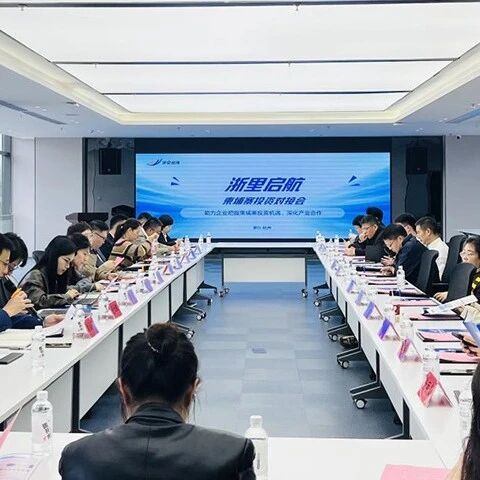
Core Viewpoint - Increasing number of Chinese companies are relocating factories to Cambodia due to lower operational costs and favorable investment conditions [1][2] Group 1: Investment Trends - Chinese companies such as Hongdou Group, Yanjinpuzi, and Petty Pet have established manufacturing bases in Cambodia, with significant investments in textiles and food processing [1] - In recent years, tire manufacturers like Shandong New Continental and Qingdao Doublestar have also set up production facilities in Cambodia, highlighting the trend of Chinese firms moving operations to the region [1] - China has become the largest source of foreign investment in Cambodia, with projected investments reaching $5.42 billion by 2025, accounting for 54.25% of Cambodia's total foreign investment [1] Group 2: Investment Environment - The Cambodia Investment Matching Conference held in Hangzhou focused on investment opportunities and key challenges for companies entering the Cambodian market [1][2] - The event featured discussions on Cambodia's market policies and business environment, with representatives from various industries sharing insights on practical aspects of establishing operations [1][2] - Cambodia offers significant tariff advantages for exports to major markets like the EU, the US, and Japan, with some products enjoying zero tariffs [2] Group 3: Strategic Advantages - The Boeck Economic Zone in Cambodia, covering 153 hectares, aims to create a low-pollution, multi-industry integrated park, attracting projects in pet food, textiles, hardware, and furniture [2][3] - Despite rising land and labor costs, Cambodia remains a "blue ocean" market compared to Vietnam and Thailand, with clear tariff advantages and a favorable financial environment [3] - The event provided a platform for companies to gain a comprehensive understanding of Cambodia's investment landscape, promoting information exchange and resource sharing for better international expansion [3]

富春染织:25Q4拐点已现,26Q1前瞻乐观-20260331
HUAXI Securities· 2026-03-31 10:35
Investment Rating - The investment rating for the company is "Buy" [1] Core Insights - The company has shown a turning point in Q4 2025, with revenue and net profit growth driven by improved gross margins and investment income [2][4] - The company plans to distribute a cash dividend of 1.04 yuan per 10 shares, resulting in a dividend payout ratio of 26% and a dividend yield of 0.72% [2] Revenue and Profit Analysis - In 2025, the company's revenue, net profit attributable to the parent, net profit excluding non-recurring items, and operating cash flow are projected to be 3.409 billion, 77 million, 56 million, and 463 million yuan respectively, with year-on-year growth rates of 11.87%, -39.16%, -49.80%, and a turnaround from negative to positive [2] - For Q4 2025, the company reported revenue, net profit attributable to the parent, and net profit excluding non-recurring items of 1.002 billion, 53 million, and 44 million yuan respectively, with year-on-year growth rates of 17%, 139%, and 431% [2] Business Segments Performance - The revenue from color yarn, trade yarn, processing fees, and other businesses in 2025 is expected to be 2.812 billion, 253 million, 132 million, and 34 million yuan respectively, with year-on-year growth rates of 6.21%, 8.28%, 5.36%, and 42.87% [3] - The company has a production capacity of 132,000 spindles and a total sales volume of 115,500 tons, resulting in a capacity utilization rate of 87.5% [3] Margin and Cost Analysis - The company's gross margin for 2025 is projected to be 9.79%, a decrease of 2.47 percentage points year-on-year, with specific margins for color yarn, trade yarn, and processing fees at 10.64%, 6.27%, and 6.54% respectively [4] - In Q4 2025, the gross margin, net margin, and net margin excluding non-recurring items are expected to be 11.33%, 5.33%, and 4.39%, showing improvements of 2.6, 2.7, and 3.5 percentage points year-on-year [4] Inventory and Receivables - As of the end of 2025, the company's inventory is valued at 1.344 billion yuan, a decrease of 7.7% year-on-year, with a breakdown of raw materials, work in progress, and finished goods [5] - Accounts receivable decreased by 17% year-on-year to 29 million yuan, with an average turnover period of 3.38 days [5] Future Outlook - The company is expected to benefit from rising domestic cotton prices and low-cost raw material inventory, potentially leading to improved net profit per ton [6] - Revenue forecasts for 2026 and 2027 have been raised to 4.002 billion and 4.323 billion yuan respectively, with net profit forecasts adjusted to 200 million and 219 million yuan [7]
棉花、棉纱日报-20260326
Yin He Qi Huo· 2026-03-26 12:36
Group 1: Report Industry Investment Rating - Not provided Group 2: Core Viewpoints of the Report - The supply side of this year is basically determined, but there are rumors of a production cut in the new year, which still provides some support for the market. The current commercial inventory is lower than that of the previous year, which is bullish for cotton prices. The downstream market is operating well, with recent increases in yarn prices. The orders in the "Golden March" this year are generally good, but the market is cautious about the future. If the downstream maintains the current operating level, it will support the market. Considering the rapid inventory reduction of gauze, there may be restocking behavior in the future, which is also bullish for the market [6]. - It is expected that US cotton will fluctuate strongly in the short - term. The fundamentals of Zhengzhou cotton have not changed much. It is advisable to consider building long positions on dips and not to chase high prices. For arbitrage and options, it is recommended to wait and see [7]. Group 3: Summary by Relevant Catalogs First Part: Market Information - **Futures Disk Information**: The closing prices, price changes, trading volumes, and open interest of CF01, CF05, CF09, CY01, CY05, and CY09 contracts are presented, along with their respective changes. For example, the CF01 contract closed at 15900, up 35, with a trading volume of 8,477 (an increase of 3073) and an open interest of 24,055 (an increase of 1374) [2]. - **Spot Price Information**: The prices and price changes of various spot products are provided, such as CCIndex3128B (16711 yuan/ton, up 119), CY IndexC32S (22180, up 30), etc. [2]. - **Spread Information**: Cotton and yarn inter - period spreads and cross - variety spreads are given, including the spreads between different months and the differences between domestic and foreign cotton and yarn prices. For example, the 1 - 5 month spread of cotton is 480, down 45 [2]. Second Part: Market News and Views Cotton Market News - In January 2026, India's total export volume of cotton yarn (HS:5205) was 110,900 tons, a year - on - year increase of 16.44% and a month - on - month increase of 9.39%. From August 2025 to January 2026, India's cotton yarn export volume was 565,000 tons, with 231,100 tons exported to Bangladesh (a year - on - year decrease of 19.5%, accounting for 40.91%) and 183,100 tons exported to China (a year - on - year increase of 133.18%, accounting for 18.31%) [4]. - On March 26, 2026, the road transportation price index of Xinjiang cotton was 0.1561 yuan/ton·km, remaining unchanged from the previous day. In the short term, the price index shows a relatively stable operation characteristic [4]. - In February 2026, Pakistan's textile and clothing export value was 1.311 billion US dollars, a year - on - year decrease of 7.22% and a month - on - month decrease of 24.59%. It exported 30,900 tons of cotton yarn (a year - on - year increase of 56.97% and a month - on - month increase of 1.52%) and 259 million tons of cotton cloth (a year - on - year decrease of 9.2% and a month - on - month decrease of 19.37%). From January to February 2026, Pakistan's total textile and clothing export value was 3.05 billion US dollars, a year - on - year decrease of 1.59%. It exported a total of 61,300 tons of cotton yarn (a year - on - year increase of 38.18%) and 58 tons of cotton cloth (a year - on - year increase of 8.98%) [5]. Trading Logic - The supply side of this year is basically determined, but there are rumors of a production cut in the new year, which still provides some support for the market. The current commercial inventory is lower than that of the previous year, which is bullish for cotton prices. The downstream market is operating well, with recent increases in yarn prices. The orders in the "Golden March" this year are generally good, but the market is cautious about the future. If the downstream maintains the current operating level, it will support the market. Considering the rapid inventory reduction of gauze, there may be restocking behavior in the future, which is also bullish for the market [6]. Trading Strategy - **Unilateral**: It is expected that US cotton will fluctuate strongly in the short - term. The fundamentals of Zhengzhou cotton have not changed much. It is advisable to consider building long positions on dips and not to chase high prices [7]. - **Arbitrage**: Wait and see [7]. - **Options**: Wait and see [7]. Cotton Yarn Industry News - The trading of pure cotton yarn is fair, and textile enterprises' sales are smooth but showing marginal weakness. Downstream orders can last until mid - April. High - quality yarn prices are firm, while ordinary - quality prices are stable or slightly decreasing. Traders are offering discounts for promotion. Manufacturers are not optimistic about the future market, and the period after the Tomb - sweeping Festival is an important observation point. Future attention should be paid to the trend of Zhengzhou cotton and downstream demand [8]. - The sales of the all - cotton grey cloth market are gradually weakening, and the sales atmosphere has not improved significantly. Except for the sustainable orders of home textile products, the orders for knitted and woven fabrics are difficult to continue. Many fabric mills report that foreign orders have not been placed, and the increase in domestic orders is also lower than expected. Grey cloth prices are still market - driven, and grey cloth traders are also selling goods actively according to the market [8]. Third Part: Relevant Attachments - Multiple charts are provided, including the 1% tariff - based domestic and foreign cotton price spread, cotton 1 - month, 5 - month, and 9 - month basis, CY05 - CF05 and CY01 - CF01 spreads, and CF9 - 1 and CF5 - 9 spreads, along with their historical data from different years [10][11][12][15][16][17][18][19][21][22]
油价涨了,冲锋衣要危险了
36氪· 2026-03-26 04:35
Core Viewpoint - The article discusses the impact of rising oil prices on the cost of various consumer goods, particularly focusing on the relationship between oil prices and the price of clothing items like jackets, highlighting that the increase in oil prices can lead to higher production costs for synthetic fibers used in these garments [5][63]. Group 1: Oil Price Impact on Consumer Goods - The recent conflict in the Middle East has led to a significant increase in oil prices, which in turn raises the costs of imports and fuel in China [5][7]. - The article draws parallels between the price of pork affecting the cost of down jackets and the rising oil prices potentially increasing the price of jackets [9][11]. - The relationship between oil prices and clothing costs is attributed to the reliance on synthetic fibers, which are derived from petroleum [20][52]. Group 2: Synthetic Fibers and Their Importance - Synthetic fibers account for nearly 62% of global fiber consumption, with polyester contributing over 52% of that figure [23][24]. - The article emphasizes that synthetic fibers, particularly those derived from oil, are widely used in the textile industry due to their low cost and high durability [22][28]. - The main materials used in jackets, such as polyester and nylon, are heavily reliant on oil, making them sensitive to fluctuations in oil prices [31][45]. Group 3: Market Dynamics and Brand Responses - The rising costs of raw materials are expected to be passed down to consumers, although this process may not be immediate due to existing inventory [54][70]. - Brands with lower profit margins, particularly mid-tier and smaller brands, may face more significant challenges in absorbing these costs compared to high-end brands [57][60]. - There is speculation that if raw material prices continue to rise, prices for new collections in the fall/winter of 2026 may increase [61][62].

杨岳斌:为什么多数企业不赚钱?详解巴菲特“商品”生意
点拾投资· 2026-03-22 11:00
Core Viewpoint - The article discusses Warren Buffett's investment philosophy, particularly focusing on the distinction between "franchise" and "commodity" businesses, emphasizing the importance of competitive advantages and sustainable economic moats for long-term investment success [1][2]. Summary by Sections Definition of "Commodity" Businesses - Buffett defines "commodity" businesses as those lacking differentiation in performance, appearance, and service, making them susceptible to profit challenges, especially in industries with overcapacity [3]. - The article outlines three non-market forces that can mitigate profit challenges: government price interventions, illegal price collusion among companies, and actions by international cartels like OPEC [3]. Economic Characteristics of "Commodity" Businesses - Industries characterized by overcapacity and lack of buyer preference for providers are likely to experience poor economic outcomes, often leading to disaster [3]. - The article highlights that in "commodity" sectors, only a few producers can achieve profitability through sustainable low-cost advantages, while most face a harsh economic equation: continuous overcapacity plus lack of pricing power equals weak profitability [4][6]. Case Study: Textile Industry - The textile industry serves as a textbook example of a "commodity" business, where high product homogeneity leads to minimal returns unless in a supply-constrained environment [7]. - Historical context is provided, detailing how the U.S. textile industry faced severe overcapacity due to international competition, leading to poor investment returns for companies like Berkshire Hathaway [7][9]. Insurance Industry as a "Commodity" Business - The insurance industry is presented as another example of a "commodity" business, where competition primarily revolves around pricing, and brand differentiation is largely ineffective [11][12]. - The article discusses how the insurance market's unique characteristics, such as product homogeneity and the psychological nature of capacity, contribute to persistent overcapacity [12]. GEICO's Differentiation Strategy - GEICO is highlighted as an exception in the insurance sector, successfully establishing a competitive moat through strong financial backing and strict pricing discipline [15][21]. - The company focuses on profitability over market share, maintaining a commitment to not underwrite unprofitable policies, which has allowed it to accumulate significant low-cost "float" [21][16]. Investment Certainty and Economic Moats - The article emphasizes that the essence of investment lies in ensuring that current capital can yield high returns in the future, with economic moats serving as a defense against "creative destruction" [22][25]. - Buffett's investment strategy prioritizes businesses with clear economic moats, which are essential for navigating the complexities of market dynamics and ensuring long-term success [24][28].

台华新材:产业链涨价关注盈利恢复,PA66放量可期-20260319
Xinda Securities· 2026-03-19 10:25
Investment Rating - The investment rating for the company is "Buy" [2] Core Insights - The report highlights that the nylon industry chain has seen significant price increases due to geopolitical conflicts, with prices for caprolactam, PA6 chips, and nylon POY rising by 23%, 29%, and 29% respectively since March, and year-to-date increases of 30%, 38%, and 36% [2] - The report anticipates a recovery in profits for the company as the price of nylon filament has increased more than the cost of raw materials, indicating a potential for profit restoration [2] - The company is expected to benefit from the growing sales of its differentiated product PA66, which has superior performance and higher margins compared to conventional nylon products [3] - Geopolitical factors are likely to create structural changes in the nylon 66 industry, potentially accelerating the company's market penetration and solidifying its leading position in the domestic high-end nylon market [3] - The company is actively extending its nylon industry integration, with ongoing projects in both domestic and international locations, which are expected to contribute to future revenue growth [4] Financial Projections - The company’s projected net profits for 2025, 2026, and 2027 are estimated at 509 million, 845 million, and 914 million yuan respectively, with corresponding P/E ratios of 17.45, 10.51, and 9.73 [4][7] - Total revenue is expected to reach 6.69 billion yuan in 2025, with a year-on-year growth rate of -6.0%, followed by a recovery to 7.74 billion yuan in 2026 and 8.33 billion yuan in 2027 [7]

台华新材(603055):产业链涨价关注盈利恢复,PA66放量可期
Xinda Securities· 2026-03-19 09:04
Investment Rating - The investment rating for the company is "Buy" [2] Core Views - The report highlights that the nylon industry chain is experiencing significant price increases due to geopolitical conflicts, with prices for caprolactam, PA6 chips, and nylon POY rising by 23%, 29%, and 29% respectively since March, and year-to-date increases of 30%, 38%, and 36% [2] - The report anticipates a recovery in profits for the company as the price of nylon filament is increasing at a rate higher than that of raw materials, indicating a potential for profit restoration [2] - The company is expected to benefit from the growing sales of its differentiated product PA66, which has superior performance and higher margins compared to conventional nylon products [3] - Geopolitical factors are likely to create structural impacts on the nylon 66 industry, potentially accelerating the company's market penetration and solidifying its leading position in the domestic high-end nylon market [3] - The company is actively extending its nylon industry integration, with ongoing projects in both domestic and international locations, which are expected to contribute to future revenue growth [4] Financial Summary - The company’s projected net profits for 2025, 2026, and 2027 are estimated at 509 million, 845 million, and 914 million yuan respectively, with corresponding P/E ratios of 17.45, 10.51, and 9.73 [4][7] - Total revenue is expected to reach 6.69 billion yuan in 2025, with a year-on-year growth rate of -6.0%, followed by a recovery to 7.74 billion yuan in 2026 and 8.33 billion yuan in 2027 [7] - The company’s gross margin is projected to be 21.2% in 2025, improving to 23.0% in 2026 and 22.5% in 2027 [7]
兼评2月经济数据:经济开门红好于预期
KAIYUAN SECURITIES· 2026-03-17 01:12
Group 1: Economic Performance - Industrial added value for January-February increased by 6.3% year-on-year, surpassing expectations by 1.1 percentage points[3] - Fixed asset investment (FAI) showed a cumulative year-on-year increase of 1.8%, against an expected decline of 2.7%[14] - Service sector production rose to 5.2% year-on-year, up 0.2 percentage points from the previous value[3] Group 2: Investment Trends - Infrastructure investment rebounded significantly, with broad infrastructure up 25.8% year-on-year and narrow infrastructure up 23.6%[4] - Manufacturing investment growth improved by 2.5 percentage points to 3.1%, with notable increases in electrical machinery and textiles[4] - Real estate investment saw a reduction in decline, improving by 6.1 percentage points to -11.1%[5] Group 3: Consumer Behavior - Retail sales (social retail) increased by 1.9 percentage points to 2.8% year-on-year, although cumulative growth declined by 0.9 percentage points[6] - Service retail continued to outperform goods retail, with a widening growth gap of 3.1 percentage points[6] - Key contributors to retail growth included home appliances and food, while automotive sales lagged[6] Group 4: Market Outlook - Economic performance in early 2026 exceeded expectations, suggesting a potential moderate recovery in equity markets[7] - The need for additional policies to support domestic recovery remains, particularly in light of geopolitical uncertainties and consumer demand fluctuations[7] - Risks include potential policy changes and unexpected economic downturns in the U.S.[8]