家庭责任感

Search documents
两代人身上折射出来的不同理念
Sou Hu Cai Jing· 2026-02-19 11:04
Core Insights - A significant phenomenon is emerging where many young people struggle to save money, while their parents' generation tends to save more, highlighting differences in lifestyle, values, and historical context [1] Group 1: Young Generation's Spending Habits - The younger generation, raised in a relatively affluent and consumer-driven environment, often prioritizes lifestyle quality over savings, spending on cars, smartphones, and trendy experiences despite lower incomes [3] - Their financial lives are closely tied to credit tools, leading to a "live for today" mentality, with salaries often spent quickly and future financial planning being less prioritized [3][5] - Major expenditures for young people focus on immediate gratification and personal experiences, such as travel, dining, and entertainment, rather than long-term investments like housing or child-rearing [3][5] Group 2: Older Generation's Saving Behavior - The older generation, having experienced periods of scarcity, tends to adopt frugal spending habits, often living on fixed pensions and prioritizing savings for family needs over personal enjoyment [5] - Their consumption patterns reflect a deep-rooted sense of responsibility towards their children and grandchildren, often sacrificing personal comforts to support family financial needs [5][7] - The older generation's values are shaped by their experiences in a planned economy, where saving and frugality were essential for survival, leading to a focus on family welfare [5][7] Group 3: Intergenerational Understanding - The stark differences in spending behaviors between the two generations reflect broader societal changes, emphasizing the need for mutual understanding and learning [7] - Young people can benefit from the older generation's long-term planning and financial responsibility, while older individuals might consider enhancing their quality of life [7] - Finding a balance between living for oneself and for family could be key to resolving the conflicting consumption perspectives of both generations [7]


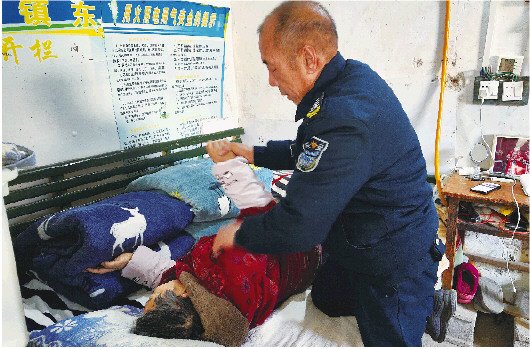
保安大叔和“植物人”妻子的“重生之路”
Xin Lang Cai Jing· 2026-01-15 10:09
Core Viewpoint - The story highlights the unwavering dedication of Li Shanjun, who has devoted himself to caring for his wife, Yue Shuxia, after she became a vegetable due to an accident, showcasing the themes of love, resilience, and hope in the face of adversity [3][7][12]. Group 1: Personal Sacrifice and Care - Li Shanjun has taken on the role of a full-time caregiver for his wife, learning to cook and provide medical care, demonstrating immense dedication over the years [5][9]. - He has faced significant financial burdens, including a 300,000 yuan loan for a boat, yet he remains committed to his wife's recovery, borrowing over 200,000 yuan for her medical expenses [8][9]. - The couple's bond has deepened through non-verbal communication, as Li has learned to understand his wife's needs without words [6][10]. Group 2: Health and Recovery - After four years of care, Yue Shuxia began to show signs of recovery, regaining the ability to sit up and communicate through gestures [9][11]. - Li has meticulously documented his wife's health, noting the times of her seizures, which has helped him manage her condition better [10]. - The couple's journey reflects a gradual improvement in Yue's health, with her condition stabilizing and her seizures becoming less frequent [11]. Group 3: Community Support - The family has received support from various sources, including donations from kind-hearted individuals and assistance from local organizations, which have helped them through difficult times [11]. - Li's current job as a security guard provides a stable income, supplemented by his wife's disability benefits, allowing them to have a more secure life [11][12]. - The school where Li works has facilitated their living arrangements, enabling him to care for his wife more easily [11].