家装行业供给侧改革

Search documents
金融赋能家装革新:被窝资金存管构建行业信任新生态
Zhong Guo Jin Rong Xin Xi Wang· 2025-11-26 06:07
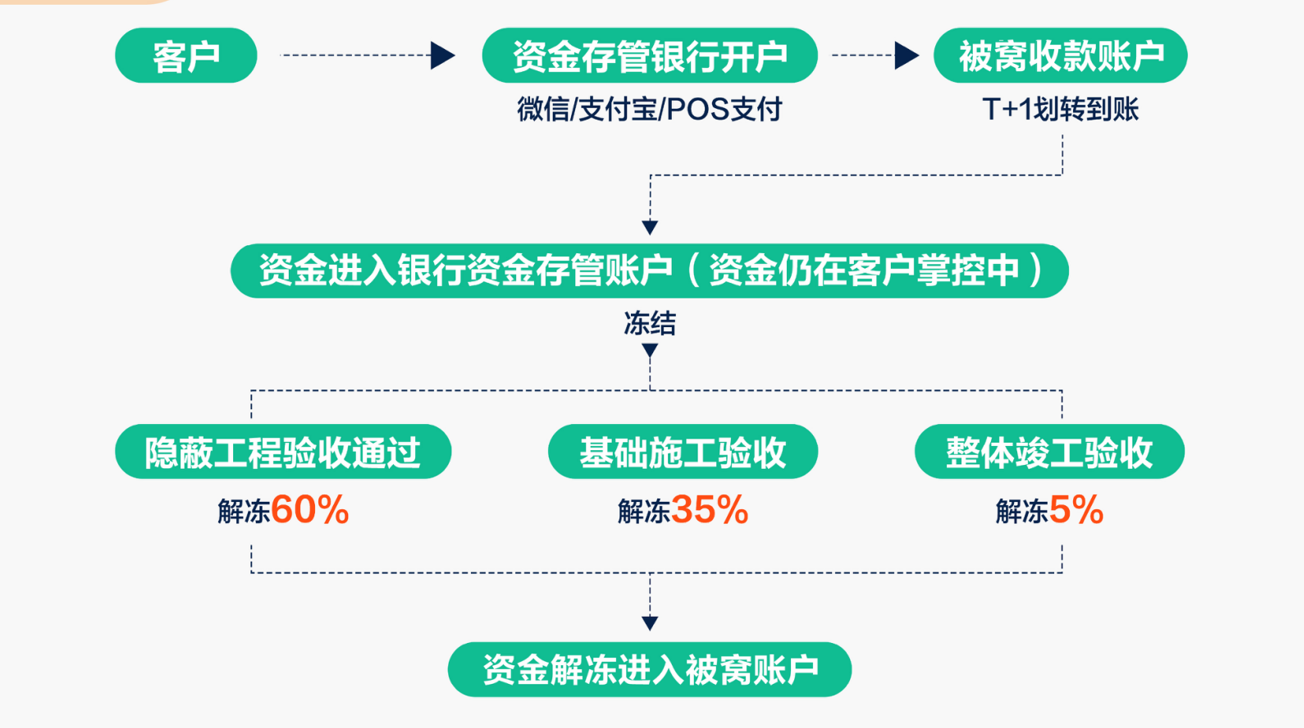
Core Viewpoint - The emergence of the renovation fund custody business addresses consumer disputes arising from the "prepayment" model in the home decoration industry, enhancing consumer rights protection and promoting a new phase of high-quality, standardized development in the industry [1][4]. Group 1: Fund Custody Mechanism - The innovative model features a "designated account and milestone release" fund management mechanism, ensuring that renovation funds are deposited into a bank-regulated custody account and only released upon consumer satisfaction at key project milestones [2][4]. - The fund custody service effectively eliminates the risk of fund misappropriation, aligning payment with project progress and quality [4][6]. Group 2: Consumer Empowerment - The fund custody service reverses the traditional passive payment relationship, empowering consumers with control over their funds throughout the renovation process [5][6]. - Consumers can monitor their funds through the bank's platform, ensuring transparency and security in the payment process [5]. Group 3: Industry Impact - The introduction of the fund custody mechanism by Beike's Weijia has set a service benchmark in the industry, compelling other companies to enhance service quality and consumer trust [6][7]. - The model has led to a significant reduction in customer complaints, fostering a positive interaction between consumers and service providers [6][7]. Group 4: Credit Ecosystem and Sustainable Development - The fund custody business contributes to the establishment of a credit system within the home decoration industry, addressing long-standing trust issues and promoting sustainable development [7][8]. - By enhancing transparency and accountability, the mechanism encourages a shift from sales-driven to service-driven business models, leading to overall quality improvements in the industry [7][8]. Group 5: Community Engagement - Weijia has initiated public welfare activities, such as the "Home Decoration Safety Consumption Classroom," to educate consumers about renovation risks and enhance their protective capabilities [8]. - This initiative combines consumer education with the fund custody service, fostering a collaborative ecosystem involving enterprises, financial institutions, consumer associations, and consumers [8].