
寒潮降温

Search documents
雨、雪、寒潮!春节出行,紧急提醒
券商中国· 2026-02-15 10:28
Summary of Key Points Core Viewpoint - The article discusses the significant weather changes in China during the Spring Festival, highlighting increased precipitation, potential snowfall in certain regions, and a cold wave affecting the central and eastern parts of the country. Group 1: Weather Forecast - Increased precipitation is expected across southern China, with regions like Shaanxi and Henan possibly experiencing snowfall [2][7] - A cold wave will move southward, leading to temperature drops of 6 to 10 degrees Celsius in various areas, with some localities in western Jiangnan experiencing drops exceeding 12 degrees Celsius [8] Group 2: Specific Weather Conditions - From February 15 to 17, areas including northeastern Inner Mongolia, central and northern Heilongjiang, and parts of Jiangnan will see significant temperature decreases [8] - Rainfall will be widespread in southern regions, with heavy rain expected in parts of Hubei, northern Hunan, and northern Jiangxi [6][7] Group 3: Public Safety Advisory - The article advises the public to pay attention to weather forecasts and warnings due to the potential for severe convective weather, including thunderstorms and localized hail [7]


寒潮发威 中东部迎冷暖逆转局地降温超20℃
Yang Shi Xin Wen· 2026-02-05 05:40
Group 1 - A cold wave is expected to impact the central and eastern regions of China from February 5 to 7, with temperature drops exceeding 12°C in many areas, and localized drops potentially exceeding 20°C [1] - The cold air will lead to a reversal of the warm weather pattern, with temperatures in the central and eastern regions dropping by 6 to 10°C, transitioning from a previously warm state to a colder one [1] - The eastern regions will experience more significant temperature drops compared to the western regions due to the cold air's path being relatively eastward [1] Group 2 - On February 5, the main areas experiencing temperature drops will be in Northeast and North China, with drops of 12°C to 16°C in regions such as Inner Mongolia, northern Hebei, Beijing, western Liaoning, and western Jilin [2] - Southern regions will remain warm on February 5, with maximum temperatures generally exceeding 15°C, and some areas in southern Jiangnan and South China exceeding 20°C [2] - By February 6, the cold wave will rapidly move southward, affecting areas south of the Yangtze River, with temperature drops of 10°C to 16°C expected [2]
今年首场寒潮即将上线,降温日历看你家何时迎来最冷一天
Xin Lang Cai Jing· 2026-01-16 08:49
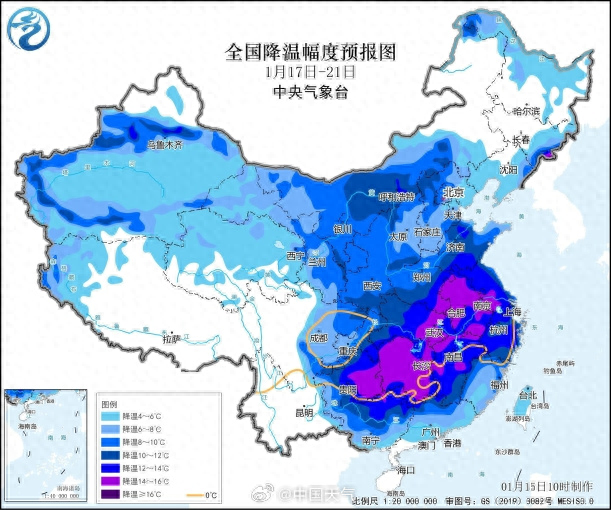
Core Viewpoint - A significant cold wave is expected to hit China starting January 16, leading to a drastic temperature drop across many regions, reversing the recent warm weather experienced during the "Three Nine" period [1][3][6]. Temperature Changes - The first cold wave will bring temperatures down significantly, with some areas experiencing a drop of over 20°C. For instance, Zhengzhou's temperature is projected to fall from nearly 22°C on January 15 to -5°C by January 20, marking a cumulative drop of 26°C [6][7]. - Major cities like Yinchuan, Jinan, and Hohhot will also see substantial temperature declines, with drops around 20°C [6][7]. Timeline of Cold Wave Impact - The cold air will first affect the northwest and eastern regions, with the core temperature drop occurring from January 19 to 21, impacting most of central and eastern China [3][6]. - Specific dates indicate that on January 17, the cold wave will primarily affect northern Xinjiang and parts of Inner Mongolia, while by January 19, most of the central and eastern regions will experience noticeable cooling [3][6]. Weather Conditions - Alongside the temperature drop, regions will also face rain, snow, and strong winds, particularly in northern areas, which may lead to a wind chill effect. Southern regions will experience damp and cold conditions [7][8]. - The cold wave is expected to bring the lowest temperatures of the winter season, with cities like Beijing forecasted to have maximum temperatures below freezing for several consecutive days [6][7].
冷空气发力!江苏气象最新发布:全省-5℃,有冰冻!
Xin Lang Cai Jing· 2026-01-02 03:05
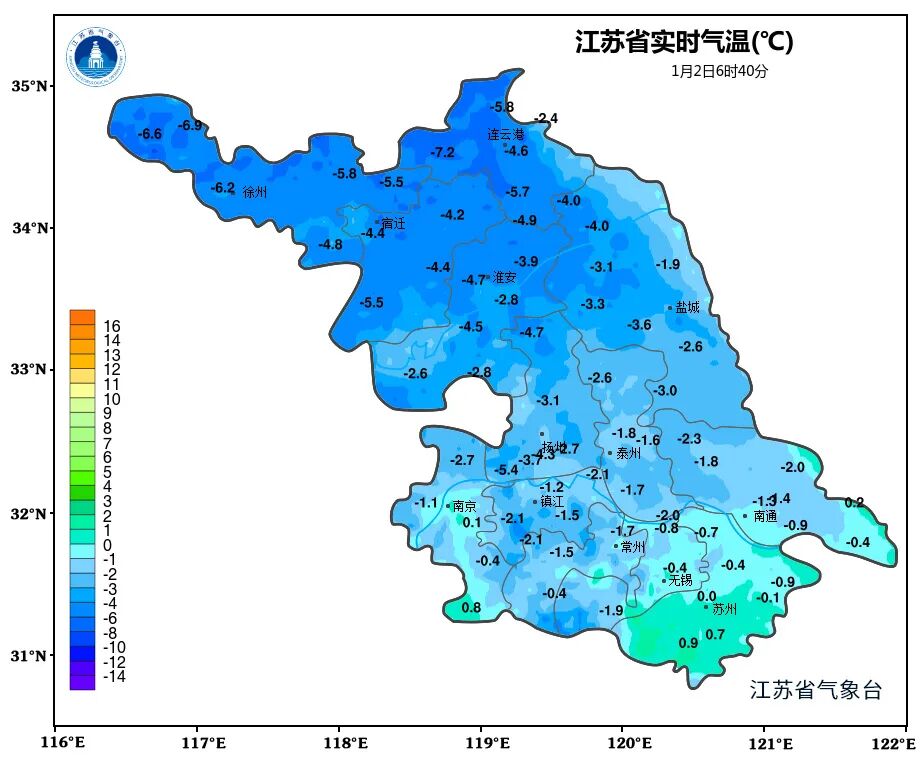
Core Viewpoint - The article discusses the impact of a cold wave and snow on southern regions of China, highlighting significant temperature drops and providing guidance on how to cope with the cold weather [1][3]. Group 1: Weather Impact - Southern regions experienced severe temperature drops of 10°C to 14°C, marking the coldest day of the winter so far [1]. - The temperature in Jiangsu province is expected to range from -6°C to -4°C in the northern areas and -2°C to 0°C in the southern areas [1]. - The minimum temperature is projected to drop to around -5°C statewide, with frost expected [3]. Group 2: Cold Weather Guidelines - Dressing in layers is recommended, following an "onion-style" approach: inner layer for moisture-wicking, middle layer for warmth, and outer layer for wind and water resistance [5][6]. - Key body parts that are vulnerable to cold should be protected, including the head, neck, and ankles, with suggestions for wearing hats, scarves, and warm socks [8]. - Dietary recommendations include consuming warming, high-protein foods like beef and chicken, while avoiding cold foods that may upset the stomach [9].
11月中国平均气温较常年同期偏高0.9℃
Zhong Guo Xin Wen Wang· 2025-12-03 06:11
Group 1 - In November, the average temperature in China was 4.2℃, which is 0.9℃ higher than the same period in previous years [1] - There were three cold air processes affecting China in November, which is 1.3 times less than the average for the same period [1] - A nationwide cold wave occurred from November 17 to 19, causing significant temperature drops in Northeast China and most of the central and eastern regions, with the maximum drop exceeding 14℃ in 11 national stations [1] Group 2 - Looking ahead, it is expected that three cold air masses will influence China in the next ten days, but their overall intensity will be weak, with less precipitation and higher overall temperatures [1] - In December, temperatures in the northeastern region's central and northern parts, eastern Inner Mongolia, and northern Xinjiang are expected to be lower than the same period in previous years, while most other areas will have temperatures close to or higher than the historical average [1] - The southern agricultural regions may face risks of frost damage, and preparations for wind and cold resistance in agricultural and livestock facilities are advised [2]