小三通

Search documents
国台办:“小三通”客运量累计超过2600万人次
Zhong Guo Xin Wen Wang· 2026-02-05 09:02
Group 1 - The core viewpoint of the article highlights the significant passenger volume of the "Mini Three Links" initiative, which has exceeded 26 million trips, with the Xiamen-Kinmen route accounting for over 23 million trips, representing more than 90% of the total [1] - The spokesperson, Chen Binhua, emphasized that the "Mini Three Links" will continue to enhance customs efficiency and improve service support systems, benefiting cross-strait livelihoods and economic development [1] - The initiative aims to foster the development of the Xiamen-Kinmen "same city living circle" and deepen cross-strait integration, injecting new momentum into regional economic growth [1]
二十五载“小三通” 民心所向看大势(观沧海)
Ren Min Ri Bao· 2026-01-24 22:04
Core Viewpoint - The "Mini Three Links" passenger route has significantly enhanced connectivity between Taiwan and mainland China over the past 25 years, facilitating not only travel but also emotional ties and economic cooperation between the two regions [1][2][3]. Group 1: Historical Significance - The "Mini Three Links" route has been operational since January 2, 2001, and has transported over 26 million passengers, becoming a vital "golden waterway" for cross-strait relations [1]. - The route has evolved from a single-direction service to a dual-direction service, now offering four passenger routes with 252 sailings per week, thus deepening economic ties between Fujian and Taiwan [1][3]. Group 2: Emotional and Social Impact - The route has allowed families and friends to reconnect, with individuals traveling for leisure and business, thereby strengthening personal and professional networks across the strait [2]. - The emotional significance of the route is highlighted by personal stories of reunions and the shared experiences of individuals who have witnessed the impact of the service on their lives [2]. Group 3: Economic and Developmental Aspects - The establishment of the "Fujian-Matsu City Card" and "Xiamen-Kinmen City Card" reflects ongoing efforts to enhance public service integration and promote economic collaboration between the regions [3]. - The anticipation of infrastructure projects, such as the Kinmen Bridge, indicates a commitment to further improving connectivity and fostering a sense of community between Taiwan and mainland China [3].
山海隔不断 两岸共潮生
Xin Lang Cai Jing· 2026-01-02 23:43
Core Viewpoint - The "Mini Three Links" (小三通) passenger route has become a vital connection for people across the Taiwan Strait, celebrating its 25th anniversary with significant contributions to cross-strait exchanges and cooperation [4][5][6]. Group 1: Historical Development - The "Mini Three Links" route has evolved from a single-direction service to a dual-direction service, facilitating both passenger and cargo transport, marking a significant transition in cross-strait relations [4][5]. - The route has seen over 26 million passengers since its inception, highlighting the strong desire for communication and cooperation between the two sides [9]. Group 2: Economic and Social Impact - The route has significantly reduced travel time and costs for cross-strait exchanges, enabling activities such as family visits, business, tourism, and cultural exchanges to occur more freely [6][10]. - Local businesses, such as those owned by residents of Matsu, have benefited from the ease of access to resources and markets provided by the "Mini Three Links," fostering economic growth and collaboration [10][11]. Group 3: Future Prospects - Experts and local leaders emphasize the need for continued development and optimization of the "Mini Three Links" to enhance its role in cross-strait integration and economic cooperation [14][15]. - Suggestions include improving infrastructure, increasing the variety of ticket options, and leveraging policy advantages to maximize the route's potential for facilitating people and goods flow [15].

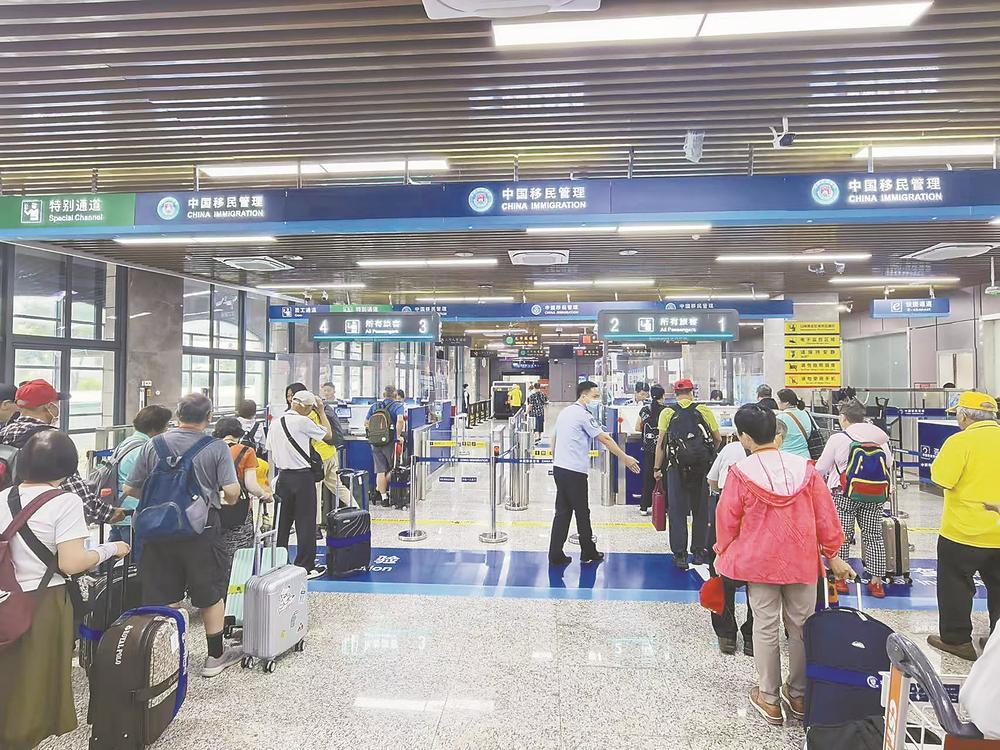
曹原彰:“因推动‘小三通’而坐牢,我觉得很值”
Xin Lang Cai Jing· 2026-01-02 23:43
Core Viewpoint - The article highlights the significant impact of the "Small Three Links" (小三通) on the lives of residents in Kinmen, emphasizing improved transportation and economic opportunities between Kinmen and Xiamen, as well as the cultural connections fostered through these exchanges [1][2]. Group 1: Historical Context and Development - In 1998, a group led by Cao Yuanzhang organized a "cross-strait" team to advocate for the "Small Three Links," which eventually led to the opening of the route three years later [1]. - Prior to the "Small Three Links," travel from Kinmen to Xiamen was complicated and lengthy, requiring detours through Taipei and Hong Kong, resulting in high logistical costs and limited access to goods [1]. Group 2: Economic Impact - The establishment of the "Small Three Links" has significantly reduced travel time and costs, allowing Kinmen residents to easily access Xiamen for shopping and leisure activities [1]. - The price disparity for goods is notable, with a 500-gram pack of green grapes costing 400 New Taiwan Dollars (approximately 90 RMB) in Kinmen, while the same pack costs only 20 RMB in Xiamen [1]. Group 3: Cultural and Social Connections - Kinmen residents have developed strong ties with Xiamen, with over 30,000 properties purchased by Kinmen people in Xiamen, facilitating familial and social interactions [2]. - Events such as the "Xiamen-Kinmen, Two Sides as One" Spring Festival calligraphy activity highlight the cultural exchanges and community bonds between the two regions [2]. Group 4: Future Prospects - The number of travelers between Kinmen and Xiamen has grown from approximately 20,000 in the first year of the "Small Three Links" to an expected 1.9 million by 2025, indicating a strong demand for continued cross-strait exchanges [2].
“小三通”客运航线通航25年运送旅客超2600万人次
Xin Lang Cai Jing· 2026-01-02 18:29
Core Viewpoint - The "Little Three Links" passenger shipping route has been operational for 25 years, facilitating over 26 million passenger trips, and serves as a vital connection for cross-strait exchanges and transportation [1] Group 1: Historical Context - The "Little Three Links" route officially commenced on January 2, 2001, with the first voyages from Fuzhou and Xiamen to Matsu and Kinmen [1] - The signing of the "Two Matsu Agreement" and "Two Kinmen Agreement" further enhanced direct exchanges between the two sides [1] Group 2: Current Operations - Currently, there are four passenger routes under the "Little Three Links": Xiamen-Kinmen, Matsu, Quanzhou-Kinmen, and Lianjiang-Matsu [1] - The number of weekly voyages is projected to increase from 210 in 2024 to 252 in 2025, with an expected passenger volume exceeding 1.9 million in 2025 [1] Group 3: Infrastructure Development - Recent advancements in infrastructure have significantly improved connectivity, establishing a more efficient sea and air transport network between the two sides [1] - New ports, customs facilities, and supporting transportation infrastructure, including roads, railways, and airports, have been developed to enhance the overall connectivity [1] - Ongoing construction projects, such as the Xiamen section of the Xiamen-Kinmen Bridge, are contributing to the rapid progress of cross-strait integration [1]
“小三通”航线开通25年 见证两岸交流不断深化
Xin Lang Cai Jing· 2026-01-02 11:15
Core Viewpoint - The "Mini Three Links" maritime routes have evolved over 25 years from initial operations to a well-established and efficient transportation network, facilitating deepening cross-strait relations and exchanges. Group 1: Development and Operations - The "Mini Three Links" routes commenced operations on January 2, 2001, and have developed into a busy maritime passage with multiple routes [1] - Currently, there are four operational passenger routes: Xiamen to Kinmen, Quanzhou to Kinmen, Fuzhou Mawei to Matsu, and Lianjiang Huangqi to Matsu, forming a robust transportation network [1] - The total number of passenger trips transported has exceeded 26 million [2] Group 2: Safety and Volume - Over the 35 years of operation, the total number of safe passenger ship operations has reached 244,000 [3] - Annual passenger volume has increased from 200,000 in the early years to over 2 million currently [4] - The Xiamen-Kinmen route has seen over 470,000 passengers, while the Quanzhou-Kinmen route has surpassed 1.55 million passengers [7]

“小三通”客运航线通航25年 运送旅客超2600万人次
Xin Hua Wang· 2026-01-02 09:45
Core Points - The "Mini Three Links" passenger route has been operational for 25 years, transporting over 26 million passengers, serving as a vital connection for cross-strait exchanges [1] - A recent seminar celebrated the 25th anniversary, highlighting the importance of the route in promoting cultural, economic, and social ties between Fujian and Taiwan [1] - The route has evolved from a one-way service to a dual-direction operation, expanding from passenger transport to include cargo services, reflecting significant progress in cross-strait relations [1] Summary by Sections Historical Context - The "Mini Three Links" route officially began on January 2, 2001, with the first voyages from Matsu to Fuzhou and from Kinmen to Xiamen [1] - Subsequent agreements facilitated direct exchanges, marking a significant step in cross-strait interactions [1] Current Developments - The route now includes four passenger lines: Xiamen-Kinmen, Matsu, Quanzhou-Kinmen, and Lianjiang-Matsu, with weekly voyages expected to increase from 210 in 2024 to 252 in 2025 [2] - Projected passenger volume for 2025 is over 1.9 million [2] Infrastructure Improvements - Recent advancements in infrastructure have established a more efficient sea and air transport network between Fujian and Taiwan, enhancing connectivity [2] - New ports, customs facilities, and supporting transportation systems are being developed, including the ongoing construction of the Xiamen section of the Kinmen Bridge [2][3]
台湾写真:“小三通”25周年 金门民众赴大陆如“走灶脚”
Xin Lang Cai Jing· 2026-01-02 08:10
Core Viewpoint - The "Little Three Links" (小三通) has significantly enhanced travel and trade between Kinmen and mainland China, with a notable increase in passenger traffic and local economic activity over the past 25 years [2][5]. Group 1: Development of "Little Three Links" - The "Little Three Links" was established on January 2, 2001, facilitating direct exchanges between Kinmen and mainland China, leading to over 26 million passengers transported in 25 years [2]. - By the end of 2025, it is projected that over 1.84 million people will have used the "Little Three Links" route between Kinmen and Xiamen or Quanzhou, with approximately 73.77% being travelers from Taiwan [2]. Group 2: Economic Impact on Kinmen - The new "Waterhead Port Large Passenger Service Center," set to open in mid-January 2026, will cover an area of approximately 36,000 square meters and accommodate 3.5 million passengers annually, reflecting the growing demand for travel [5]. - Local businesses, including travel agencies and specialty shops, have benefited from increased tourism, with many young residents traveling to Xiamen for work opportunities and events [5]. Group 3: Challenges and Political Context - Despite the economic benefits, political obstacles from certain Taiwanese factions have hindered direct travel arrangements, forcing travelers to adopt a more complex route through Kinmen [5]. - Local residents express hope for the restoration of more straightforward travel options, emphasizing that increased connectivity will enhance the vitality of both Kinmen and cross-strait relations [5].
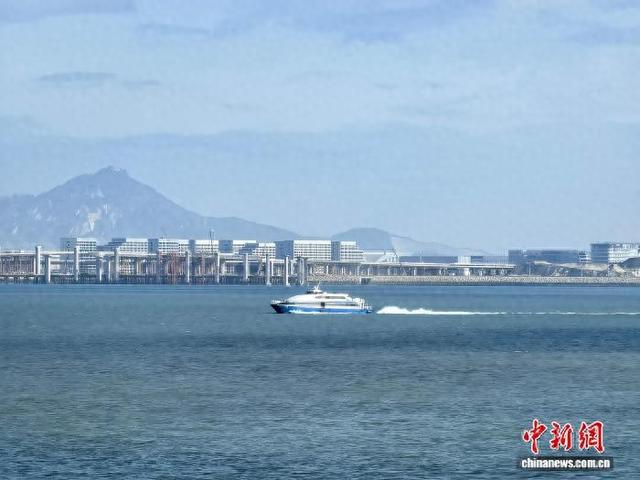
台湾写真:金门“十一”陆客破万 “小三通”助推旅游热
Zhong Guo Xin Wen Wang· 2025-10-09 23:22
Core Insights - The recent surge in tourism to Kinmen during the "Eleventh" holiday has been significantly driven by the "Mini Three Links" policy, allowing increased travel from mainland China [1][2] - From October 1 to 8, over 10,000 mainland tourists visited Kinmen, contributing to a total of over 200,000 visitors since the resumption of travel last September [1] - The influx of tourists has revitalized local industries, including accommodation, transportation, dining, and retail [1][5] Tourism Growth - The number of mainland tourists visiting Kinmen has consistently increased since the reopening of travel for Fujian residents, with the "Eleventh" holiday seeing particularly high demand [2] - Local accommodations, such as guesthouses, reported full bookings, with nearly 90% of guests coming from mainland China [1][5] - The demand for electric vehicle rentals has surged, with all available vehicles often booked in advance due to the dispersed nature of tourist attractions [1] Economic Impact - The restaurant industry has experienced a significant boost, with long queues reported at popular dining spots, indicating a strong consumer base among mainland tourists [5] - Local businesses have noted a substantial increase in revenue, with some reporting nearly double their earnings compared to the previous month [6] - Payment methods such as Alipay and WeChat Pay have been widely adopted, enhancing the shopping experience for tourists [7] Cultural Engagement - Tourists are engaging in local cultural activities, such as guided tours and festivals, which have been well-received and are attracting a high percentage of participants from Fujian [6] - Kinmen's historical and cultural offerings are appealing to visitors, with many expressing a desire to explore more of Taiwan beyond Kinmen [8]