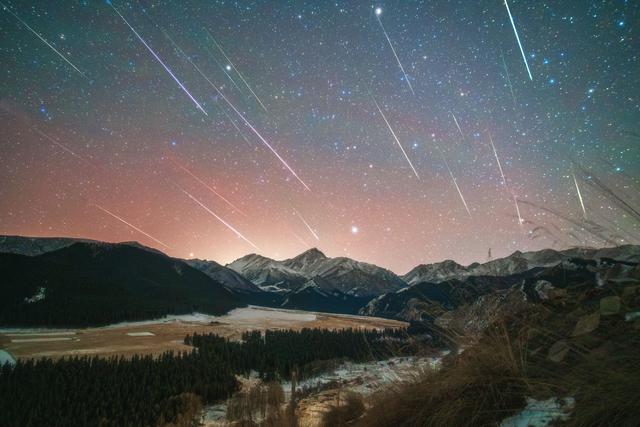
小熊座流星雨

Search documents
今年最后一个流星雨,要来了!广州最佳观赏时间确定
Huan Qiu Wang Zi Xun· 2025-12-22 01:37
Group 1 - The core event of the year, the Ursid meteor shower, will reach its peak on December 23 at 0:00, with a ZHR (Zenithal Hourly Rate) of approximately 10 [1][3] - The meteor shower is expected to be visible in the Northern Hemisphere due to its radiant point being near the North Celestial Pole, making it observable almost all night [3] - The best viewing time in Guangzhou is from 0:00 to 6:05 on December 23, as there will be no moonlight interference during the later hours of the night [1][3] Group 2 - The Ursid meteor shower is a recurring event that has been recorded in China since 1449, originating from the periodic comet 8P/Tuttle, which has a cycle of 13.6 years [3] - The meteor shower's active period lasts from December 17 to 26, with a typical ZHR of 10, but can occasionally reach up to 50 [3] - Observers are advised to choose open areas at least 20 kilometers away from city lights, use the naked eye for scanning the sky, focus on the northern direction, and note that conditions improve as dawn approaches [5]

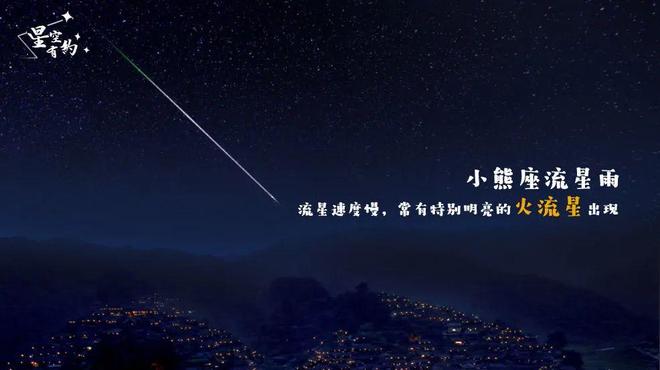
2025年流星雨迎来谢幕演出,小熊座流星雨22日极大
Xin Lang Cai Jing· 2025-12-20 14:58
Core Viewpoint - The 2025 Ursids meteor shower will peak on December 22, with favorable observation conditions for enthusiasts [1][3]. Group 1: Meteor Shower Characteristics - The Ursids meteor shower has a low activity rate, with a Zenithal Hourly Rate (ZHR) of around 10, and its active period is from December 17 to 26 [3]. - The radiant point of the Ursids is near Beta Ursae Minor, making it visible throughout the night for most observers in the Northern Hemisphere [3]. - The peak of the Ursids occurs around the winter solstice, providing longer observation times due to longer nights [3]. Group 2: Observation Tips - Observers are advised to find a location with minimal light pollution and a clear view of the sky, using the North Star to locate Ursa Minor [5]. - It is recommended to not focus solely on the radiant point, as meteors can appear in any part of the sky [5]. - The absence of moonlight during the peak of the Ursids this year enhances the observation experience [3].