
双子座流星雨

Search documents
双子座流星雨
Xin Lang Cai Jing· 2026-01-05 20:49
Group 1 - The Geminid meteor shower is one of the three major meteor showers in the Northern Hemisphere, alongside the Quadrantids and the Perseids [3] - The image captured in Lijiang, Yunnan Province, showcases the Geminid meteor shower using a stacking technique [3] - The Geminid meteor shower is known for its bright and colorful meteors, making it a popular event for skywatchers [3]

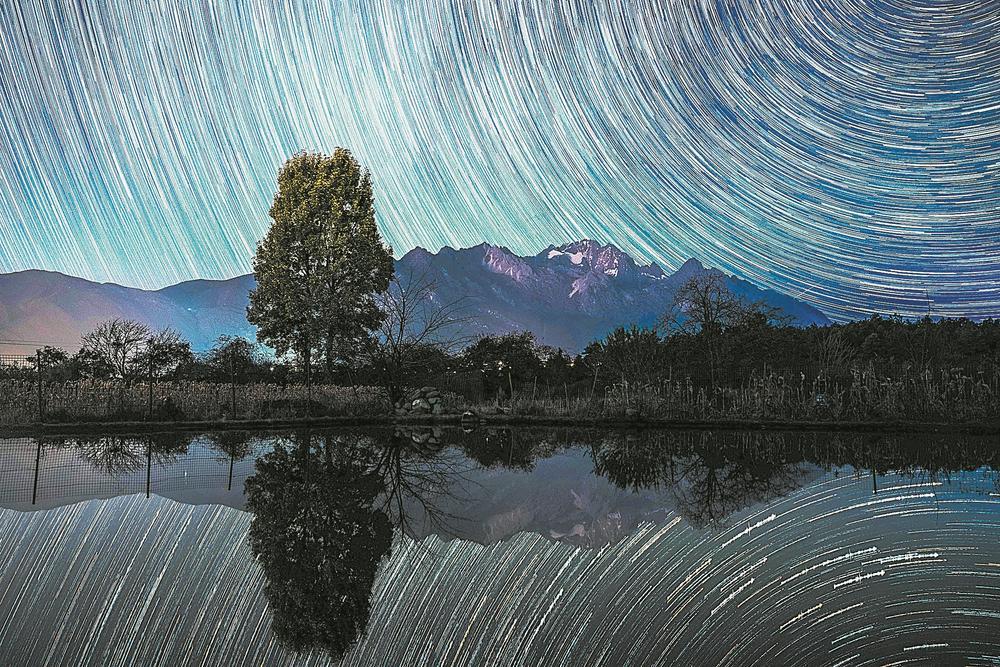
星空有约|时值“二九”,有一份抄手观天的浪漫
Xin Hua She· 2026-01-02 02:51
Core Viewpoint - The Quadrantids meteor shower will reach its peak on January 4, 2026, providing an opportunity for enthusiasts to observe this celestial event from the night of January 3 to the early morning of January 4 [1][2]. Group 1: Meteor Shower Characteristics - The Quadrantids meteor shower is one of the three major meteor showers in the Northern Hemisphere, alongside the Perseids in August and the Geminids in December [1]. - The active period of the Quadrantids is from December 28 to January 12, with the peak occurring around January 4, coinciding with the coldest part of winter [1]. - The Zenithal Hourly Rate (ZHR) of the Quadrantids is stable at around 100, with potential peaks reaching 200 or higher [1]. Group 2: Observational Challenges - The full moon during the peak of the Quadrantids will create significant light pollution, making it difficult to observe fainter meteors [2]. - Observers are advised to find locations with minimal light pollution and unobstructed views of the sky to enhance their chances of seeing the meteors [2]. Group 3: Viewing Recommendations - It is recommended to dress warmly due to the cold weather during the observation period [2]. - Observers may also witness the first full moon of 2026, which will be visible on the night of January 3 and remain full on the morning of January 4 [2].
2025年流星雨迎来谢幕演出,小熊座流星雨22日极大
Xin Lang Cai Jing· 2025-12-20 14:58
Core Viewpoint - The 2025 Ursids meteor shower will peak on December 22, with favorable observation conditions for enthusiasts [1][3]. Group 1: Meteor Shower Characteristics - The Ursids meteor shower has a low activity rate, with a Zenithal Hourly Rate (ZHR) of around 10, and its active period is from December 17 to 26 [3]. - The radiant point of the Ursids is near Beta Ursae Minor, making it visible throughout the night for most observers in the Northern Hemisphere [3]. - The peak of the Ursids occurs around the winter solstice, providing longer observation times due to longer nights [3]. Group 2: Observation Tips - Observers are advised to find a location with minimal light pollution and a clear view of the sky, using the North Star to locate Ursa Minor [5]. - It is recommended to not focus solely on the radiant point, as meteors can appear in any part of the sky [5]. - The absence of moonlight during the peak of the Ursids this year enhances the observation experience [3].
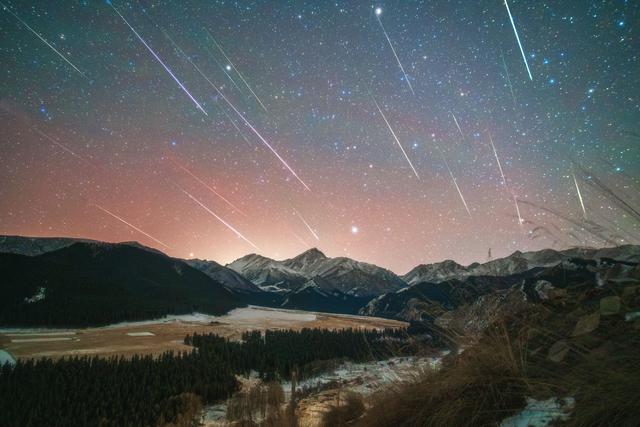
星空有约|冬夜焰火!双子座流星雨即将迎来极大
Xin Hua She· 2025-12-11 03:21
Core Viewpoint - The annual Geminid meteor shower is set to peak on December 14, providing excellent viewing opportunities for enthusiasts on the nights of December 13-14 and December 14 [1][7]. Group 1: Meteor Shower Characteristics - The Geminid meteor shower is one of the three major meteor showers in the Northern Hemisphere, alongside the Quadrantids and Perseids, with an active period from December 4 to 17 each year [1][3]. - The parent body of the Geminid meteor shower is asteroid 3200 Phaethon, making it the second known meteor shower not caused by a comet [3]. - The expected zenithal hourly rate (ZHR) for this meteor shower is around 150, characterized by slow-moving meteors, predominantly white in color, with many bright meteors and fireballs [5]. Group 2: Observational Conditions - This year's observational conditions are described as perfect, coinciding with a weekend and a favorable moon phase, with minimal moonlight interference during the peak viewing times [9]. - The radiant point of the Geminid meteor shower rises in the east shortly after dark, allowing for potential meteor sightings throughout the night [11]. - Observers are advised to choose locations with low light pollution and clear views, such as rural areas or mountain tops, to enhance the viewing experience [11]. Group 3: Viewing Tips - Observing the meteor shower requires focus and patience, as meteors appear briefly and unpredictably [12]. - It is recommended to not only focus on the radiant point, as meteors can appear anywhere in the sky [14]. - For photography enthusiasts, using a DSLR camera with a wide-angle lens and long exposure settings is suggested to capture the fleeting beauty of the meteors [14].
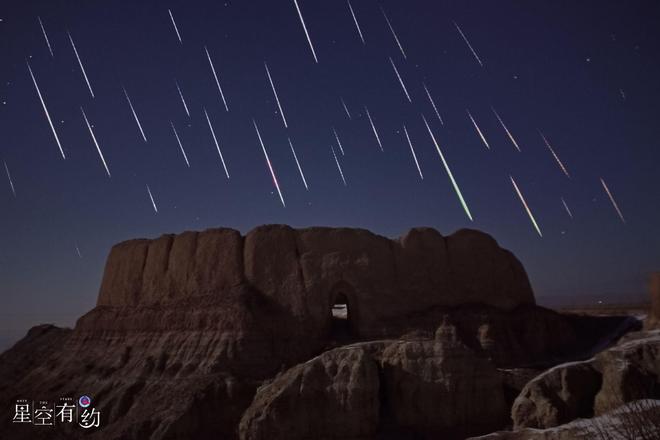
别错过!今年最后一次“超级月亮” 12月4日晚观测更佳
Yang Shi Wang· 2025-12-01 03:39
Core Viewpoint - The article discusses significant astronomical events occurring in December, including the last supermoon of the year and the peak of the Geminid meteor shower, providing details on optimal viewing times and conditions [1]. Group 1: Supermoon and Lunar Observations - The last supermoon of the year will occur on December 5, with optimal viewing on the night of December 4 [1]. - The distance between the moon and Earth varies between approximately 360,000 to 400,000 kilometers, resulting in a size difference of about 14% between the largest and smallest full moons [1]. Group 2: Mercury and Meteor Showers - Mercury will reach its western elongation on December 8, marking the last opportunity to observe the planet this year, with the next chance not until February [1]. - The peak of the Geminid meteor shower will occur on the morning of December 14, with the best viewing time from the night of December 13 to the early hours of December 14, featuring a zenithal hourly rate of about 150 meteors [1]. Group 3: Year-End Celestial Events - On December 31, the moon will pass by the Pleiades star cluster between 21:00 and 22:00, although the bright moonlight may obscure the visibility of the stars [1].