工业逆袭

Search documents
西媒:中国又开始"反人类”,曾经比黄金还贵的钛,中国拿它造锅
Sou Hu Cai Jing· 2026-02-10 03:42
Core Viewpoint - The article discusses the transformation of titanium from a strategic military material to a widely used industrial material in consumer products, highlighting China's advancements in titanium production and processing capabilities over the past decades [1][21]. Group 1: Titanium's Properties and Historical Context - Titanium is known for its high strength-to-weight ratio, with a strength close to high-strength steel but only 60% of its density, making it ideal for aerospace and military applications [3][9]. - The metal's high melting point of 1668°C allows it to maintain structural integrity in high-temperature environments, which is crucial for military aircraft and engines [3]. - Titanium's excellent corrosion resistance and biocompatibility make it suitable for various applications, including medical devices [5][7]. Group 2: Challenges in Titanium Production - The complexity of titanium extraction and processing has historically limited its use in mass markets, as it requires highly controlled conditions to prevent reactions with gases like oxygen and nitrogen [7][11]. - During the Cold War, titanium became a strategic resource due to its critical role in military technology, particularly in the development of the SR-71 reconnaissance aircraft [9][11]. Group 3: China's Rise in the Titanium Industry - China has emerged as a dominant force in the global titanium industry, overcoming previous limitations in processing technology and industrial capabilities [11][13]. - The country has developed a comprehensive industrial system for titanium production, achieving significant increases in sponge titanium output from a few thousand tons to approximately 200,000 tons annually by 2023, accounting for over 60% of global production [15][19]. - The shift from reliance on imported titanium products to domestic production has transformed China's industrial landscape, allowing for stable and continuous production at lower costs [15][19]. Group 4: Expansion into Consumer Markets - As production capabilities improved, titanium began to penetrate consumer markets, appearing in products like cookware, water bottles, and sports equipment, marking a significant shift from its traditional military and aerospace applications [17][19]. - The entry of titanium into the consumer market has diversified the industry's operational model, providing a stable demand base and enhancing the industry's resilience against economic fluctuations [19][21]. - This transition reflects a broader evolution of China's industrial system, showcasing its ability to transform raw materials into high-value products through integrated industrial capabilities [21].


乐山,一座文旅城市的工业逆袭
3 6 Ke· 2025-12-30 10:42
Group 1: Economic Transformation of Leshan - Leshan, a city with a GDP of 253.3 billion, is making significant strides in the hardcore technology sector, moving beyond its traditional image of scenic landscapes and local cuisine [1][17] - The city has a rich industrial heritage, exemplified by the legacy of Hou Debang, who established a foundational chemical industry in China with his patented method [4][6] - The chemical company Fuhua Chemical has emerged as a leader in the agricultural chemical sector, ranking among the top 20 globally and producing significant quantities of glyphosate and sodium dihydrogen phosphate [6][7] Group 2: Innovations in New Energy - Fuhua Chemical is leveraging its expertise to enter the new energy market, particularly in lithium iron phosphate production, which is in high demand due to the growth of electric vehicles [7] - The company can produce approximately 20,000 tons of lithium iron phosphate annually from its waste materials, capturing nearly 10% of the market share by 2024 [7] - The chemical industry cluster in Wutongqiao is projected to generate a value of 32.4 billion by 2024, with multiple green chemical projects underway [7][8] Group 3: Strategic Industry Development - Sichuan Weili Energy Co., Ltd. has successfully entered the all-vanadium flow battery market, which offers advantages over lithium batteries, such as higher safety and longer lifespan [10][11] - The company has created a complete supply chain for vanadium-based energy storage, contributing to the local economy and attracting related businesses to Leshan [11][12] - The development of industries in Leshan is guided by a clear understanding of local resources and strengths, allowing for strategic positioning in emerging markets [12] Group 4: Cross-Industry Innovations - Jiajing County, known for its bamboo paper production, is diversifying into high-tech industries such as nuclear medicine and aerospace materials [13][14] - The establishment of a major medical isotope production facility has positioned Jiajing as a leader in nuclear medicine, breaking international monopolies [13] - The county is also developing a comprehensive ecosystem for drone technology, supported by local resources and infrastructure [16] Group 5: Government Support and Policy - Leshan's government is implementing a dual-driven strategy of industrial strength and cultural tourism, aiming to reshape the city's industrial landscape [17][19] - Initiatives include streamlined project services and tax incentives to support businesses in their transformation and growth [19] - The city's approach serves as a model for other regions, demonstrating that success in high-end industries is achievable through strategic resource management and industry alignment [19]
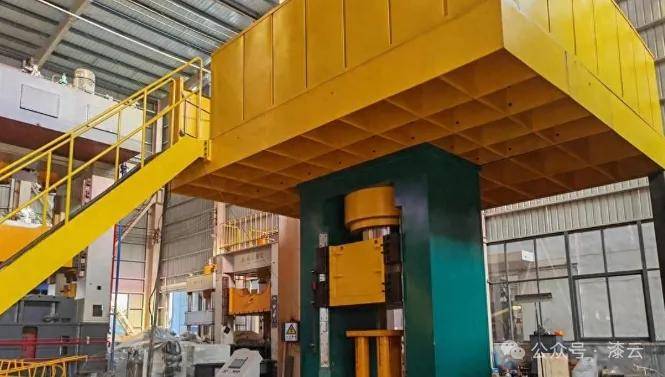
中国又一科技迎重大突破!用3年打破垄断,造出3.6万吨钢铁巨兽!
Sou Hu Cai Jing· 2025-08-22 15:45
Core Insights - The article discusses the historical challenges faced by China in producing seamless steel pipes, which are critical for energy security, national defense, and high-end manufacturing [1][5][11] - It highlights the transformation from dependency on foreign technology to achieving self-sufficiency and technological advancement in seamless steel pipe production [3][9] Industry Overview - In the 1990s, China faced exorbitant prices for seamless steel pipes, with costs reaching $20,000 per ton, and was subject to restrictive technology transfers from Western countries [1][3] - The lack of access to core technologies and advanced equipment led to a sense of industrial vulnerability, prompting a national initiative to develop domestic capabilities [5][7] Technological Development - A dedicated team of engineers and scientists was formed to create seamless steel pipes from scratch, overcoming significant technical challenges without initial design blueprints [7][9] - The key equipment, a vertical extrusion machine, was developed, which allowed for the production of high-quality seamless steel pipes, marking a significant milestone in China's industrial capabilities [9] Market Impact - The successful production of seamless steel pipes led to a dramatic price drop from $20,000 to $6,000 per ton, disrupting the market and diminishing the pricing power of foreign suppliers [9] - China's self-sufficiency in seamless steel pipe production has increased significantly, with domestic production rates exceeding 70% to 80% in high-end sectors like nuclear power and aerospace [9][11]