市研率

Search documents
时迈药业IPO:核心产品研发投入逐年走低 四年四换CFO估值已超行业水平
Xin Lang Zheng Quan· 2025-11-28 08:00
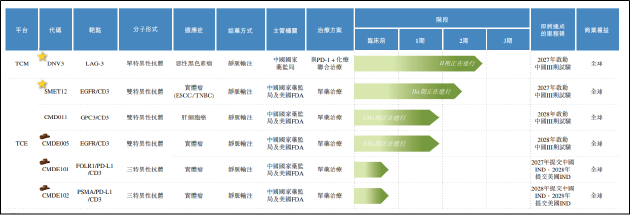
Core Viewpoint - Zhejiang Shimai Pharmaceutical Co., Ltd. has submitted its prospectus to the Hong Kong Stock Exchange, aiming for an IPO under Rule 18A, with Huatai International as the sole sponsor. The company focuses on T-cell engagers (TCE) therapies and has attracted investments from notable firms like Betta Pharmaceuticals and Tigermed, achieving a post-Series C valuation of 2.23 billion yuan. However, it faces multiple risks, including reduced R&D investment, frequent changes in financial leadership, and safety concerns regarding core products [1][2]. Financial Performance - The company's revenue for 2023, 2024, and the first half of 2025 is projected to be 14.65 million yuan, 6.62 million yuan, and 2.28 million yuan, respectively, indicating minimal income. Concurrently, net losses are expected to be 74.94 million yuan, 59.89 million yuan, and 25.42 million yuan, leading to cumulative losses exceeding 160 million yuan over two and a half years. Historical cumulative losses since inception are nearing 500 million yuan [2][4]. - R&D expenses have significantly decreased, with figures of 76.11 million yuan, 53.38 million yuan, and 22.39 million yuan for the respective years, reflecting a downward trend. The R&D investment for core products DNV3 and SMET12 has also seen a notable decline [2][4]. Product Development - The company has four clinical-stage candidates, including core products DNV3 and SMET12, which are currently in critical Phase II trials. The reduction in R&D spending during this pivotal phase raises concerns about the company's financial health and ability to validate drug efficacy and safety [4][5]. - DNV3's Phase I trial involved 11 patients, with an adverse event rate of 81.8%, while SMET12's trial included 16 patients, with 93.8% experiencing adverse events. These results raise questions about the safety of the products [6]. Market Position and Valuation - The global TCE market is projected to be only $3 billion in 2024, with the domestic market at 700 million yuan, indicating that TCE therapies are still in the early stages of development compared to the larger oncology market [5]. - The post-Series C valuation of 2.23 billion yuan places the company above industry averages, with a market-to-research ratio of approximately 42 times based on 2024 R&D expenditures. This is significantly higher than the median of 23.21 times for similar unprofitable biotech firms listed under Rule 18A [7].

应世生物IPO:零营收、高负债、对赌压身 资金告急C轮融资后火速递表
Xin Lang Zheng Quan· 2025-09-19 09:12
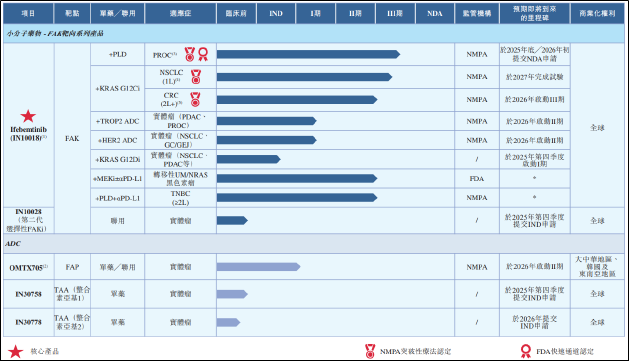
Core Viewpoint - InxMed Limited has submitted its IPO application to the Hong Kong Stock Exchange after completing a $34 million Series C financing round, indicating a strategic move to secure funding for its clinical-stage oncology products [1][8]. Financial Performance - The company reported operating losses of RMB 174 million, RMB 143 million, and RMB 27.5 million for the years 2023, 2024, and the first quarter of 2025, respectively, with cumulative losses reaching RMB 765 million by Q1 2025 [3][4]. - The first quarter of 2025 showed a significant reduction in losses compared to the same period in the previous year, primarily due to a positive change in the fair value of financial liabilities [3][4]. - R&D expenses have been decreasing, from RMB 1.36 billion in 2023 to RMB 1 billion in 2024, and further down to RMB 162 million in Q1 2025, while administrative expenses have been rising [5][6]. Product Pipeline - InxMed's core product, the FAK inhibitor ifebemtinib, is in Phase III clinical trials, positioning the company ahead of competitors like GSK and Amplia Therapeutics [5][6]. - The company has also acquired other candidates, including OMTX705, which is expected to enter Phase II trials in late 2026 [6]. Market Position and Competition - The FAK inhibitors represent a new direction in cancer treatment, with ifebemtinib being the only one in advanced clinical stages among its peers [5][6]. - The market for ifebemtinib is limited, with an estimated 17,800 cases of PROC in China in 2020, growing to 18,600 by 2024, indicating a modest growth rate of 1.1% [7]. Financial Health - As of March 2025, the company reported a net debt of RMB 765.9 million and current liabilities exceeding cash reserves by more than five times, raising concerns about financial sustainability [7][8]. - The recent Series C financing of RMB 243 million is insufficient to cover the company's debt obligations, which may explain the urgency in pursuing an IPO [8]. Valuation Metrics - Since its establishment in 2017, InxMed has raised approximately RMB 929.3 million, with a post-money valuation of about RMB 2.18 billion [8]. - The company's market-to-research ratio is approximately 20.41 times based on 2024 R&D expenditures, which is significantly lower than the median of 26.84 times for other unprofitable biotech firms listed under the 18A rule [8].
科望医药二战港交所:累亏超20亿资金链显著承压 核心管线均为引进自研能力待考
Xin Lang Zheng Quan· 2025-05-30 13:07
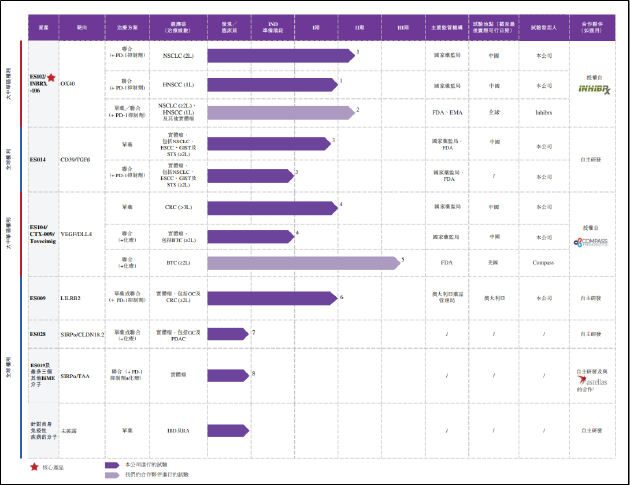
Core Viewpoint - Kewang Pharmaceutical has submitted its prospectus to the Hong Kong Stock Exchange for an IPO, aiming to raise funds despite facing significant operational challenges and financial losses [1][2]. Company Overview - Kewang Pharmaceutical was established in 2017 and focuses on enhancing immune responses against tumors by targeting suppressive factors in the tumor microenvironment [1]. - The company has completed four rounds of financing, raising approximately 1.79 billion yuan, with notable investors including Hillhouse Capital and Tencent [1]. Financial Performance - Kewang Pharmaceutical has not yet commercialized any products and reported revenues of 107 million yuan in 2024, primarily from collaborations and licensing agreements [2]. - Cumulative losses have reached 2.067 billion yuan as of December 31, 2024, with annual losses of 771 million yuan, 853 million yuan, and 88 million yuan from 2022 to 2024 [2]. - The company’s cash reserves have dwindled to 33 million yuan by the end of 2024, insufficient to sustain a year of R&D activities [6]. Research and Development Pipeline - The company’s core products, ES102 and ES104, are both licensed from other firms, raising concerns about Kewang's self-research capabilities [5][6]. - ES102 has shown a low overall response rate (ORR) of 11.1% in clinical trials, which may challenge its clinical value [5]. - ES104 has completed early-phase trials but is similarly licensed, indicating reliance on external innovations [5]. Valuation and Market Position - Kewang's valuation has increased over 30 times from 20 million USD in 2017 to approximately 600 million USD in 2021 [7]. - The company’s market-to-research ratio is around 37 times based on 2024 R&D costs, significantly higher than the median of 15.65 times for similar unprofitable companies listed in Hong Kong [7].