广义价值投资

Search documents
重仓白酒银行铁路!“泰信互联网+主题混合”现风格漂移,近三年跌20.67%,新任基金经理陈颖8月上任
Xin Lang Ji Jin· 2025-09-10 09:51
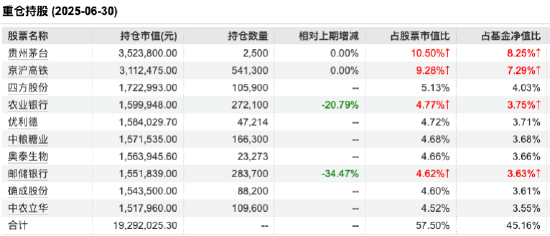
Core Viewpoint - The article highlights the phenomenon of "style drift" in public funds, particularly focusing on the 泰信互联网+主题混合 fund, which has deviated significantly from its stated investment theme despite regulatory scrutiny [1][12]. Group 1: Fund Performance and Holdings - The 泰信互联网+主题混合 fund's top ten holdings include stocks from various sectors such as liquor, railways, banking, biomedicine, and agriculture, which are not closely related to the "Internet+" theme [1][2]. - As of June 30, 2025, the fund's top ten holdings accounted for 57.50% of the stock market value and 45.16% of the fund's net value, indicating a high concentration but a lack of focus on internet or technology growth stocks [2]. - Year-to-date (YTD) return for 2025 is 4.97%, significantly underperforming the沪深300 index (12.74%) and the average of flexible allocation funds (19.82%) [3]. Group 2: Long-term Performance - Over the past year, two years, and three years, the fund's returns have consistently lagged behind the average of similar funds and mainstream indices, with a total return of 58.50% and an annualized return of 5.10% since its inception in 2016 [5]. - The current fund manager, 陈颖, has seen a return drop of 4.35% within less than two months of tenure, while previous managers have generally delivered negative returns, raising concerns about the stability and effectiveness of the investment team [6]. Group 3: Fund Structure and Management - The fund, established on June 8, 2016, has a current size of only 0.43 billion, categorizing it as a typical mini-fund, with 100% of its investors being individual investors and no institutional investors [8]. - The fund manager's commentary in the second quarter report focused on macroeconomic analysis and broad value investment frameworks, lacking specific insights into the "Internet+" investment opportunities, indicating a disconnect between the fund's stated investment strategy and actual management practices [10].