建筑设计

Search documents
艺术回望2025|普利兹克奖重返中国与这一年的重要建筑
Xin Lang Cai Jing· 2025-12-30 10:50
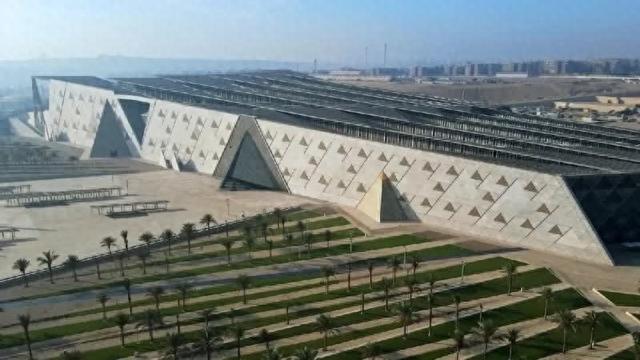
Key Points - The Grand Egyptian Museum, the largest single-civilization museum in the world, officially opened in November 2025 after 20 years of construction, with a total investment of $1.1 billion and housing over 100,000 artifacts [1][3] - The museum's design, by architect Shih-Fu Peng, features a radiating cliff-like structure that harmonizes with the nearby pyramids, creating a visual connection [3] - The museum's exhibition space is organized into 12 galleries, allowing for a non-linear visitor experience that emphasizes themes of society, power, and faith [5][7] - The Osaka Expo's main building, "The Great Roof," designed by architect Sou Fujimoto, has sparked controversy due to its high cost and complex construction, costing approximately 1.6 billion RMB [9][11] - The V&A East Storage Space in London redefines museum display by inviting public interaction with hidden collections, allowing visitors to pre-book specific items from over 500,000 artifacts [15][22] - Liu Jiakun, the second Chinese architect to win the Pritzker Prize, completed the Weiwuyuan Bookstore, transforming an abandoned granary into a cultural space that blends ancient and modern elements [24][26] - Wang Shu's Xi'an Grand Theatre, his first theatre design, features a modern interpretation of traditional Chinese architecture and will serve as a significant cultural venue in the region [30][31] - The Fenix Museum in Rotterdam explores immigration themes and serves as a cultural symbol, built on the site of a historic warehouse [33][36] - The Obama Presidential Center in Chicago aims to redefine the presidential library concept by integrating community spaces and activities, featuring a 68-meter tall museum building [38][40] - The St. Lawrence Market in Toronto has been expanded to include a city courthouse, blending traditional market functions with modern civic needs [44][46] - The Abu Dhabi Guggenheim Museum, designed by Frank Gehry, is nearing completion and will be one of the largest Guggenheim museums globally, focusing on modern and contemporary art from the Middle East and beyond [51][55] - The Shanghai Grand Opera House, designed to resemble a giant folding fan, is set to open in 2026 and aims to create a vibrant public space [59][63]

欧洲最高楼建得有讲究
Jing Ji Ri Bao· 2025-08-16 21:48
Core Points - The Lakhta Center is the tallest building in Europe, with a height of 462 meters including the spire, surpassing the previous record held by the Federation Tower in Moscow at 370 meters [2] - The building has won multiple prestigious architectural awards, including the Emporis Skyscraper Award and the Best Tall Building Award from the Council on Tall Buildings and Urban Habitat [2] - The design and construction of the Lakhta Center faced significant challenges due to extreme temperature fluctuations and strong winds in St. Petersburg, necessitating innovative engineering solutions [3] Group 1: Architectural Significance - The Lakhta Center features a unique twisting design, with each floor rotated at a certain angle relative to the one below, creating a "smooth twisting shape" [2] - The building's entrance arch has an impressive column-free span of 88 meters, utilizing glass as a load-bearing component, a first in architectural history [2] - The building's silhouette resembles a torch, symbolizing the Gazprom company, and its façade consists of over 16,000 "cold-bent glass units" [3] Group 2: Functional Aspects - Although primarily an office building, the Lakhta Center includes multifunctional halls, a 7,000 square meter educational center, and a spherical planetarium that can accommodate up to 140 people [4] - It features a panoramic restaurant at 320 meters, the highest dining venue in Europe, and an observation deck at 360 meters equipped with interactive telescopes for visitors [4] - The Lakhta Center has become a modern symbol of St. Petersburg, enhancing the city's tourism potential and urban environment quality [4]
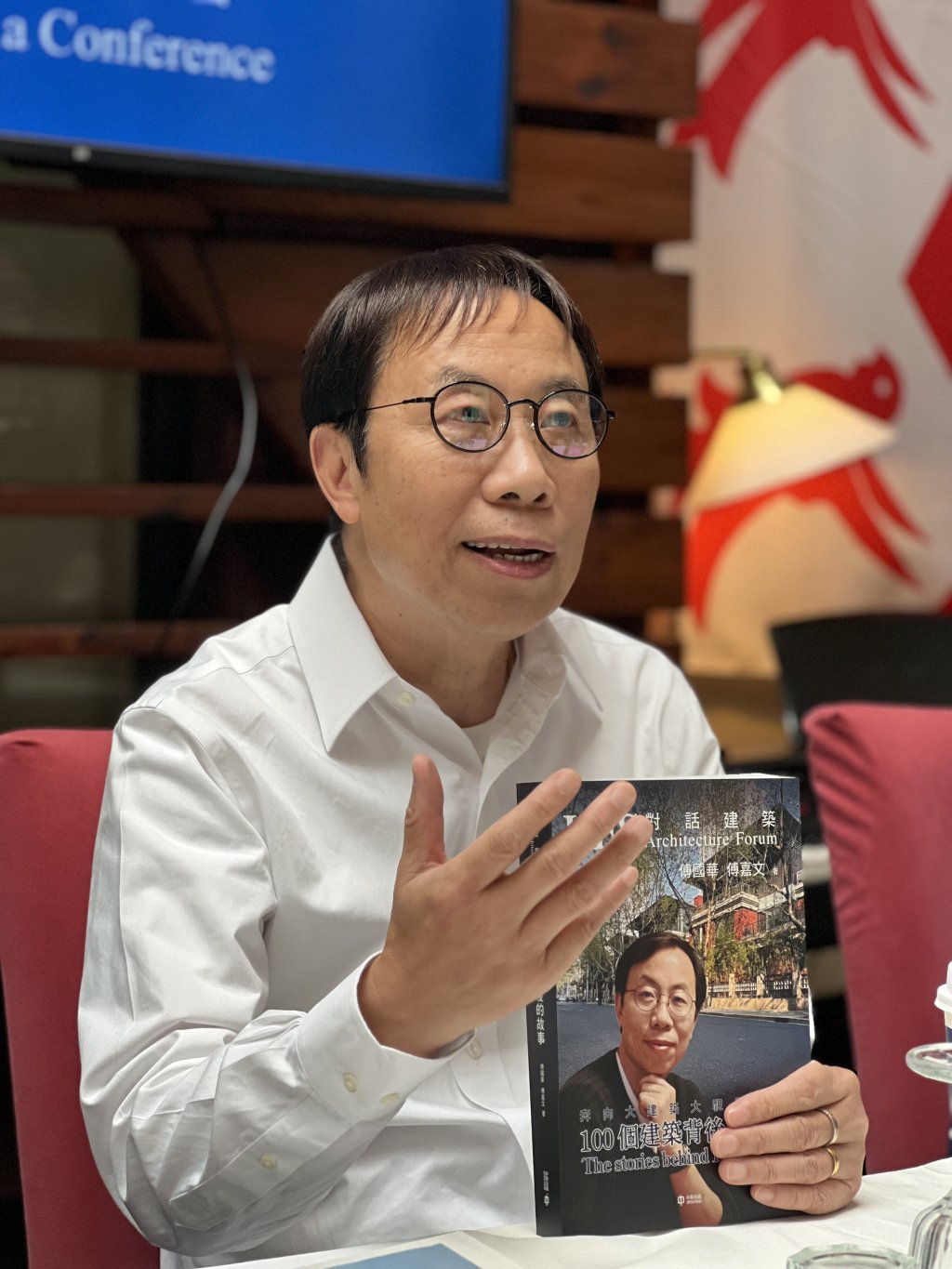
城市有温度建筑有故事,《100个建筑背后的故事》遍布上海
Xin Lang Cai Jing· 2025-07-17 06:40
Core Viewpoint - The newly published book "100 Stories Behind Buildings" by Dr. Fu Guohua and his son Fu Jiawen aims to highlight the narratives and design philosophies behind various architectural projects, encouraging a deeper appreciation for architecture and its impact on urban life [1][4]. Group 1: Author Background - Dr. Fu Guohua is a professor at McGill University and the founder of KFS Architects in Canada, with educational credentials from Tongji University and McGill University in urban planning and architecture [3]. - He has over 25 years of experience in architectural design, which is reflected in the projects discussed in the book [4]. Group 2: Book Content - The book features nearly 50 projects located in Shanghai, which is described as the author's hometown, showcasing his pride in the buildings he has designed [5]. - It also includes around 20 projects in the Guangdong-Hong Kong-Macao Greater Bay Area, with a focus on the recently completed Hengqin Tianmu Qintai, a project that took 15 years to design [5]. - The architectural concept of Tianmu Qintai is described as a unique creation that integrates with its environment, emphasizing its distinctiveness to Hengqin [5][7]. Group 3: Architectural Philosophy - The book encapsulates the design concepts of 100 buildings, all personally conceived by Dr. Fu Guohua, representing his career achievements [7]. - The author expresses a desire for cities to have warmth and stories, indicating a philosophy that values the emotional and cultural significance of architecture [4].