
开发区管理制度改革

Search documents
尹弘主持召开全省部分开发区负责同志座谈会
Xin Lang Cai Jing· 2026-01-07 12:04
Group 1 - The meeting emphasized the importance of deepening the reform of the management system in development zones to support the successful start of the "14th Five-Year Plan" [1][3] - Development zones are seen as crucial for economic growth, especially in the context of a new round of technological revolution and industrial transformation [3][4] - The need for a shift in development models from merely pursuing scale and speed to focusing on innovation, structural optimization, and quality improvement was highlighted [3][4] Group 2 - The meeting called for a continuous deepening of management system reforms, improving the relationship between development zones and administrative regions, and enhancing the efficiency of the "management committee + company" model [4][5] - There is a strong emphasis on nurturing high-tech small and medium-sized enterprises and strengthening industrial chains to create a favorable industrial development ecosystem [4][5] - The importance of attracting investment through various methods, including scenario-based and chain-based investment strategies, was discussed to foster new economic growth points [4][5]

又一个国家级新区 “升级”了
Mei Ri Jing Ji Xin Wen· 2025-12-05 15:55
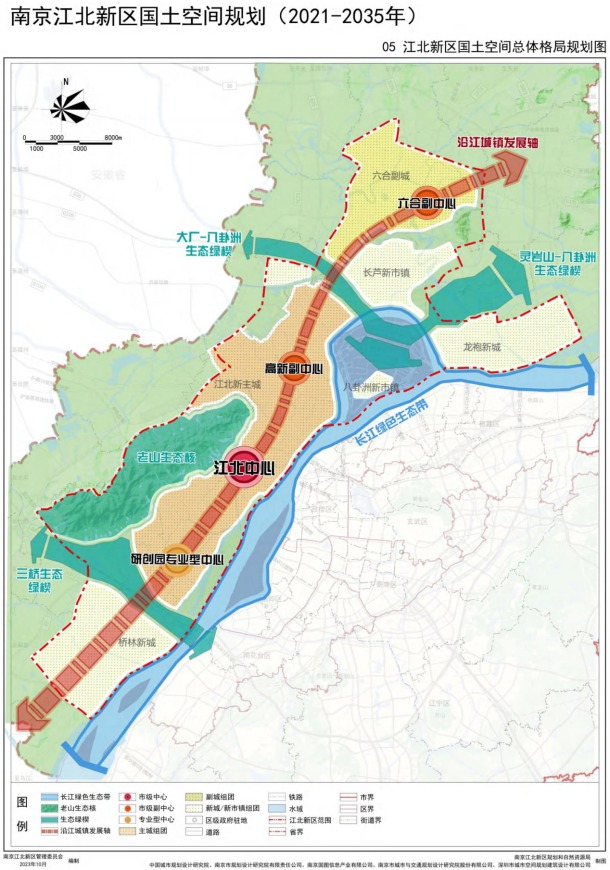
Core Viewpoint - The integration and upgrading of national-level new districts is a growing trend in China, exemplified by the recent merger of Nanjing's Jiangbei New District and Pukou District, aiming to enhance development capabilities and expand growth space [1][3][8]. Group 1: Recent Developments - On December 5, Nanjing announced the merger of Jiangbei New District and Pukou District, implementing unified leadership and integrated operations [1][3]. - This follows similar administrative adjustments in other cities, such as the establishment of the Liangjiang New Area in Chongqing, which transitioned from a functional zone to a complete administrative district [9][10]. Group 2: National Context - There are over 2,500 development zones across China, including national, provincial, and municipal new districts, highlighting the scale of this administrative structure [2]. - The recent Third Plenary Session of the 20th National Congress emphasized the need for reform in the management of development zones, focusing on the synergy between functional and administrative districts [2]. Group 3: Specific Cases and Mechanisms - The integration of Jiangbei New District and Pukou District is part of a broader trend where functional zones are merging with administrative districts, aiming for a more cohesive governance structure [3][4]. - The Jiangbei New District, established in 2015, is now entering a phase of unified governance, which is expected to enhance its competitive edge and economic contribution [4][7]. Group 4: Future Directions - The integration aims to provide a robust institutional mechanism to support high-quality regional development, with local leaders emphasizing the urgency and importance of this initiative [8]. - The administrative management mechanisms vary, with some areas adopting a "government-type" model while others, like Nanjing, are moving towards a "district-government integration" model [10][11].
又一个国家级新区,“升级”了
Mei Ri Jing Ji Xin Wen· 2025-12-05 15:13
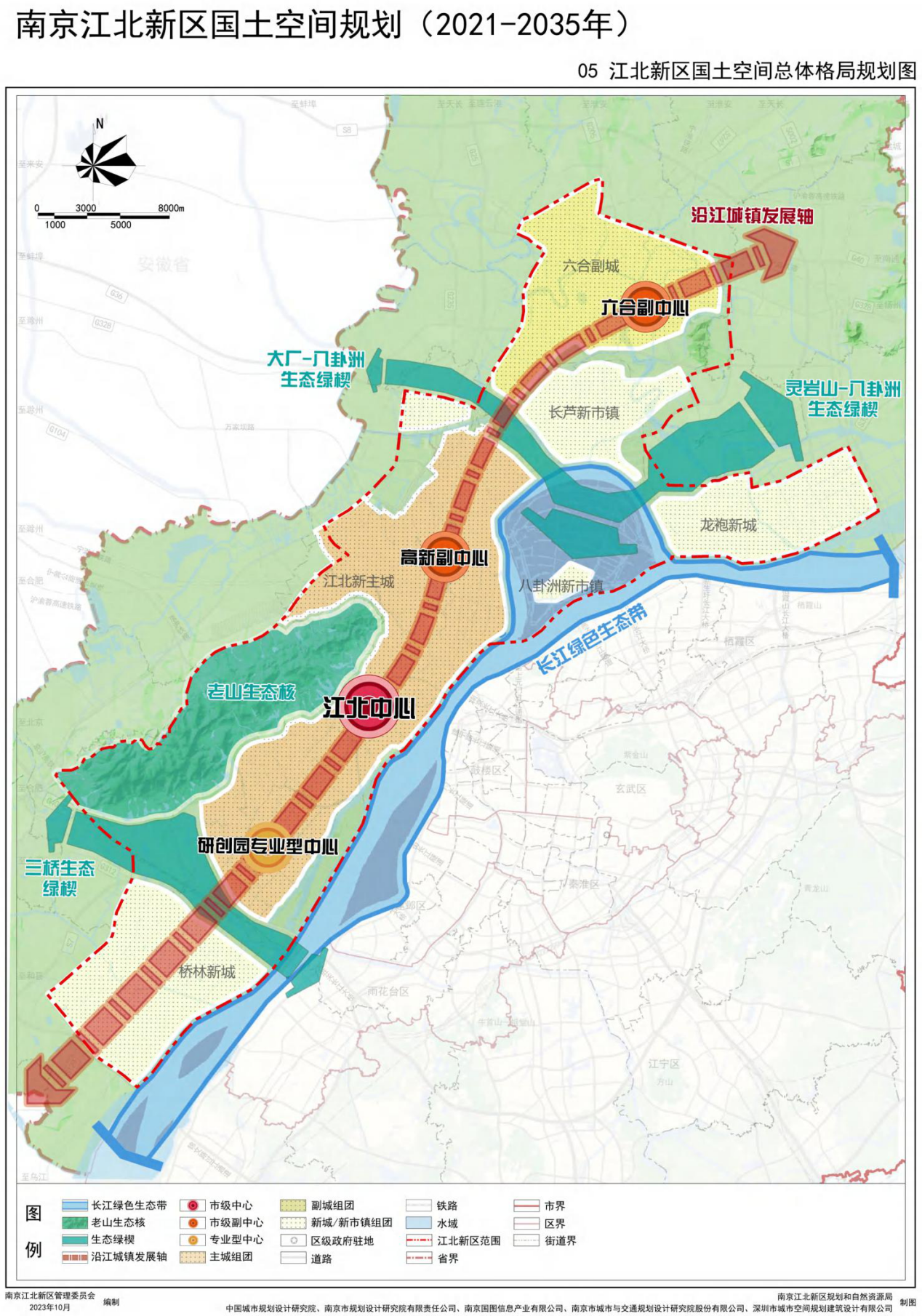
Core Viewpoint - The integration and upgrading of national-level new districts is gaining momentum, with recent examples including the merger of Nanjing's Jiangbei New District and Pukou District, as well as the establishment of the Liangjiang New Area in Chongqing, indicating a trend towards administrative and functional integration in various regions [1][2][6]. Group 1: Recent Developments - On December 5, Nanjing announced the integration of Jiangbei New District and Pukou District, aiming for unified leadership and integrated operations to enhance development capabilities [1][2]. - Chongqing's Liangjiang New Area recently transitioned from a functional zone to a complete administrative district, marking a significant administrative adjustment [6]. Group 2: Historical Context and Trends - Over the years, several new districts such as Shanghai's Pudong New Area and Tianjin's Binhai New Area have also undergone similar transformations, moving towards a model that combines administrative and functional roles [1][6]. - Currently, there are over 2,500 development zones across China, including various levels of new districts, highlighting the extensive landscape of regional development initiatives [1]. Group 3: Policy Implications - The Third Plenary Session of the 20th Central Committee emphasized the need for reform in the management of development zones, focusing on the collaborative development of functional and administrative areas [1]. - The integration of Jiangbei New District and Pukou District is seen as a critical step in providing a robust institutional mechanism to support high-quality regional development [6]. Group 4: Administrative Models - Different administrative models are being adopted across various regions, including "government-type," "integrated district governance," and "committee-type" models, each with its own advantages and challenges [7][8]. - The shift towards a "government-type" model, as seen in Chongqing, aims to streamline governance and enhance administrative efficiency by dissolving the previous committee structure [7][8]. Group 5: Future Directions - The ongoing reforms suggest a trend towards either "separation" of social management from economic functions or "integration" of administrative and functional roles, depending on regional needs and development stages [9][12]. - The focus remains on enhancing economic efficiency and maintaining the unique advantages of development zones while navigating the complexities of administrative integration [18].
安徽省开发区深化管理制度改革加快实现高质量发展
Zhong Guo Fa Zhan Wang· 2025-07-09 07:27
Group 1 - As of now, 133 provincial-level development zones in Anhui have established 76 AA-level and above platform companies, with 84 having implemented the dual separation of social affairs management and development operations, and 126 adopting the "management committee + company" reform model [1] - The provincial-level development zones have been granted 133 economic management items, facilitating the transfer of social functions such as land acquisition and social stability to local townships [2] - The implementation of the "management committee + company" operational mechanism aims to enhance service capabilities of platform companies and promote high-quality industrial development [3] Group 2 - The introduction of a performance evaluation system that breaks traditional identity frameworks allows for salary adjustments based on job roles and performance, thereby eliminating the "big pot rice" distribution model [4] - Through institutional innovation and market-oriented reforms, the development zones across the province are accelerating their transformation towards high-quality development [5]