成本与性能的博弈

Search documents
人形机器人:是风口还是泡沫?
Xin Lang Cai Jing· 2026-02-21 06:45
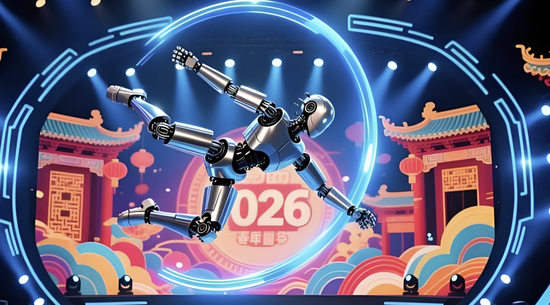
Group 1 - The 2026 Spring Festival marks a significant moment in technology history, showcasing the transition of humanoid robots from laboratory demonstrations to commercial competition [2][32] - The Spring Festival Gala featured impressive performances by various companies' robots, indicating a shift towards practical applications in the market [2][32] Group 2 - The Spring Festival Gala demonstrated the immense "traffic" potential for sales, with a 300% increase in robot search volume on JD.com and a 150% increase in order volume within two hours [4][35] - The limited edition "machine panda" from Magic Atom sold out quickly, with one unit fetching a price of 57,000 yuan, highlighting the high-value nature of these products [4][35] Group 3 - Four companies showcased their unique market positions: Yushu Technology as a "kung fu star," Galaxy General focusing on intelligence, Songyan Power on emotional connection, and Magic Atom on versatile capabilities [6][36] - The competition in the humanoid robot industry is intensifying, with companies needing to establish a clear identity in the market to survive [6][36] Group 4 - The humanoid robot industry is seeing significant orders from government and large clients, with notable contracts such as a 250 million yuan order for Ubtech and a 120 million yuan project for China Mobile [8][39] - The rental market for robots is booming, with platforms like "Qingtian Rent" reporting an 80% increase in transaction volume during the Spring Festival [8][40] Group 5 - Predictions indicate that humanoid robot sales in China will reach 28,000 units in 2026, a 133% increase from previous years, with major players like Zhiyuan Robotics and Yushu Technology capturing a significant market share [8][40] - The global humanoid robot shipment volume is projected to grow from 53 billion yuan in 2025 to 103 billion yuan in 2026, indicating a doubling of market size [57][58] Group 6 - A debate is ongoing regarding which company holds the title of "number one" in the humanoid robot market, with various reports showing differing shipment figures and market shares [12][43] - Companies like Zhiyuan Robotics and Yushu Technology are at the forefront, with reported shipments of over 5,500 and 5,200 units respectively for 2025 [12][45] Group 7 - Despite the excitement, the industry faces challenges, with robots still in the early stages of development and often unable to perform reliably in real-world environments [18][49] - Key issues include the high cost of data collection for training robots, hardware limitations, and the trade-off between cost and performance in production [20][52] Group 8 - The humanoid robot industry is expected to undergo a significant shakeout by 2026, with many companies likely to exit the market, similar to trends seen in the electric vehicle sector [25][56] - The current landscape is characterized by over 150 humanoid robot companies, with a majority being startups or companies from other sectors [25][56] Group 9 - The humanoid robot sector is viewed as both a bubble and a genuine opportunity, with the potential for substantial growth despite the risks involved [27][57] - The focus is shifting from storytelling to actual product delivery, with companies needing to prove their capabilities in real-world applications [24][55]