
战斗力标准

Search documents
火箭军:两战士军事训练成绩不合格,评优评先资格被否决
Xin Lang Cai Jing· 2025-12-20 01:35
Core Viewpoint - The article emphasizes the importance of maintaining combat readiness as the primary standard for evaluation within the military, highlighting that even outstanding performers can be disqualified from recognition if they fail to meet military training standards [1][3][18]. Group 1: Evaluation Standards - Two soldiers, despite their excellent performance in other areas, were disqualified from recognition due to inadequate military training results, reinforcing the principle that combat effectiveness is the sole criterion for evaluation [1][3]. - The decision to uphold strict standards has been positively received within the unit, with leadership supporting the idea that there are no exceptions to the combat readiness requirement [5][9]. Group 2: Training and Performance - The article discusses how the soldiers' focus on their specialized skills led to a neglect of essential military training, ultimately resulting in their disqualification [7][18]. - The unit has implemented measures to ensure that all personnel, regardless of their roles, maintain high levels of military training, emphasizing that every member is a combatant [9][11]. Group 3: Organizational Culture - The military unit has adopted a culture that prioritizes combat readiness, with various initiatives aimed at integrating training into daily operations and reinforcing the importance of military skills [11][15]. - The leadership has encouraged a shift from a "business over training" mentality to one where all personnel actively engage in training to enhance their combat capabilities [13][18]. Group 4: Training Initiatives - The unit has established regular training sessions and discussions to ensure that all members understand the importance of combat readiness and are equipped to meet the standards [11][15]. - Recent training exercises have shown significant improvements in performance, indicating that the emphasis on combat readiness is yielding positive results [17][18].

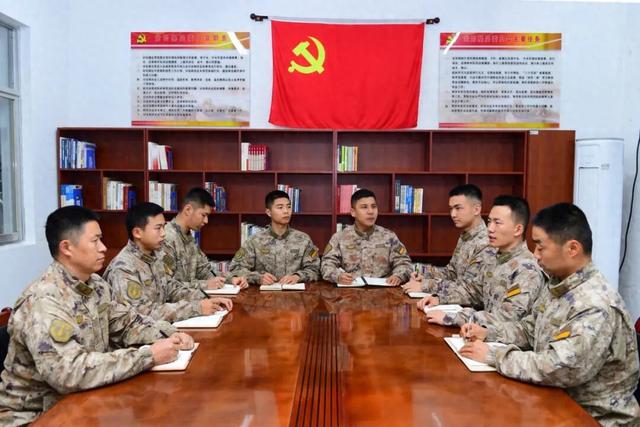
解放军报刊文:为战砺剑除积弊
Bei Jing Ri Bao Ke Hu Duan· 2025-11-17 00:08
Core Viewpoint - The article emphasizes the importance of political training and military readiness in achieving the goal of building a strong military by the centenary of the People's Army, highlighting the need for a focus on combat effectiveness and addressing ideological issues within the ranks [1][2][4][17] Group 1: Historical Context and Lessons - Historical instances show that military decline often begins with ideological complacency, leading to a loss of combat effectiveness [3][4] - The article references the decline of historical military forces due to a lack of preparedness and a shift towards a peacetime mentality, underscoring the need for a warrior spirit [3][4] Group 2: Current Military Focus - The current military strategy is centered on enhancing combat readiness and ensuring that all efforts are directed towards preparing for potential conflicts [2][4][11] - The leadership has called for a rigorous approach to training that reflects real combat scenarios, moving away from superficial practices [11][12][13] Group 3: Talent Management - The selection and utilization of military personnel are critical for ensuring combat readiness, with an emphasis on identifying and promoting capable leaders [5][6][7] - The military is focusing on cultivating high-quality, professional talent to meet the demands of modern warfare [6][7] Group 4: Organizational Strength - The establishment of strong party organizations within the military is highlighted as essential for maintaining unity and effectiveness [9][10] - Continuous improvement in the leadership and organizational capabilities of military units is necessary to adapt to changing combat environments [10][14] Group 5: Discipline and Conduct - Strict discipline is portrayed as a fundamental source of military strength, with historical examples illustrating its importance in achieving victory [14][15] - The article stresses the need for a culture of accountability and adherence to regulations to maintain operational effectiveness [15][16] Group 6: Future Outlook - The article concludes with a call to action for the military to remain vigilant and prepared, emphasizing that achieving the centenary goals requires sustained effort and commitment to combat readiness [17]
向着世界一流军队迈进
Ren Min Ri Bao· 2025-07-31 22:22
Group 1 - The article emphasizes the significance of the 80th anniversary of the victory in the Chinese People's War of Resistance Against Japanese Aggression and the World Anti-Fascist War, highlighting the historical context and the role of the Chinese Communist Party in leading the military [1] - It underscores the importance of a strong military for national security, as articulated by President Xi Jinping, who links the dream of national rejuvenation to the dream of a strong military [1][4] - The narrative reflects on the historical journey of the People's Army, emphasizing its commitment to the Party's leadership and the continuous evolution of military strategies and capabilities [3][4] Group 2 - The article discusses the absolute leadership of the Party over the military as a core principle, which has been maintained and refined throughout history, ensuring the military's loyalty and effectiveness [2][4][5] - It highlights the modernization of the military, including the introduction of new equipment and training methods, aimed at enhancing combat readiness and operational capabilities [10] - The narrative also touches on the military's role in disaster response and community support, showcasing the bond between the military and the civilian population [12][14] Group 3 - The article mentions the ongoing efforts to strengthen national defense education and foster patriotism among the youth, particularly through interactions with military personnel [15] - It emphasizes the importance of military-civilian unity and the support for military reforms, which are seen as essential for achieving the goals set for the military by 2025 [11][15] - The commitment to maintaining a high standard of combat readiness and the continuous improvement of military capabilities is reiterated as a priority for the armed forces [8][10]