东风系列导弹

Search documents
特朗普暴跳如雷!英国专家:一种情况下,美国将立即对华发动核战
Sou Hu Cai Jing· 2026-01-28 18:10
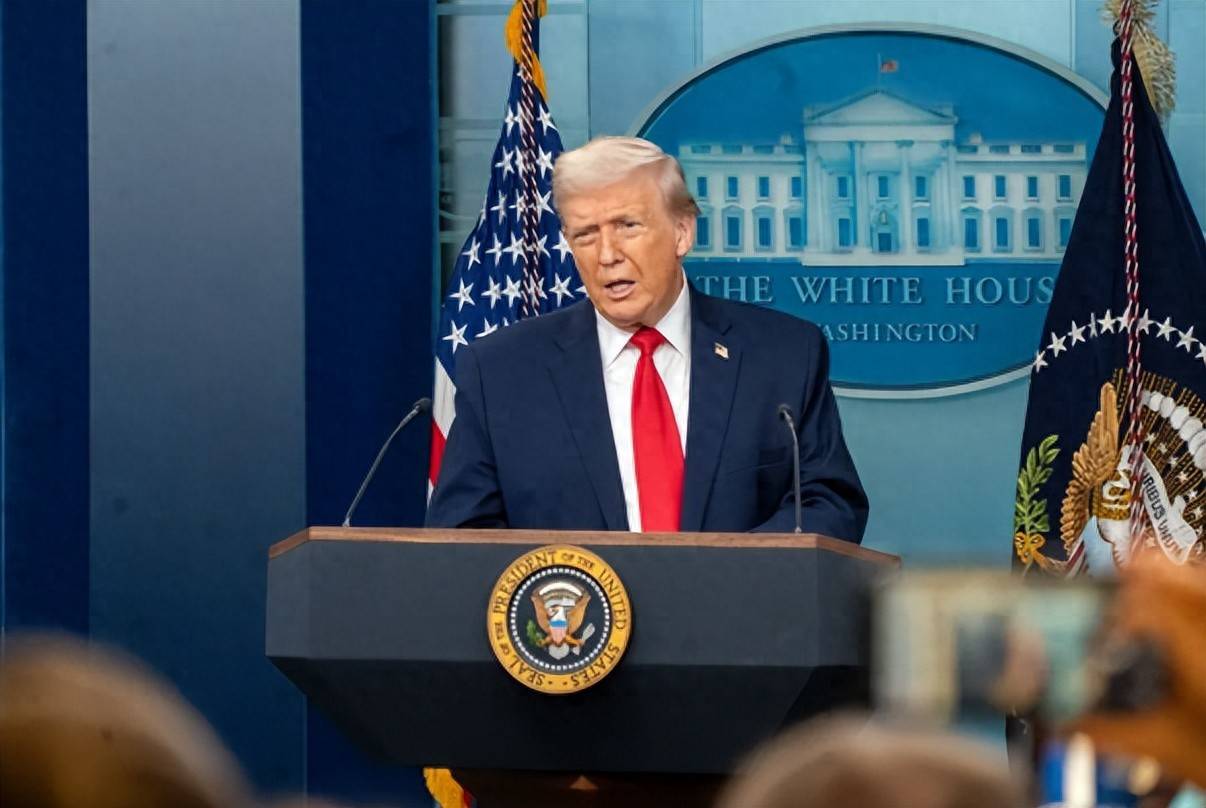
Group 1 - The recent geopolitical tensions have escalated with President Trump's sanctions targeting traditional allies Canada and South Korea [2][4] - Canada is attempting to balance its trade relations between the US and China, which has provoked a strong response from Washington [2][4] - Trump's threats include imposing punitive tariffs of up to 100% on Canadian goods if any substantial trade agreements with China are made [4] Group 2 - South Korea has faced similar sanctions, with tariffs on its automotive and pharmaceutical sectors raised from 15% to 25% due to perceived failures in trade commitments to the US [5] - The sanctions against South Korea are a direct response to President Yoon Suk-yeol's recent high-profile visit to China, where numerous economic cooperation agreements were signed [6][8] - The US is exhibiting extreme anxiety over its geopolitical influence, as evidenced by its aggressive trade policies aimed at preventing allies from strengthening ties with China [8][30] Group 3 - The US Department of Defense's recent National Defense Strategy report has sparked debate, as it contrasts sharply with Trump's aggressive trade rhetoric [10] - The report avoids mentioning Taiwan and emphasizes cooperation in areas of mutual interest, suggesting a shift towards a more pragmatic approach to US-China relations [12][13] - Analysts interpret this as a sign of the US military's acknowledgment of its limitations in a direct confrontation with China, despite ongoing military superiority [10][13][20] Group 4 - Economic data indicates that China, with a population of 1.4 billion and a GDP growth rate around 5%, is on a trajectory to surpass the US economically within 10 to 20 years [16] - The US military remains a significant asset, with annual defense spending that exceeds the combined total of the next nine countries, maintaining a global military presence [18] - The current military advantage of the US is seen as a critical window for action against China, as economic competition appears increasingly unfavorable for the US [20][22] Group 5 - There is a faction within the US military advocating for preemptive action against China, viewing military engagement as a necessary strategy to disrupt China's modernization [22][24] - The potential for nuclear conflict is highlighted, with the US military's willingness to consider first-use scenarios under specific conditions [24][26] - The US is expected to continue leveraging trade wars and geopolitical tensions to slow China's progress while preparing its military capabilities for future confrontations [28][30]

“国之大事”澎湃“中国力量”
Xin Lang Cai Jing· 2025-12-26 16:58
Group 1 - The core viewpoint emphasizes the synchronization of "top-level design" and "grassroots practice" in achieving the goals set by the "14th Five-Year Plan," which focuses on high-quality development and building a strong domestic market [4] - The achievements highlighted include advancements in intelligent production lines, increased job opportunities, and enhanced consumer choices, making "Chinese-style modernization" a tangible reality [4] - The narrative captures both the hard power represented by advanced military equipment and the soft sentiments of historical remembrance and peace, showcasing the duality of China's strength [4] Group 2 - The concept of "breakthrough" and "inclusive growth" is increasingly evident, with innovations like DeepSeek making top-tier AI accessible to small and medium enterprises and the general public [4] - The construction of the Hainan Free Trade Port is noted for transforming reform dividends into benefits for people's livelihoods, reflecting a commitment to societal welfare [4] - The focus on technological and institutional innovation as core development models enhances China's confidence and resilience in the global landscape [4]

向着世界一流军队迈进
Ren Min Ri Bao· 2025-07-31 22:22
Group 1 - The article emphasizes the significance of the 80th anniversary of the victory in the Chinese People's War of Resistance Against Japanese Aggression and the World Anti-Fascist War, highlighting the historical context and the role of the Chinese Communist Party in leading the military [1] - It underscores the importance of a strong military for national security, as articulated by President Xi Jinping, who links the dream of national rejuvenation to the dream of a strong military [1][4] - The narrative reflects on the historical journey of the People's Army, emphasizing its commitment to the Party's leadership and the continuous evolution of military strategies and capabilities [3][4] Group 2 - The article discusses the absolute leadership of the Party over the military as a core principle, which has been maintained and refined throughout history, ensuring the military's loyalty and effectiveness [2][4][5] - It highlights the modernization of the military, including the introduction of new equipment and training methods, aimed at enhancing combat readiness and operational capabilities [10] - The narrative also touches on the military's role in disaster response and community support, showcasing the bond between the military and the civilian population [12][14] Group 3 - The article mentions the ongoing efforts to strengthen national defense education and foster patriotism among the youth, particularly through interactions with military personnel [15] - It emphasizes the importance of military-civilian unity and the support for military reforms, which are seen as essential for achieving the goals set for the military by 2025 [11][15] - The commitment to maintaining a high standard of combat readiness and the continuous improvement of military capabilities is reiterated as a priority for the armed forces [8][10]
全球首个击落隐身战机的部队,用上了中国防空导弹
Huan Qiu Shi Bao· 2025-07-11 02:12
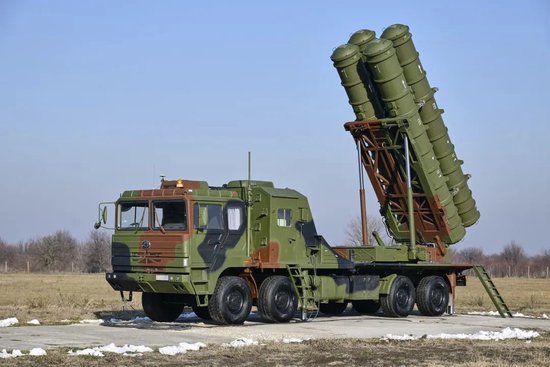
Core Viewpoint - The article highlights the significance of Serbia's 250th Air Defense Brigade, which gained fame for shooting down a NATO F-117A stealth fighter during the 1999 conflict, and its current collaboration with China in acquiring advanced air defense systems, specifically the FK-3 and HQ-17AE missile systems [1][3][4]. Group 1: Historical Context - The 250th Air Defense Brigade is renowned for using the SAM-3 missile to down the F-117A, marking the first instance of a stealth aircraft being shot down by a surface-to-air missile [1][4]. - The F-117A was considered invulnerable due to its stealth technology until it was successfully targeted by the older SAM-3 system, showcasing the effectiveness of training and tactics over technological superiority [6][7]. Group 2: Current Developments - Serbia has publicly showcased its new Chinese-made FK-3 and HQ-17AE air defense systems, with officials expressing pride in these acquisitions [7][9]. - The FK-3 system has a maximum range of 100 kilometers and can intercept various aerial threats, significantly enhancing Serbia's air defense capabilities [12]. - The HQ-17AE system is designed for low-altitude defense and can engage multiple targets simultaneously, further strengthening Serbia's military capabilities [15]. Group 3: User Experience and Collaboration - The 250th Air Defense Brigade has reported high satisfaction with the performance and reliability of the Chinese missile systems, emphasizing effective collaboration with Chinese manufacturers for system adaptations [9][12]. - The introduction of these systems has improved Serbia's airspace control and defense capabilities, allowing for better protection of critical infrastructure [9][12]. Group 4: Future Outlook - The brigade's commander expressed interest in continuing to monitor advancements in Chinese military technology, indicating a commitment to integrating new systems into Serbia's defense strategy [16].