技术品味

Search documents
一个VC的十年成长之路:3年投出独角兽,10年收获千亿市值IPO
创业邦· 2026-03-15 06:06
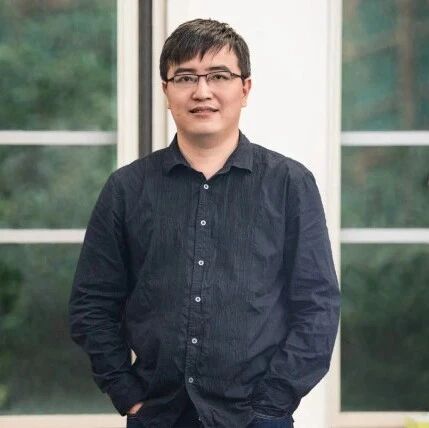
Core Viewpoint - The article discusses the investment journey of Chen Yu, a partner at Yunqi Capital, highlighting his investment philosophy and the successful ventures he has backed, including MiniMax, PingCAP, and others. It emphasizes the "3, 7, 10" rule for venture capitalists, which outlines the milestones for a successful investor over a decade [6][16][29]. Group 1: Investment Philosophy - Chen Yu believes that a qualified VC investor should achieve specific milestones: invest in a unicorn within three years, ensure that unicorns survive by the seventh year, and facilitate their IPO by the tenth year [6][16]. - He emphasizes the importance of investing in founders who are smart, honest, ambitious, and possess technical taste, rather than solely focusing on their educational background [19][28]. Group 2: Successful Investments - MiniMax, which went public in early 2026 with a market capitalization exceeding HKD 100 billion, was initially valued at only CNY 1.2 billion during its angel round investment [5][25]. - PingCAP, another successful investment, was made during a time when few investors understood the distributed database sector. It has since become a unicorn with a valuation exceeding USD 1 billion [14][24]. - Chen Yu also invested in autonomous driving companies, including Yuanrong Qixing and New Stone, both of which have achieved unicorn status [18][21]. Group 3: Investment Strategy - The article highlights the importance of making investment decisions based on deep technical understanding and independent judgment, rather than following market trends [26][28]. - Chen Yu's approach involves assessing the underlying technology and the potential market size, focusing on the critical point when technology reaches maturity [24][29]. - He stresses that successful investments require continuous attention to commercialization from the outset, not just as an afterthought [28]. Group 4: Future Outlook - Looking ahead, Chen Yu is focusing on two main areas: physical AI and AI agents, particularly in international markets, as he believes China has advantages in AI hardware [29]. - The article concludes by reiterating the "3, 7, 10" rule as a comprehensive framework for VC growth and success in the investment landscape [29].

硅谷资深工程师:不止是 AI 产品,Coding 也需要好的 taste
Founder Park· 2025-10-06 02:05
Core Viewpoint - A good "taste" in technology is crucial for developing AI products, and it is distinct from technical ability. Cultivating a good technical taste can lead to results that exceed one's technical capabilities [2][5]. Group 1: Importance of Engineering Taste - Engineering taste is defined as the ability to choose appropriate engineering values for current projects, as most decisions in software engineering involve trade-offs between different goals [6][11]. - The essence of technical taste lies in understanding that every decision in software engineering is a trade-off, and recognizing the balance between conflicting engineering values is a hallmark of maturity in the field [11][15]. Group 2: Characteristics of Good and Bad Taste - Good taste is difficult to identify compared to technical ability, as it involves selecting suitable engineering values for specific technical problems. Success in projects can indicate good taste [16][17]. - Bad taste often stems from rigidity, where engineers advocate for methods that worked in past projects without considering their suitability for current projects [13][15]. Group 3: Engineering Values - Key engineering values that define technical taste include resiliency, speed, readability, correctness, and flexibility. Each engineer prioritizes these values differently based on the project requirements [11][12]. - Other important values include portability, scalability, and development speed, which can influence preferences for programming languages and architectural decisions [14]. Group 4: Developing Good Taste - To cultivate good taste, it is recommended to try different types of work and observe which aspects of projects are easy or challenging. Flexibility in thinking about software development is also essential [17][18].