技能

Search documents
理解Openclaw的工作原理才能发现养虾的魅力并沉迷其中
第一财经· 2026-03-09 05:37
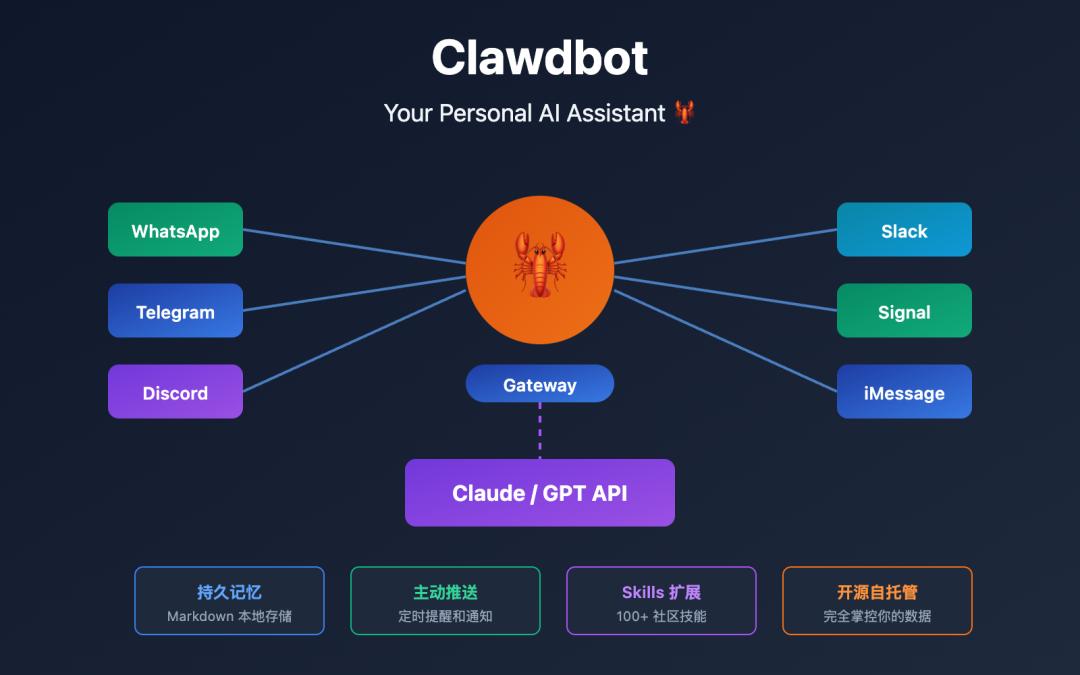
Core Viewpoint - The article discusses OpenClaw, an open-source AI project that allows users to control AI programming tools via chat software, highlighting its unique features and potential applications in personal assistance [5][6]. Group 1: Features of OpenClaw - OpenClaw operates as a 24/7 personal assistant, characterized by three essential features: continuous online presence, long-term memory, and self-learning capabilities [8]. - The continuous online feature allows OpenClaw to execute tasks automatically every half hour, making it feel more like a personal assistant rather than a simple search engine [9]. - Long-term memory in OpenClaw enables it to store information directly on the user's computer, allowing for easy access and modification [10]. - The self-learning aspect allows OpenClaw to improve its performance over time by accumulating knowledge and adapting to user preferences [11]. Group 2: User Experience and Setup - Users need to invest time in understanding OpenClaw's workings and troubleshooting issues, indicating that it is not just a simple tool but requires significant engagement to maximize its value [11][12]. - The article suggests that while OpenClaw may require initial setup and learning, it can provide substantial benefits if users are willing to invest the necessary time [12]. - Future iterations of similar products are expected to emerge, potentially reducing the setup complexity and enhancing user experience [12].


从ClawdBot爆火看AIoT万物智行的底层逻辑:为什么"技能"比"智能体"更重要?
3 6 Ke· 2026-02-03 11:14
Core Insights - ClawdBot's success signifies a shift in AI from conversational to execution-oriented capabilities, highlighting a significant demand gap for AI that can perform tasks effectively [1][4] - The focus of AIoT competition is expected to shift from the intelligence of agents to the ecosystem of skills, emphasizing the importance of practical skills over general intelligence [7][8] Group 1: ClawdBot Phenomenon - ClawdBot has gained immense popularity due to its ability to integrate various services and execute tasks, demonstrating the market's need for functional AI [1][17] - The rise of ClawdBot indicates a collective misunderstanding in the industry, where the focus has been on creating all-knowing AI rather than practical skills that interact with the physical world [3][5] Group 2: Skills vs. Agents - Agents are AI systems with decision-making capabilities, akin to project managers, while skills are standardized, reusable units that complete specific tasks, similar to specialized engineers [5][6] - The value of an agent lies in its ability to utilize high-quality skills, suggesting that practical skills are more valuable than the intelligence of the agent itself [6][10] Group 3: Future of AIoT - The future of AIoT may involve a shift towards a skill network, where devices expose their capabilities rather than each having redundant intelligence [8][16] - The introduction of standardized protocols like MCP will facilitate the integration of skills across devices, making the competition about the richness of the skill ecosystem rather than the intelligence of individual devices [9][12] Group 4: Application of Skills - Skills can be likened to apps for AI, allowing agents to complete tasks without the need for users to write prompts or debug tools [10][11] - The technology stack of AIoT can be divided into three layers: protocol layer (MCP), capability layer (skills), and scheduling layer (agents) [11][12][14] Group 5: Skills in Physical AI - The combination of skills with physical AI presents significant opportunities, such as in retail where devices can autonomously manage inventory and customer interactions [18][19] - The evolution of sensors from passive data reporters to active decision-support nodes illustrates the potential of skills in enhancing operational efficiency [19] Group 6: Conclusion - ClawdBot represents just the beginning of a broader transformation in the physical world, emphasizing that users are willing to invest in AI that can perform tasks effectively [20] - The integration of skills will elevate AIoT from basic infrastructure collaboration to value exchange collaboration, aligning with policy initiatives aimed at creating a fully interconnected smart environment [20]