智能体

Search documents
工业智能创新发展报告(2026年)
中国信通院· 2026-03-31 09:55
Investment Rating - The report does not explicitly provide an investment rating for the industry Core Insights - The manufacturing industry is undergoing a critical transformation towards high-quality development, driven by advancements in artificial intelligence (AI) technology, which is shifting from "discriminative analysis intelligence" to "autonomous decision-making intelligence" [5][12] - The future manufacturing landscape will focus on proactive innovation, flexible autonomy, and resilient openness, requiring new capabilities in comprehensive understanding, precise modeling, deep intelligent decision-making, and autonomous collaborative execution [6][15] Vision Chapter: Intelligent Manufacturing System - The manufacturing sector is at a pivotal point of comprehensive upgrade, moving from traditional growth models to a new era characterized by agile and flexible production to meet rapidly changing consumer demands [12] - AI innovation is providing strong momentum for industrial upgrades, transitioning from automated intelligence to autonomous intelligence capable of complex decision-making and real-time optimization [14] - The future industrial landscape will emphasize proactive innovation, agile production, and resilient resource organization, enabling rapid market response and continuous value creation [15][18] Technology Chapter: Integration of Industrial Mechanisms and Data Intelligence - The report outlines a technological framework consisting of digital platforms, intelligent models, digital twins, and intelligent agents, which collectively support the capabilities of comprehensive understanding, precise modeling, deep decision-making, and autonomous execution [36][39] - Intelligent models are evolving to understand diverse industrial information and deepen domain knowledge, enhancing decision-making reliability and interpretability [41][42] - Digital twins are becoming more efficient in modeling and dynamic evolution, allowing for real-time updates and continuous optimization of decision accuracy [49] Application Chapter: Evolution and Restructuring of Manufacturing Models - The integration of AI into industrial manufacturing is driving systemic changes across research and design, production, and supply chain processes, leading to more precise autonomous perception and optimization [55] - Research and design processes are shifting from efficiency-driven to high-certainty autonomous workflows, enabling continuous optimization through a closed-loop system that integrates demand, generation, simulation, iteration, and feedback [56][59]
腾讯研究院AI速递 20260330
腾讯研究院· 2026-03-29 16:11
Group 1: Claude Mythos and AI Developments - Claude Mythos 5.0 has begun gray testing, positioned as a larger and smarter model than Opus, with a 73% probability of launching in June [1] - Claude demonstrated the ability to autonomously discover vulnerabilities, including a 20-year stack buffer overflow in the Linux kernel [1] - Anthropic's engineers have shifted to a multi-agent parallel work mode, transitioning from coding to managing AI agents [1] Group 2: Claude Code Enhancements - Claude Code introduced an automatic mode using a transcription classifier, achieving a false block rate of only 0.4% in 10,000 real traffic instances [2] - The classifier employs a dual-layer architecture to ensure operational safety and prevent self-justification interference [2] - The system has a 17% false negative rate for excessive proactive behavior, with safety checks in multi-agent scenarios [2] Group 3: Google Gemini Advancements - Google launched Gemini 3.1 Flash Live, significantly improving voice interaction latency and naturalness, especially in noisy environments [3] - The model supports continuous audio-video stream input and includes capabilities like tool invocation and multi-language support [3] - Gemini API and Google AI Studio have been opened to developers, showcasing potential applications in design collaboration and gaming [3] Group 4: GLM-5.1 Model Release - Zhizhu released the GLM-5.1 model, which improved programming capabilities by nearly 10 points, now only 2.6 points behind Claude Opus 4.6 [4] - The model supports approximately 200K context windows and reasoning mode, and it was sold out shortly after launch due to high demand [4] - Users have successfully created interactive games using GLM-5.1, demonstrating its strengths in spatial understanding and complex task execution [4] Group 5: Runway Multi-Shot App - Runway launched the Multi-Shot App, allowing users to generate up to five-shot videos from a text description without manual editing [6] - The app is based on the Gen-4.5 model and includes features like automatic shot language orchestration and synchronized dialogue [6] - Runway recently completed a $315 million financing round, valuing the company at $5.3 billion, and is moving towards full film production capabilities [6] Group 6: Claude Code Memory 2.0 - Claude Code introduced the experimental AutoDream feature, which periodically reviews historical sessions to manage memory files [7] - The feature can be triggered automatically or manually, running for about 10 minutes to recap numerous sessions [7] - Its core value lies in reducing repetitive background explanations and enhancing key information recall [7] Group 7: NeurIPS Controversy - NeurIPS 2026 faced backlash for a new policy prohibiting submissions from entities on the OFAC sanctions list, including major Chinese companies [9] - The Chinese Computer Society and other organizations called for a halt to submissions and reviews, leading to a swift apology from NeurIPS [9] - NeurIPS updated its policy to welcome all compliant institutions and individuals for submissions [9] Group 8: AI Industry Insights - Industry leaders discussed the growth of token usage driven by intelligent agents, with a noted increase of 10 times, indicating a potential demand of 100 times [10] - The concept of "self-evolution" was highlighted as a key direction for AGI in the coming year, with significant efficiency improvements reported [11] - The need for infrastructure designed for agents rather than humans was emphasized, suggesting a future where infrastructure itself evolves [11]


9点1氪:“华人神探”李昌钰去世;罗技为“一降价你像狗一样跑来”广告语道歉;寿司郎就餐需出示手机SIM卡尾号
36氪· 2026-03-28 01:27
Group 1 - Renowned forensic expert Dr. Henry Lee passed away at the age of 87, leaving a significant impact on the field of forensic science and law enforcement [4] - Dr. Lee was born in Jiangsu, China, and had a distinguished career, serving as a forensic expert in all 50 U.S. states and at least 46 countries, providing consultation to around 600 law enforcement agencies [4] - He was involved in high-profile investigations, including the re-examination of President Kennedy's assassination, the O.J. Simpson murder case, and the 9/11 terrorist attacks [4] Group 2 - Logitech faced backlash for a derogatory advertisement that insulted consumers, leading to a public outcry and calls for boycotts [5] - Consumers reported quality issues with Logitech products, including malfunctioning keyboards and mice, in addition to the offensive advertisement [5] Group 3 - Sushi restaurant chain Sushi郎 implemented a new policy requiring customers to present the last four digits of their mobile SIM card when dining, aimed at preventing scalping of reservation numbers [7] - This policy was introduced in several cities, including Beijing and Shanghai, to ensure that the person who made the reservation is the one dining [7] Group 4 - Xpeng Motors announced a change in its Chinese name from "Xpeng Motors Co., Ltd." to "Xpeng Group," effective April 1, 2026, while maintaining its English name [6] - The company aims to enhance its brand identity as it continues to grow in the electric vehicle market [6] Group 5 - Wahaha temporarily halted 70% of its production lines, including several factories, due to production scheduling issues, with a planned resumption of operations around April 2 [8] - This decision reflects the company's current operational challenges and adjustments in production capacity [8] Group 6 - Yonghui Supermarket entered the second phase of its operational adjustment, achieving growth in same-store traffic and sales for the first time in five years [9] - The CEO announced a focus on "refined deep cultivation" in this new phase of transformation [9] Group 7 - KKR announced the sale of its data center cooling business, CoolIT, to Ecolab for $4.75 billion, representing a significant return on investment [13] - The deal is expected to yield approximately 15 times the original investment, including dividends [13] Group 8 - OpenAI's ChatGPT advertising pilot program generated over $100 million in annualized revenue within six weeks, indicating strong market demand for its advertising services [13] - This success highlights the growing interest in AI-driven advertising solutions [13] Group 9 - Dell Technologies experienced significant insider stock sales, with a board member selling nearly 460,000 shares for approximately $74.6 million [14] - This trend of insider selling raises questions about the company's future performance and investor confidence [14] Group 10 - The transformer manufacturing sector in China is currently experiencing high demand, with many companies operating at full capacity and some orders extending into 2027 [33] - The surge in demand is attributed to the rapid growth of AI technologies, which has created a substantial need for electrical infrastructure [33]

渤海证券研究所晨会纪要(2026.03.27)-20260327
BOHAI SECURITIES· 2026-03-27 00:29
Macro and Strategy Research - The report indicates that the export structure is continuously optimizing, which is expected to support export resilience, although risks from escalating Middle Eastern conflicts may weaken external demand [3] - Domestic demand shows a good start, but short-term incremental deployment may be relatively restrained due to policy emphasis on quality improvement [3] - Input inflation is expected to increase cost pressures on enterprises, posing challenges to corporate operating efficiency in Q2 [3] A-Share Market Liquidity - The report suggests that the relationship between capital supply and stock supply will become more balanced in Q2, with public funds expected to expand further as reforms deepen [4] - The overall funding situation is gradually improving, with policies aimed at increasing the proportion of stock financing leading to further growth in IPOs and refinancing [4] Industry Research - The rise of the "Token Economy" in the AI era is highlighted, with significant benefits expected for the computing power industry chain [7] - The report notes that the price increase trend in PC hardware has spread from memory to CPUs, with Intel and AMD raising prices across their entire CPU range [7] - The AI computing power segment is experiencing rapid growth in token usage, reflecting high demand in inference stages, which is expected to drive revenue from computing power services [8] Investment Opportunities - The report identifies potential investment opportunities in resource products and high-dividend varieties if geopolitical conflicts persist, while a resolution could revive market risk appetite and catalyze thematic opportunities [5] - Specific areas of focus include the computing power sector driven by the construction of large-scale intelligent computing clusters and the domestic power equipment industry benefiting from policy support and overseas energy transitions [5]
让生物学家摆脱数据分析之苦,斯坦福团队发布首个开源自进化生物分析AI智能体,实现自动化基因组学发现
生物世界· 2026-03-26 08:30
Core Insights - The article discusses the significant advancements in large language models (LLMs) and intelligent agent systems, particularly in the field of biology, enhancing capabilities in reasoning, planning, code generation, and tool invocation, which allows for complex data analysis to be executed at unprecedented speed and scale [2][3]. Group 1: PantheonOS Overview - PantheonOS is a newly developed biomedical intelligent agent system that is evolvable, privacy-protecting, and general-purpose, marking a shift from closed-source cloud-based data analysis to a fully open-source, locally deployed framework [3][4]. - The system features an abstract, extensible architecture that supports custom agent combinations and can perform end-to-end single-cell and multi-omics analyses, including complex biological tasks [4][6]. - Pantheon-Evolve, a core module of PantheonOS, enables intelligent code evolution, allowing the system to autonomously improve algorithms beyond human-designed baselines [4][6]. Group 2: Functional Architecture - PantheonOS employs a four-layer pyramid architecture, starting from the LLM layer, followed by the agent layer, interface layer, and application layer, facilitating a flexible user interface and a distributed multi-agent system [6][7]. - The LLM layer supports over 100 LLMs and includes features for distributed communication, while the agent layer coordinates tasks through a structured protocol [6][7]. Group 3: Use Cases - The system has been tested in various complex biological scenarios, such as reconstructing 3D gene expression maps during early mouse embryonic development, integrating single-cell multi-omics data for human fetal heart analysis, and optimizing virtual cell models for developmental biology [10][12][14][16]. Group 4: User Interfaces - Pantheon-UI offers a conversational analysis interface for biologists, allowing direct access to all functionalities without complex installations [21][22]. - Pantheon-CLI provides a command-line interface for advanced users to call various tools for biological analysis [24]. Group 5: Community and Future Developments - Pantheon-Store features over 1,300 different bioinformatics analysis skills, with ongoing updates planned, promoting community-driven component development and sharing [26]. - The research team emphasizes the importance of open-source collaboration in advancing scientific discovery and plans to release a desktop version and multi-platform support in the near future [29].

半导体IP巨头联手Meta做芯片,股价一夜狂飙16%
21世纪经济报道· 2026-03-26 06:32
Core Viewpoint - Arm has officially entered the production chip market with the launch of its Arm AGI CPU, designed for AI data centers, marking a significant shift from its traditional business model of providing semiconductor IP to chip design manufacturers [1][4][9]. Group 1: Product Launch and Market Reaction - Arm announced its first production chip, the Arm AGI CPU, aimed at AI data centers, with initial products set to be released within the year [1]. - Following the announcement, Arm's stock price surged over 16% on March 25, reflecting positive market reception [1]. Group 2: Business Model Transition - Historically, Arm's revenue primarily came from licensing fees and royalties from semiconductor IP provided to chip designers and cloud service providers [4]. - The decision to produce its own chips was driven by the increasing demand for CPU capabilities in the AI era, particularly for managing workloads generated by AI agents [4][5]. Group 3: CPU Market Opportunities - The rise of AI applications has created a renewed demand for CPU chips, which are essential for core computing tasks in cloud environments [5][7]. - Arm's CEO, Rene Haas, highlighted that each gigawatt of data center power requires approximately 30 million CPU cores, indicating a substantial market need [5][7]. Group 4: Technical Specifications and Performance - The Arm AGI CPU is designed to handle the workload of agent-based AI, featuring a reference server with dual-node design and a total of 272 cores per server [8]. - Arm's configurations can achieve performance levels exceeding current x86 systems by more than double, with significant capital expenditure savings for AI data centers [8][9]. Group 5: Competitive Landscape - Arm aims to compete with the established x86 architecture in the data center market, with plans for future product releases, including a second-generation Arm AGI CPU by 2027 [9][10]. - The company has formed partnerships with major players like Meta and others to enhance its market presence and product development [9][10]. Group 6: Future Market Potential - The total addressable market for data center CPU chips is projected to reach $100 billion by 2030, with Arm targeting $15 billion in revenue from this segment [13]. - Arm's ongoing IP business is also expected to grow, potentially reaching $10 billion by 2030, reflecting the company's strategic positioning in the evolving semiconductor landscape [13].

英伟达早不靠GPU躺赢!黄仁勋终极预判:10亿程序员时代将至,AI智能彻底廉价
AI前线· 2026-03-25 08:34
Core Insights - The core perspective of the article revolves around NVIDIA's strategic shift from being a graphics chip manufacturer to a comprehensive computing platform company, emphasizing the importance of AI factories in the future of AI competition [3][4][7]. Group 1: AI and Computational Evolution - Huang Renxun believes that the core competition in AI is transitioning from individual chips to "AI factories," which will be crucial for NVIDIA's future valuation [3]. - The "expansion law" is still in its early stages, with growth shifting towards reasoning, reinforcement learning, and agent collaboration, with synthetic data becoming a key fuel for AI iteration [3][29]. - The enhancement of AI capabilities now relies on system-level engineering rather than just upgrading individual GPUs, necessitating a holistic approach to computing systems [4][5]. Group 2: Strategic Design and Collaboration - NVIDIA's strategy involves proactive engagement with model development and addressing industry challenges, balancing generality and specialization to maintain rapid architectural iterations [4][5]. - Huang emphasizes the importance of extreme collaborative design, where all technical experts work together to solve complex problems, ensuring that system performance scales efficiently with increased computational resources [10][12][16]. - The company has a unique approach to decision-making, involving collective input from various experts to shape future strategies and innovations [5][13][28]. Group 3: Future Predictions and Market Dynamics - Huang predicts that the future of programming will expand to a billion-level scale, emphasizing the need for all workers to learn AI, regardless of their job roles [7]. - The next three years will see hardware investments focused on yet-to-emerge AI models, with NVIDIA leveraging its research and industry collaborations to anticipate future needs [33][34]. - Huang highlights the necessity of optimizing energy efficiency in AI factories, aiming to increase the number of tokens produced per watt, which directly impacts profitability [42][43]. Group 4: Supply Chain and Energy Management - Huang discusses the importance of supply chain dynamics, emphasizing the need for collaboration with suppliers to ensure the timely availability of advanced components [45][46][48]. - The current electrical grid design often leads to underutilization of available power, suggesting a need for innovative contracts that allow data centers to manage loads more flexibly [52][53]. - Huang advocates for a new approach to energy management that allows data centers to relinquish some load during peak demand periods, thus optimizing overall energy use [52][53]. Group 5: Global Innovation and Competitive Landscape - Huang acknowledges the rapid innovation pace in China, attributing it to a combination of competitive dynamics, strong educational foundations, and a culture of open-source collaboration [68][69][70]. - The article highlights that China has a significant proportion of global AI researchers, contributing to its status as one of the fastest innovating countries in the world [68][70].


英伟达早不靠GPU躺赢,黄仁勋终极预判:10亿程序员时代将至,AI智能彻底廉价
3 6 Ke· 2026-03-24 11:42
Core Insights - Huang Renxun emphasizes that the core competition in AI is shifting from individual chips to "AI factories," which will determine NVIDIA's potential to reach a market value of $10 trillion [2] - The future of AI growth will rely heavily on system-level engineering capabilities rather than just upgrading individual GPUs [3] - Huang believes that the true limit of intelligence will be determined by computational power, and the focus will shift to maximizing token output per watt [3][28] Group 1: AI Development and Strategy - Huang Renxun discusses the "expansion law," stating that it will continue to evolve along four paths: pre-training, post-training, testing, and intelligent agent systems [2][19] - The transition from training to inference will require significant computational resources, as inference is inherently more complex than pre-training [20] - The future of AI will see a massive increase in the number of programmers, driven by the need for problem-solving and collaboration rather than just coding [5] Group 2: System Design and Collaboration - NVIDIA's approach has shifted from chip-level design to rack-level and system-level design, necessitating extreme collaborative design across various technical domains [7][10] - Huang emphasizes the importance of collective intelligence, with around 60 experts reporting directly to him, covering all critical technical dimensions [4][10] - The company focuses on optimizing the entire technology stack, from architecture to algorithms, to ensure efficient distribution of workloads across systems [9][10] Group 3: Market Position and Future Predictions - Huang expresses confidence that NVIDIA's market position is central to the emerging economic infrastructure as the world transitions to a context-based system [5] - The company is actively working to address supply chain challenges and ensure that it can maintain its growth trajectory in the AI computing market [29][30] - Huang predicts that the next three years will require hardware investments in yet-to-emerge AI models, necessitating foresight and flexibility in system architecture [23][24] Group 4: Energy Efficiency and Sustainability - Huang highlights the underutilization of global electricity systems, suggesting that AI factories can leverage idle power to enhance efficiency [3][35] - The focus on energy efficiency is critical, as the profitability of AI factories will depend on maximizing token output per watt [28] - Huang advocates for a new approach to power contracts that allows data centers to reduce loads during peak demand, thus utilizing excess capacity [35][37] Group 5: Global Talent and Competitive Landscape - Huang acknowledges the significant contribution of Chinese researchers to global AI advancements, noting that many top talents are based in China [47] - The competitive landscape in China is characterized by a multitude of tech companies and internal competition, fostering innovation and excellence [47]
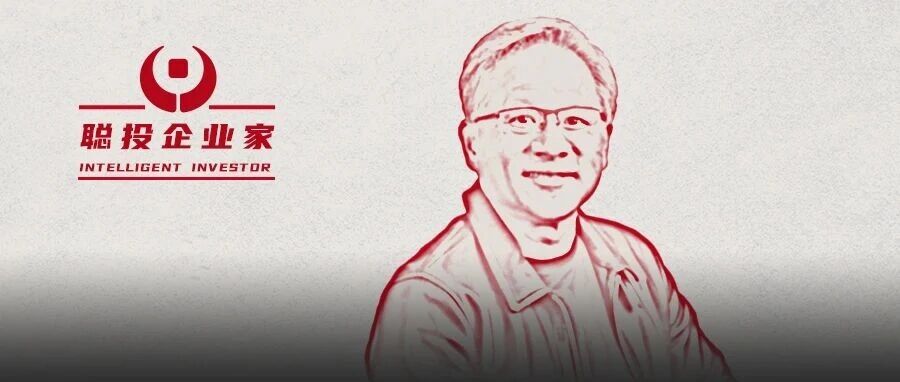
2万字|黄仁勋近期最精彩的一场对话,许多看法与市场共识不一样……
聪明投资者· 2026-03-24 03:34
Core Insights - Huang Renxun emphasizes that Nvidia is not just about computing power but is defining a set of principles for accelerating everything, addressing questions about entering new industries and the potential market size being underestimated by Wall Street analysts [3][5][6] - The acquisition of Groq for $20 billion is seen as a strategic move to complement Nvidia's "accelerated computing" vision [3][6] - Huang expresses optimism about AI commercialization, believing that the emergence of intelligent agents will lead to systemic acceleration across various industries, contrary to the belief that they will destroy the software industry [6][96] Market Concerns - Key questions raised include whether AI revenue can keep pace with capability growth, the competitive strength of China in models and supply chains, and the impact of geopolitical conflicts on the AI race [5][8] - Huang's views on China's contributions to AI, including recognition of companies like DeepSeek and Kimi, highlight China's significant role in open-source contributions and talent reserves [7][8] AI and Intelligent Agents - Huang believes that the market underestimates the impact of intelligent agents, which will not only enhance existing software tools but also make them more critical due to increased usage [6][96] - The transition from "large language model processing" to "intelligent agent processing" signifies a shift in computational demands, with the need for diverse models in data centers [10][19] Strategic Decisions and Market Position - Huang outlines the strategic decision-making process at Nvidia, focusing on defining vision and strategy while leveraging insights from technical experts [30][31] - The company aims to expand its total addressable market (TAM) significantly, potentially increasing it by one-third to one-half due to new technologies and acquisitions [19][66] Open Source and Ecosystem Development - The importance of open-source tools and community-driven innovation is highlighted, with a belief that both proprietary and open-source models are necessary for the future of AI [101][102] - Nvidia's investment in open-source ecosystems is seen as a way to ensure access to cutting-edge models while allowing for cost reduction and specialization [107][108] Global Market Dynamics - Huang notes that Nvidia has lost significant market share in China, dropping from 95% to 0%, and emphasizes the need for the U.S. to regain its competitive edge in AI technology [111][112] - The company is committed to maintaining a presence in the Middle East despite geopolitical tensions, viewing the region as critical for future AI investments [120][122] Future of AI and Automation - Huang envisions a future where every engineer will have multiple intelligent agents to enhance productivity, fundamentally changing the nature of work and creativity [92][94] - The potential for AI to transform industries, including the automotive sector, is underscored, with Nvidia focusing on providing the necessary computational infrastructure for automation [128][130]
国家数据局局长谈“龙虾热”
第一财经· 2026-03-23 12:49
Core Insights - The article emphasizes that "good intelligent agents" should not only be versatile executors but also transparent risk communicators and reliable solution providers [4][5] - The rapid growth of AI applications in China is driven by technological innovation and commercial applications, with the AI industry expected to exceed 10 trillion yuan by the end of the 14th Five-Year Plan [3][4] Group 1: Trends in AI Development - The emergence of intelligent agents, exemplified by OpenClaw, signifies a new form of large model application that autonomously plans and executes tasks, leading to a global market explosion [4] - The "lobster craze" reflects a trend where AI deeply integrates into production and daily life, making safety and compliance governance focal points [5] Group 2: Data Security and Compliance - High-quality, secure, and compliant data is essential for the development of AI, with the National Data Bureau focusing on empowering AI innovation through quality data set construction [5][6] - The article highlights various security risks associated with AI, including copyright disputes, data poisoning attacks, and network security vulnerabilities, which can undermine the reliability of AI applications [5] Group 3: Safety Mechanisms for AI - Chinese companies are accelerating the application of intelligent agents by integrating domestic large models with comprehensive data security strategies, including compliance checks, data isolation, and operational audits [4][5] - The principles of "minimum privilege, proactive defense, and continuous auditing" should guide the ongoing safety measures for intelligent agents [5][6]