
投票率

Search documents
这两大变量 影响日本众议院选举结果
Xin Lang Cai Jing· 2026-02-08 07:21
Core Viewpoint - The focus of the Japanese 51st House of Representatives election is whether the ruling coalition of the Liberal Democratic Party (LDP) and the Japan Innovation Party can secure a majority of seats, with voter turnout and the "black money" scandal adding uncertainty to the election outcome [1][10]. Group 1: Election Overview - The election involves 1,284 candidates competing for 465 seats in the House of Representatives, with voting scheduled to end at 20:00 local time [3][12]. - The election system combines single-member districts and proportional representation, with 289 seats from single-member districts and 176 from proportional representation [3][12]. - Prior to the election, the LDP held 198 seats, and the Japan Innovation Party held 34 seats, making a total of 232 seats for the ruling coalition [3][12]. Group 2: Polling Insights - Multiple polls indicate that the ruling coalition may secure a majority, with the LDP potentially winning more than half of the 465 seats [4][13]. - According to Kyodo News, the LDP could achieve an "absolute stable majority" of 261 seats in coalition with the Japan Innovation Party [4][13]. - Some polls suggest the LDP and its coalition partner could exceed 300 seats, possibly reaching a two-thirds majority of 310 seats [4][13]. Group 3: Factors Influencing Election Outcome - Key factors influencing the election include voter turnout and the impact of the "black money" scandal, which has previously harmed the LDP's standing [5][15]. - A higher voter turnout could benefit the LDP, as it may attract more independent voters [15]. - The "black money" scandal has led to criticism of the LDP, with 45% of respondents in a previous poll indicating they would consider political and financial issues when voting [15]. Group 4: Possible Election Outcomes - Four potential outcomes of the election could reshape the power dynamics: 1. The ruling coalition secures a majority, but the LDP does not achieve a majority on its own, strengthening the coalition's position [8][17]. 2. The LDP wins a majority independently, enhancing its power within the coalition [9][18]. 3. The ruling coalition fails to secure a majority, but the LDP remains the largest party, leading to potential leadership changes [9][18]. 4. The opposition coalition surpasses the LDP, although this outcome is considered unlikely given current polling [9][18]. Group 5: Leadership Implications - Prime Minister and LDP President Sanna Takashi has set the goal for the ruling coalition to secure a majority, stating she would resign if they fail to do so [10][18]. - The election marks the shortest interval between the dissolution of the House and voting since World War II, with only 16 days between the two events [10][18].

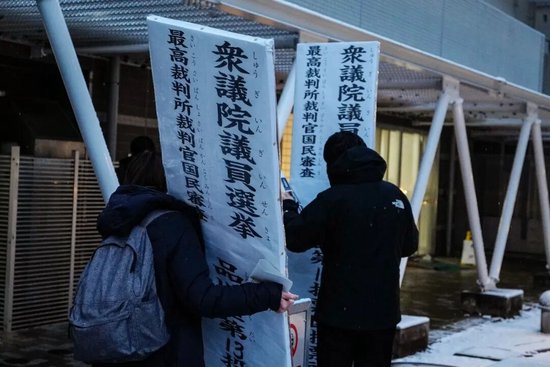
日本大选:两大变量 四种结果
Xin Lang Cai Jing· 2026-02-05 20:15
Core Viewpoint - The upcoming Japanese House of Representatives election on February 8 is expected to see the ruling coalition of the Liberal Democratic Party (LDP) and Japan Innovation Party secure a majority of seats, although undecided voters and the impact of the "black money" scandal introduce uncertainty into the election outcome [2][3][4]. Polling Insights - Multiple media polls indicate that the ruling coalition is likely to gain over half of the seats, with the LDP potentially securing a majority of the 465 seats in the House of Representatives [3]. - According to Kyodo News, the ruling coalition is projected to achieve an "absolute stable majority" of 261 seats, allowing them to control all 17 standing committees in the House [3]. - Yomiuri Shimbun's poll also suggests that the LDP may secure a majority on its own, while Asahi Shimbun indicates that the combined seats of the LDP and Japan Innovation Party could exceed 300, possibly reaching a two-thirds majority of 310 seats [3]. Key Factors Influencing Election - Voter turnout is a critical factor, as higher turnout may favor the LDP due to increased participation from independent voters, who have shown a tendency to lean towards opposition parties in the past [6]. - The "black money" scandal poses a significant risk to the LDP's electoral prospects, with 45% of respondents in a previous poll indicating they would consider political and financial issues when voting [7]. Possible Election Outcomes - Four potential outcomes are outlined for the election: 1. The ruling coalition secures a majority, but the LDP does not achieve a majority on its own, which would stabilize their position in the Diet [8]. 2. The LDP wins a majority independently, enhancing its power relative to the Japan Innovation Party [8]. 3. The ruling coalition fails to secure a majority, but the LDP remains the largest party, leading to a potential change in leadership [9]. 4. The "Center Reform Coalition" surpasses the LDP to become the largest party, which could lead to a change in governance, although this scenario is considered unlikely given current polling trends [9].
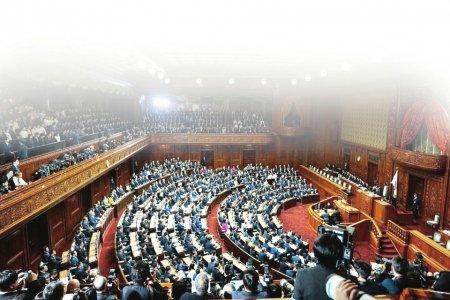
两大变量将左右日本大选结果
Xin Lang Cai Jing· 2026-02-05 20:15
Group 1 - The core viewpoint of the article indicates that the ruling coalition of the Liberal Democratic Party (LDP) and the Japan Innovation Party is likely to secure a majority of seats in the upcoming House of Representatives election [3][4] - Recent polls show that the LDP could potentially win more than half of the 465 seats in the House, with the coalition expected to achieve at least 261 seats, which would provide an "absolute stable majority" [4][5] - The main opposition, the "Center Reform Alliance," is projected to perform poorly, possibly securing fewer than 167 seats [4] Group 2 - Two key factors are identified that will influence the election outcome: voter turnout and the "black money" scandal [5][6] - Higher voter turnout is seen as beneficial for the LDP, as it may attract more independent voters; however, adverse weather conditions, such as heavy snowfall, could negatively impact voter participation [5] - The "black money" scandal, involving over 40 candidates linked to the controversy, has raised significant public criticism, with 45% of respondents in a previous poll indicating they would consider political and financial issues when voting [6] Group 3 - Four potential outcomes of the election are outlined, each leading to different power dynamics: 1. The ruling coalition secures a majority, but the LDP does not achieve a standalone majority, solidifying the coalition's position [7] 2. The LDP wins a majority on its own, enhancing its power relative to the Japan Innovation Party [7] 3. The coalition fails to secure a majority, but the LDP remains the largest party, leading to potential leadership changes [7] 4. The "Center Reform Alliance" surpasses the LDP, which could result in a shift in governance [7]
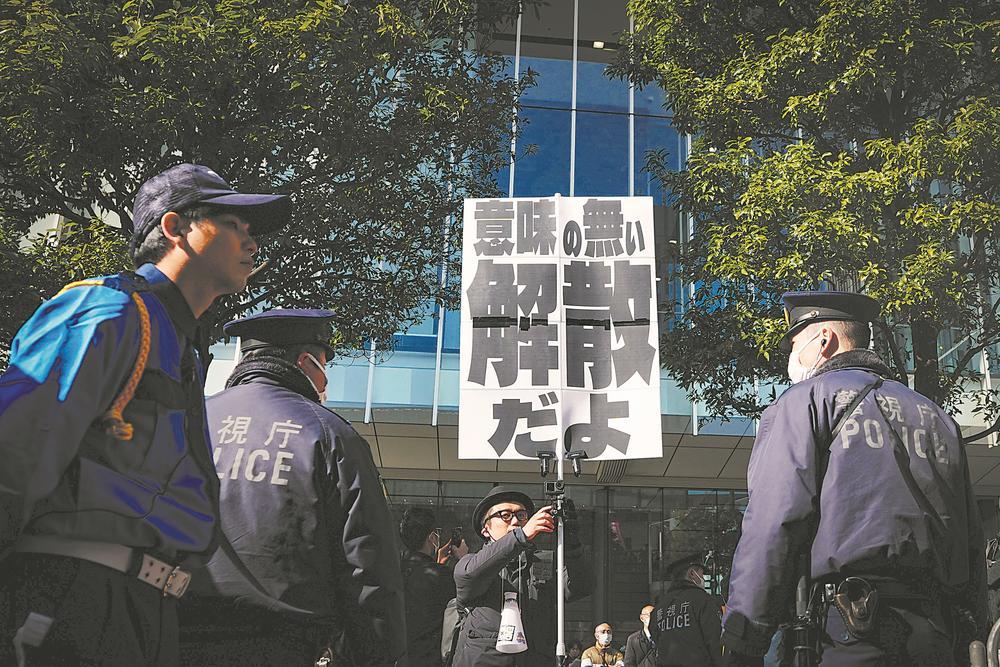
日本大选:两大变量和四种结果
Xin Lang Cai Jing· 2026-02-05 19:12
Group 1 - The core viewpoint of the article indicates that the ruling coalition of the Liberal Democratic Party (LDP) and the Japan Innovation Party is expected to secure a majority in the upcoming House of Representatives election, although uncertainties remain due to undecided voters and the impact of scandals [1][2][3] Group 2 - Polls suggest that the LDP could potentially win more than half of the 465 seats in the House, with estimates indicating the ruling coalition may achieve 261 seats, which would provide them with a stable majority [2] - The main opposition, the "Center Reform Coalition" formed by the Constitutional Democratic Party and Komeito, is projected to perform poorly, possibly securing fewer than 167 seats [2] - Factors influencing voter turnout include weather conditions and the presence of undecided voters, which could significantly affect the election outcome [5][6] Group 3 - Two critical factors identified are voter turnout and the "black money" scandal, which has raised public discontent towards the LDP and could negatively impact their election prospects [5][6] - The "black money" scandal has led to widespread criticism of the LDP, with 45% of respondents in a previous poll indicating they would consider political and financial issues when voting [5] Group 4 - Four possible outcomes of the election are outlined: 1. The ruling coalition secures a majority but the LDP does not achieve a standalone majority, which would maintain the current power structure [6] 2. The LDP wins a majority on its own, strengthening its position within the coalition [7] 3. The ruling coalition fails to secure a majority, but the LDP remains the largest party, leading to potential leadership changes [8] 4. The "Center Reform Coalition" surpasses the LDP, which could lead to a shift in governance, although this scenario is considered unlikely [8]