
政治与金钱问题

Search documents
高市早苗有麻烦了
Xin Lang Cai Jing· 2026-02-26 14:11
Core Viewpoint - Japanese Prime Minister Sanae Takaichi is under scrutiny for allegedly violating the Political Funds Regulation Act by distributing gifts to over 300 members of the ruling Liberal Democratic Party (LDP) after the recent House of Representatives election, raising significant controversy and impacting her political credibility and governance prospects [1][11][19] Group 1: Allegations and Reactions - Takaichi distributed gift catalogs to 315 LDP members, with each gift costing approximately 34,000 yen (about 1,500 RMB), totaling around 10.71 million yen (approximately 470,000 RMB) [12][13] - Critics, including opposition party leaders and political analysts, argue that this act represents misuse of public funds and reflects a disconnect from the public, with some labeling it as "arrogant" [14][16] - Takaichi defended her actions on social media, claiming the gifts were meant to express gratitude to elected officials and were funded by her party's local branch, asserting there were no legal issues [13][14] Group 2: Historical Context and Previous Issues - The issue of "politics and money" has long been a contentious topic in Japanese politics, and this is not Takaichi's first controversy regarding political funds [17][18] - Previous allegations against Takaichi include exploiting loopholes in political donation regulations and receiving corporate political donations, which have raised questions about her integrity [18] - Reports indicate that Takaichi has connections with the controversial religious group, the Unification Church, which has further complicated her political standing [18] Group 3: Potential Impacts - The ongoing controversy is expected to affect the legislative process, particularly the review of the fiscal budget for 2026, as it provides opposition parties with new leverage against Takaichi [19][21] - The incident has reignited public distrust in politics, particularly concerning the relationship between money and political influence, which could lead to a decline in public support for Takaichi and the LDP if the controversy persists [10][21]

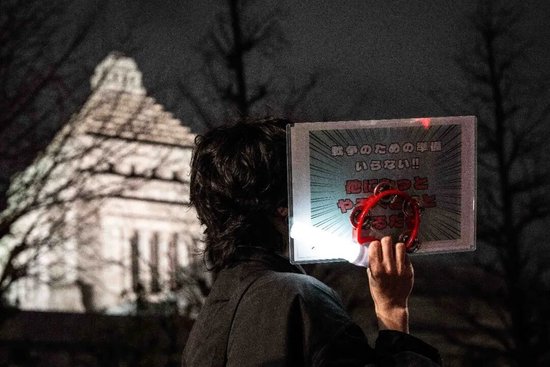
高市早苗“送礼”引发强烈不满
Xin Lang Cai Jing· 2026-02-25 21:01
Core Viewpoint - The incident involving Prime Minister Sanna Takashi distributing gifts to newly elected members of the ruling Liberal Democratic Party (LDP) has sparked significant public and political backlash, raising concerns about political funding transparency and the ongoing issue of "politics and money" in Japan [1][2] Group 1: Incident Details - Prime Minister Sanna Takashi admitted to distributing gifts worth approximately 1 million yen (about 43,900 RMB) to 315 newly elected LDP members following the House of Representatives election [1] - Each gift was valued at around 30,000 yen (1,318 RMB), and the funding was claimed to come from her LDP branch, with no legal issues cited [1] Group 2: Political Reactions - Opposition party members, particularly from the Constitutional Democratic Party, criticized Takashi, highlighting a previous incident where former Prime Minister Ishihara Shigeru distributed 100,000 yen (about 4,390 RMB) in gift vouchers to newly elected members, which led to public outrage and his subsequent apology [1] - The ongoing issues of political funding and rising prices in Japan were emphasized, with many lawmakers expressing their support for the criticism directed at Takashi [1] Group 3: Public Sentiment - The incident has led to widespread online discussions, with many accusing Takashi of being out of touch with ordinary citizens and ignoring the burdens of rising living costs [2] - There are calls for improved management of the "gray areas" in political funding and for more stringent regulations to enhance transparency [2]
高市早苗承认“送礼” 在野党和民众强烈不满
Xin Lang Cai Jing· 2026-02-25 18:57
Core Viewpoint - Japanese Prime Minister Takashi Saito admitted to distributing gifts to newly elected members of the ruling Liberal Democratic Party (LDP), leading to strong dissatisfaction from opposition parties and the public [1][2] Group 1: Political Reactions - Opposition parties questioned the source of the funds used for the gifts, accusing Saito of perpetuating the long-standing issue of "politics and money" within the LDP [1] - The Democratic Party's Secretary-General, Masayuki Tanabe, highlighted a previous incident involving former Prime Minister Ishihara Shigeru, where he distributed gift vouchers to newly elected members, which led to public outrage and his eventual apology [1][2] - Tanabe emphasized that the issues of political funding and rising prices in Japan are ongoing concerns, receiving support from other lawmakers present [1] Group 2: Public Sentiment - Public criticism focused on Saito's apparent disregard for the financial struggles faced by ordinary citizens amid rising prices, increasing distrust towards her leadership [1][3] - The Japanese Communist Party's Secretary-General, Akira Koike, criticized Saito for embodying the outdated "money power" culture of the LDP, with many citizens expressing the need for improved management of political funding and transparency [3] - Some LDP members expressed discontent with the gift distribution, suggesting that it was unnecessary and that no one would appreciate receiving such gifts after the previous controversy [3]
高市早苗,承认“送礼”
Xin Jing Bao· 2026-02-25 15:24
Core Viewpoint - Japanese Prime Minister Sanae Takaichi acknowledged distributing gifts to newly elected members of the ruling Liberal Democratic Party (LDP), leading to strong dissatisfaction from opposition parties and the public, who criticized her for ignoring the impact of rising prices on ordinary citizens [1][2]. Group 1: Political Context - The opposition parties questioned the source of the funds used for the gifts, accusing Takaichi of perpetuating the long-standing issue of "politics and money" within the LDP [1]. - Takaichi's gift distribution totaled approximately 10 million yen (around 439,000 RMB), with each gift valued at about 30,000 yen (1,318 RMB) given to 315 individuals [1]. Group 2: Public and Political Reactions - Opposition leader Tanaibu Masayoshi highlighted that the previous incident involving former Prime Minister Ishihara Shigeru, who distributed 100,000 yen (around 4,390 RMB) in gift vouchers to newly elected members, had only occurred last year, indicating a lack of learning from past mistakes [2]. - The incident sparked significant online debate, with many accusing Takaichi of being out of touch with the struggles of ordinary citizens amid rising living costs [3]. - Some LDP members expressed skepticism about the appropriateness of the gift distribution, with one member stating that there was no need for such actions following the previous controversy [3].
高市早苗“送礼”事件引发在野党和日本民众批评
Xin Lang Cai Jing· 2026-02-25 13:39
Core Viewpoint - Japanese Prime Minister Sanna Takashi admitted to distributing gifts to newly elected members of the ruling Liberal Democratic Party (LDP), leading to strong criticism from opposition parties and the public regarding the ongoing "politics and money" issue in Japan [1][2][3] Group 1: Incident Details - The gifts were distributed by Takashi's office after the House of Representatives election, with congratulatory messages on the packaging signed by her [4] - The total amount of gifts distributed was approximately 10 million yen (around 439,000 RMB), with each gift valued at about 30,000 yen (1,318 RMB) given to 315 recipients [5][6] Group 2: Political Reactions - Opposition party members, including the Constitutional Democratic Party's Secretary-General, criticized Takashi for not addressing the "politics and money" issue, referencing a similar incident involving former Prime Minister Ishihara Shigeru who distributed gift vouchers last year [5][6] - The public and some LDP members expressed dissatisfaction, with one member stating that there was no need for such actions after the previous controversy, indicating a lack of support for Takashi's decision [6]
国际观察丨日本大选:两大变量和四种结果
Xin Hua She· 2026-02-06 01:12
Core Viewpoint - The upcoming Japanese House of Representatives election on February 8 is expected to see the ruling coalition of the Liberal Democratic Party (LDP) and the Japan Innovation Party secure a majority, although undecided voters and the impact of the "black money" scandal introduce significant uncertainty into the election outcome [1][3]. Polling Insights - Multiple polls since the election announcement on January 27 indicate that the ruling coalition is likely to win a majority of seats [2]. - According to Kyodo News, the LDP may secure a majority of the 465 seats, while the coalition could achieve an "absolute stable majority" of 261 seats, allowing control over all 17 standing committees in the House [3]. - Other polls suggest the LDP could not only secure a majority but potentially exceed 300 seats, with some estimates reaching a two-thirds majority of 310 seats [3]. Key Factors Influencing Election - Two critical factors are identified that could influence the election results: 1. Voter turnout: Higher turnout may favor the LDP, as independent voters, who previously leaned towards opposition parties, are being targeted by the LDP [7]. 2. The "black money" scandal: This scandal has significantly affected public perception of the LDP, with 45% of respondents indicating they would consider political and financial issues when voting [8]. Possible Outcomes - Four potential outcomes of the election could reshape the political landscape: 1. The ruling coalition secures a majority, but the LDP does not achieve a standalone majority, which would stabilize the coalition's position [9]. 2. The LDP wins a majority on its own, enhancing its power relative to the Japan Innovation Party [11]. 3. The ruling coalition fails to secure a majority, but the LDP remains the largest party, leading to a potential leadership change [10]. 4. The "Center Reform Coalition" surpasses the LDP to become the largest party, which could lead to a change in governance, although this scenario is considered unlikely [12].
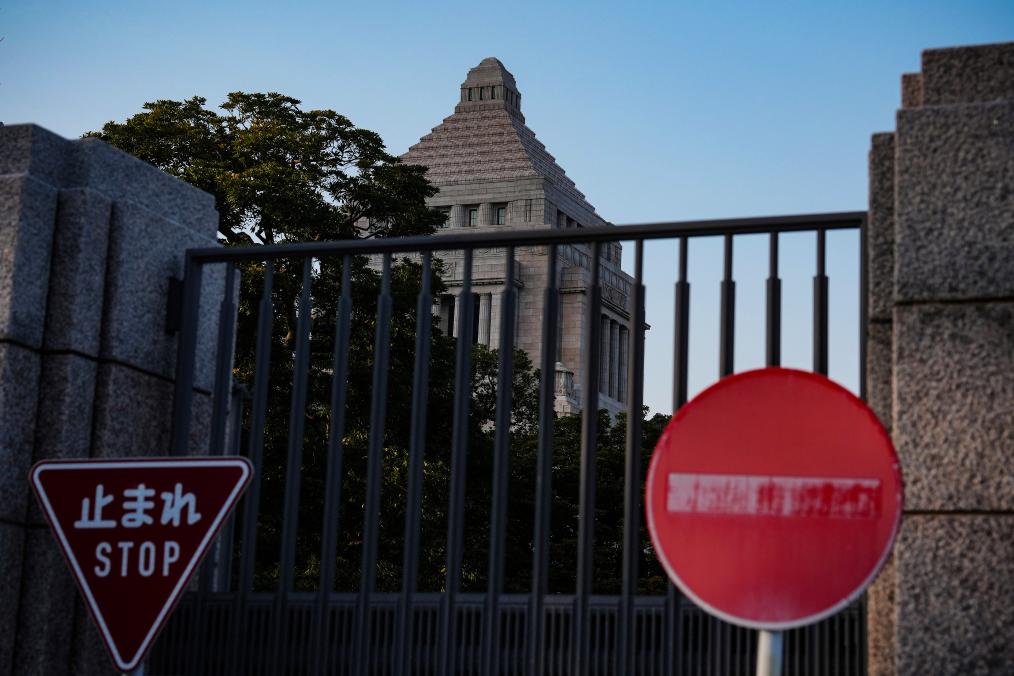
日本大选:两大变量 四种结果
Xin Lang Cai Jing· 2026-02-05 20:15
Core Viewpoint - The upcoming Japanese House of Representatives election on February 8 is expected to see the ruling coalition of the Liberal Democratic Party (LDP) and Japan Innovation Party secure a majority of seats, although undecided voters and the impact of the "black money" scandal introduce uncertainty into the election outcome [2][3][4]. Polling Insights - Multiple media polls indicate that the ruling coalition is likely to gain over half of the seats, with the LDP potentially securing a majority of the 465 seats in the House of Representatives [3]. - According to Kyodo News, the ruling coalition is projected to achieve an "absolute stable majority" of 261 seats, allowing them to control all 17 standing committees in the House [3]. - Yomiuri Shimbun's poll also suggests that the LDP may secure a majority on its own, while Asahi Shimbun indicates that the combined seats of the LDP and Japan Innovation Party could exceed 300, possibly reaching a two-thirds majority of 310 seats [3]. Key Factors Influencing Election - Voter turnout is a critical factor, as higher turnout may favor the LDP due to increased participation from independent voters, who have shown a tendency to lean towards opposition parties in the past [6]. - The "black money" scandal poses a significant risk to the LDP's electoral prospects, with 45% of respondents in a previous poll indicating they would consider political and financial issues when voting [7]. Possible Election Outcomes - Four potential outcomes are outlined for the election: 1. The ruling coalition secures a majority, but the LDP does not achieve a majority on its own, which would stabilize their position in the Diet [8]. 2. The LDP wins a majority independently, enhancing its power relative to the Japan Innovation Party [8]. 3. The ruling coalition fails to secure a majority, but the LDP remains the largest party, leading to a potential change in leadership [9]. 4. The "Center Reform Coalition" surpasses the LDP to become the largest party, which could lead to a change in governance, although this scenario is considered unlikely given current polling trends [9].
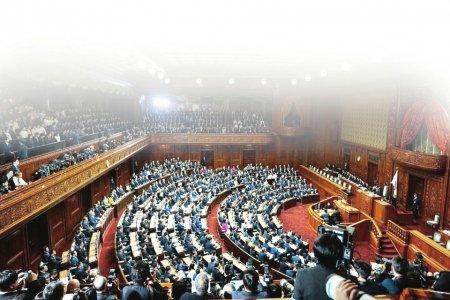
民调:约八成民众认为自民党未解决“政治与金钱”问题
Xin Hua Wang· 2026-01-27 09:12
Group 1 - The Japanese House of Representatives election is scheduled for February 8, with a recent poll indicating that about 80% of the public believes the ruling Liberal Democratic Party (LDP) has not resolved the "politics and money" issue [1][3] - The most pressing election issues identified by the public are economic concerns and rising prices, followed by pension and social security matters [1] - The LDP has nominated three batches of candidates for the election, including 43 members involved in a "black money" scandal, which has led to public and opposition criticism [3] Group 2 - The "black money" scandal revealed in November 2023 involved multiple factions instructing their members to meet sales targets for political fundraising tickets, with excess funds returned to lawmakers as "kickbacks," creating unregulated secret funds [3] - The dissolution of the House of Representatives on January 23 has delayed the normal budget approval process, raising concerns and criticism from various sectors in Japan [3] - Critics, including opposition parties and some LDP insiders, argue that Prime Minister Sanna Takashi prioritized party interests over addressing pressing issues like high prices and public welfare [3]
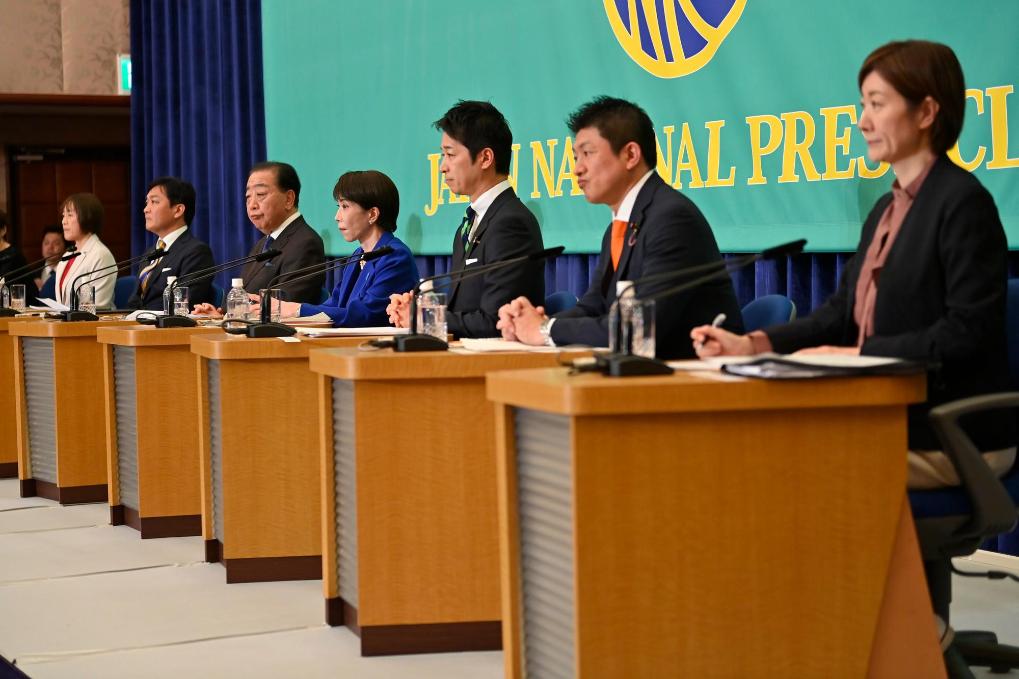
民调:日本约八成民众认为自民党未解决问题
Xin Lang Cai Jing· 2026-01-26 12:49
Core Viewpoint - Approximately 80% of the Japanese public believes that the ruling Liberal Democratic Party (LDP) has not resolved the "politics and money" issue ahead of the upcoming House of Representatives election on February 8 [1] Group 1: Election Context - The Japanese House of Representatives was officially dissolved on January 23, with the election announcement set for January 27 and voting scheduled for February 8 [1] - A recent poll conducted by All Japan News Network indicates that the most pressing election issues for voters are economic and price increases, followed by pension and social security concerns [1] Group 2: Public Sentiment and Criticism - About 80% of respondents in the poll believe that the LDP has not addressed the "politics and money" issues effectively [1] - The LDP has nominated three batches of candidates for the election, including 43 members linked to "black money" scandals, which has led to public and opposition party criticism [1] - Many citizens accuse the LDP of disregarding public opinion and attempting to obscure the "black money" issue [1]
日本公明党正式宣布退出执政联盟 首相指名选举或转向公明党
Ge Long Hui A P P· 2025-10-10 07:20
Group 1 - The core issue revolves around the continuation of the coalition government, with discussions between Sanae Takaichi and Komeito representative Tetsuo Saito failing to address concerns regarding "politics and money" [1] - Komeito's central executive committee decided to fully delegate the final judgment to Tetsuo Saito and Secretary-General Nishida after the discussions [1] - Following the discussions, Komeito announced its intention to withdraw from the coalition government due to insufficient responses from the Liberal Democratic Party (LDP) regarding the "politics and money" issue [1] Group 2 - Komeito's chairman Akabane indicated that if the party withdraws from the coalition, it will vote for Tetsuo Saito in the Prime Minister nomination election in the National Diet [1]