黑金丑闻

Search documents
高市早苗,涉嫌违法
Xin Jing Bao· 2026-02-25 03:13
Group 1 - Japanese Prime Minister Sanae Takaichi has been reported to distribute gifts worth tens of thousands of yen to newly elected Liberal Democratic Party (LDP) members, raising significant public controversy [1] - The gifts, valued at approximately 30,000 yen each, were given under the pretext of congratulating the elected officials, with the packaging indicating Takaichi's name [1] - The legality of this action is questioned under Japan's Political Funds Control Law, which has strict regulations regarding donations to public office candidates [1] Group 2 - The LDP has been embroiled in a "black money" scandal, where some factions allegedly required their members to sell political fundraising party tickets and return excess funds as "kickbacks," which were not reported in financial statements [2] - Since taking office in October 2025, Takaichi has appointed several individuals involved in the "black money" scandal to key government positions, leading to public dissatisfaction [2] - Takaichi herself faced legal action in December for illegally accepting corporate political donations, further intensifying societal discontent [2]
多重风险高悬,高市早苗2.0在隐忧中起步
Di Yi Cai Jing· 2026-02-18 07:45
Core Viewpoint - The recent election of Kishi Sanae as Japan's 105th Prime Minister raises concerns about the "black money scandal" that could undermine her administration's stability and governance [1][9]. Group 1: Election Results and Political Landscape - Kishi Sanae was elected as Prime Minister following the House of Representatives and House of Councillors elections, where her party, the Liberal Democratic Party (LDP), secured 316 seats out of 455, achieving a supermajority [2][3]. - The LDP's victory is seen as a foundation for Kishi to implement aggressive policies, but it also brings fiscal risks and social division, impacting regional and global security dynamics [3]. Group 2: Economic Policies and Risks - Kishi's economic strategy, termed "active fiscal policy," focuses on large-scale borrowing to fund defense, semiconductor supply chains, and AI, rather than controlling inflation or stabilizing the currency [5]. - Japan's national debt is projected to reach 1,342.17 trillion yen (approximately $8.77 trillion) by the end of 2025, marking a historic high and representing about 230% of GDP, the highest among developed economies [5]. - The reliance on debt financing may lead to a depreciation of the yen and increased economic risks, as the stock market's performance does not necessarily reflect real economic growth [5][6]. Group 3: Social Issues and Immigration Policy - The recent elections highlighted the contentious issue of foreign labor, which is seen as both a solution to labor shortages and a source of social tension [7]. - The number of foreign workers in Japan reached a record 2.57 million, with a significant increase from the previous year, raising concerns about social division and the political exploitation of immigration issues [7]. Group 4: Political Scandals and Governance Challenges - The "black money scandal" continues to plague the LDP, with many candidates linked to the scandal winning their seats, raising public discontent and skepticism about the party's integrity [9][10]. - The persistence of this scandal suggests a potential for political instability, as Kishi's administration may face challenges from within the party and from public opinion if support declines [10].


这两大变量 影响日本众议院选举结果
Xin Lang Cai Jing· 2026-02-08 07:21
Core Viewpoint - The focus of the Japanese 51st House of Representatives election is whether the ruling coalition of the Liberal Democratic Party (LDP) and the Japan Innovation Party can secure a majority of seats, with voter turnout and the "black money" scandal adding uncertainty to the election outcome [1][10]. Group 1: Election Overview - The election involves 1,284 candidates competing for 465 seats in the House of Representatives, with voting scheduled to end at 20:00 local time [3][12]. - The election system combines single-member districts and proportional representation, with 289 seats from single-member districts and 176 from proportional representation [3][12]. - Prior to the election, the LDP held 198 seats, and the Japan Innovation Party held 34 seats, making a total of 232 seats for the ruling coalition [3][12]. Group 2: Polling Insights - Multiple polls indicate that the ruling coalition may secure a majority, with the LDP potentially winning more than half of the 465 seats [4][13]. - According to Kyodo News, the LDP could achieve an "absolute stable majority" of 261 seats in coalition with the Japan Innovation Party [4][13]. - Some polls suggest the LDP and its coalition partner could exceed 300 seats, possibly reaching a two-thirds majority of 310 seats [4][13]. Group 3: Factors Influencing Election Outcome - Key factors influencing the election include voter turnout and the impact of the "black money" scandal, which has previously harmed the LDP's standing [5][15]. - A higher voter turnout could benefit the LDP, as it may attract more independent voters [15]. - The "black money" scandal has led to criticism of the LDP, with 45% of respondents in a previous poll indicating they would consider political and financial issues when voting [15]. Group 4: Possible Election Outcomes - Four potential outcomes of the election could reshape the power dynamics: 1. The ruling coalition secures a majority, but the LDP does not achieve a majority on its own, strengthening the coalition's position [8][17]. 2. The LDP wins a majority independently, enhancing its power within the coalition [9][18]. 3. The ruling coalition fails to secure a majority, but the LDP remains the largest party, leading to potential leadership changes [9][18]. 4. The opposition coalition surpasses the LDP, although this outcome is considered unlikely given current polling [9][18]. Group 5: Leadership Implications - Prime Minister and LDP President Sanna Takashi has set the goal for the ruling coalition to secure a majority, stating she would resign if they fail to do so [10][18]. - The election marks the shortest interval between the dissolution of the House and voting since World War II, with only 16 days between the two events [10][18].
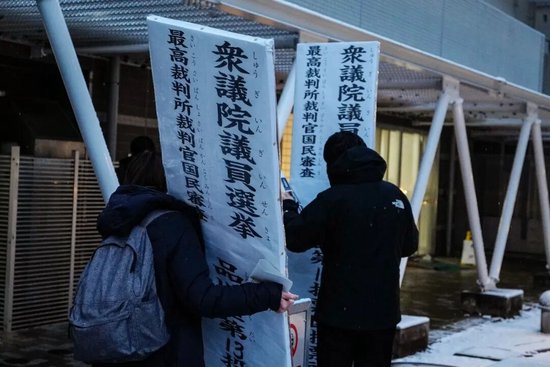
高市豪赌!日本大选又来了
第一财经· 2026-02-08 03:36
Core Viewpoint - The article discusses the recent Japanese House of Representatives election, highlighting the political landscape, voter sentiment, and key issues affecting the election outcome, including high inflation and the impact of adverse weather conditions on voter turnout [3][6][9]. Election Overview - The election involves 465 seats, with 289 from single-member districts and 176 from proportional representation [3][6]. - Over 1,200 candidates are contesting, with Prime Minister Fumio Kishida emphasizing the need for the ruling coalition to secure a majority to maintain his position [3][6]. Political Landscape - The ruling coalition, consisting of the Liberal Democratic Party (LDP) and the Japan Innovation Party, is projected to potentially secure a majority, with estimates suggesting they could achieve between 261 to over 300 seats [6][9]. - The main opposition, the Constitutional Democratic Party and the Komeito Party, are expected to perform poorly, possibly securing fewer than 167 seats [6][9]. Voter Sentiment and Weather Impact - Adverse weather conditions, including heavy snowfall, are anticipated to affect voter turnout, particularly among the elderly [7][9]. - The "black money scandal" involving LDP candidates is also expected to influence public sentiment and voter behavior [7][9]. Economic Issues - Rising food prices have led to an increase in the Engel coefficient to 28.6%, the highest since 1981, indicating a significant portion of household spending is on food [3][9]. - The election has seen debates over consumption tax policies, with proposals to reduce or eliminate the food consumption tax being central to campaign discussions [9][10]. Foreign Policy Debate - Immigration policy is a contentious issue, with the LDP advocating for stricter controls, while other parties propose more inclusive approaches [11]. - The number of foreign workers in Japan has reached a record high of 2.57 million, raising concerns about social cohesion and political rhetoric surrounding immigration [11].

高市豪赌!“恩格尔系数”26年新高之际 日本大选又来了
Di Yi Cai Jing· 2026-02-08 03:06
Group 1 - The Japanese House of Representatives election is taking place on February 8, with 465 seats contested, including 289 single-member districts and 176 proportional representation seats [1] - Over 1,200 candidates are expected to participate, with Prime Minister Sanna Takashi stating that he will resign if the ruling coalition fails to secure a majority [2] - The election is facing criticism due to adverse weather conditions, including heavy snowfall, which may impact voter turnout [2][4] Group 2 - The ruling coalition, consisting of the Liberal Democratic Party (LDP) and the Japan Innovation Party, is projected to secure a majority of seats, with some polls suggesting they could achieve an absolute stable majority of 261 seats [4] - The LDP currently holds 196 seats, falling short of the 233-seat majority, and will need to rely on the Japan Innovation Party to maintain control [3] - The election is also influenced by the "black money" scandal, which has raised concerns about the LDP's candidate list, including 37 members linked to the scandal [5] Group 3 - Rising living costs are a central issue in the election, with the Engel coefficient reaching 28.6%, the highest since 1981, indicating a significant increase in food expenditure [2][6] - Various parties are proposing measures to address high prices, with the LDP suggesting a temporary suspension of the 8% food consumption tax, while opposition parties advocate for a zero rate [7][8] - The debate over foreign labor policies is also prominent, with the LDP advocating for stricter controls, while other parties push for multicultural coexistence [8]
高市豪赌!“恩格尔系数”26年新高之际,日本大选又来了
Di Yi Cai Jing· 2026-02-08 02:40
Group 1 - The Japanese House of Representatives election is taking place on February 8, with 465 seats contested, including 289 single-member districts and 176 proportional representation seats [1][3] - Over 1,200 candidates are expected to participate, with Prime Minister Kishi Sanae emphasizing that if the ruling coalition does not secure a majority, she will resign [1][3] - The election is criticized by public opinion due to poor weather conditions and insufficient reasons for the early dissolution of the House [1][4] Group 2 - The ruling coalition of the Liberal Democratic Party (LDP) and the Japan Innovation Party is projected to potentially secure a majority, with some media suggesting they could achieve over 300 seats [3][4] - As of now, the LDP holds 196 seats, which is below the 233-seat majority threshold, and the coalition's stability is uncertain [3][4] Group 3 - The Engel coefficient, indicating the proportion of food expenditure in household consumption, has reached 28.6%, the highest since 1981, due to rising food prices [1][5] - Various political parties are proposing measures to address high prices, with the LDP suggesting a temporary suspension of the 8% food consumption tax [5][6] - The opposition party, "Center Reform Party," advocates for a zero food consumption tax policy, while other parties propose broader tax reductions [5][6] Group 4 - The election is also influenced by the "black money" scandal, which has previously impacted the LDP's performance in elections, with 37 candidates linked to the scandal [4][6] - The weather conditions, including heavy snowfall, are expected to affect voter turnout, particularly among the elderly [4][6] Group 5 - The foreign labor policy is a significant topic in the election, with the LDP advocating for stricter controls, while other parties promote multicultural coexistence [6] - As of January 2025, the number of foreign workers in Japan reached a record 2.57 million, marking an 11.7% increase from the previous year [6]
国际观察丨日本大选:两大变量和四种结果
Xin Hua She· 2026-02-06 01:12
Core Viewpoint - The upcoming Japanese House of Representatives election on February 8 is expected to see the ruling coalition of the Liberal Democratic Party (LDP) and the Japan Innovation Party secure a majority, although undecided voters and the impact of the "black money" scandal introduce significant uncertainty into the election outcome [1][3]. Polling Insights - Multiple polls since the election announcement on January 27 indicate that the ruling coalition is likely to win a majority of seats [2]. - According to Kyodo News, the LDP may secure a majority of the 465 seats, while the coalition could achieve an "absolute stable majority" of 261 seats, allowing control over all 17 standing committees in the House [3]. - Other polls suggest the LDP could not only secure a majority but potentially exceed 300 seats, with some estimates reaching a two-thirds majority of 310 seats [3]. Key Factors Influencing Election - Two critical factors are identified that could influence the election results: 1. Voter turnout: Higher turnout may favor the LDP, as independent voters, who previously leaned towards opposition parties, are being targeted by the LDP [7]. 2. The "black money" scandal: This scandal has significantly affected public perception of the LDP, with 45% of respondents indicating they would consider political and financial issues when voting [8]. Possible Outcomes - Four potential outcomes of the election could reshape the political landscape: 1. The ruling coalition secures a majority, but the LDP does not achieve a standalone majority, which would stabilize the coalition's position [9]. 2. The LDP wins a majority on its own, enhancing its power relative to the Japan Innovation Party [11]. 3. The ruling coalition fails to secure a majority, but the LDP remains the largest party, leading to a potential leadership change [10]. 4. The "Center Reform Coalition" surpasses the LDP to become the largest party, which could lead to a change in governance, although this scenario is considered unlikely [12].
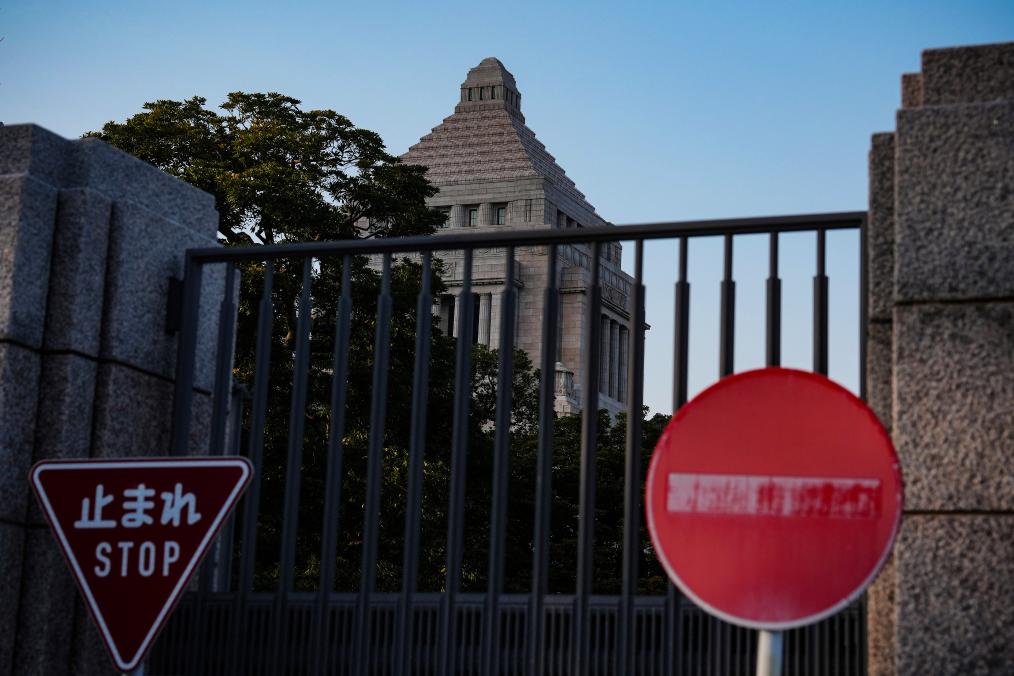
两大变量将左右日本大选结果
Xin Lang Cai Jing· 2026-02-05 20:15
Group 1 - The core viewpoint of the article indicates that the ruling coalition of the Liberal Democratic Party (LDP) and the Japan Innovation Party is likely to secure a majority of seats in the upcoming House of Representatives election [3][4] - Recent polls show that the LDP could potentially win more than half of the 465 seats in the House, with the coalition expected to achieve at least 261 seats, which would provide an "absolute stable majority" [4][5] - The main opposition, the "Center Reform Alliance," is projected to perform poorly, possibly securing fewer than 167 seats [4] Group 2 - Two key factors are identified that will influence the election outcome: voter turnout and the "black money" scandal [5][6] - Higher voter turnout is seen as beneficial for the LDP, as it may attract more independent voters; however, adverse weather conditions, such as heavy snowfall, could negatively impact voter participation [5] - The "black money" scandal, involving over 40 candidates linked to the controversy, has raised significant public criticism, with 45% of respondents in a previous poll indicating they would consider political and financial issues when voting [6] Group 3 - Four potential outcomes of the election are outlined, each leading to different power dynamics: 1. The ruling coalition secures a majority, but the LDP does not achieve a standalone majority, solidifying the coalition's position [7] 2. The LDP wins a majority on its own, enhancing its power relative to the Japan Innovation Party [7] 3. The coalition fails to secure a majority, but the LDP remains the largest party, leading to potential leadership changes [7] 4. The "Center Reform Alliance" surpasses the LDP, which could result in a shift in governance [7]
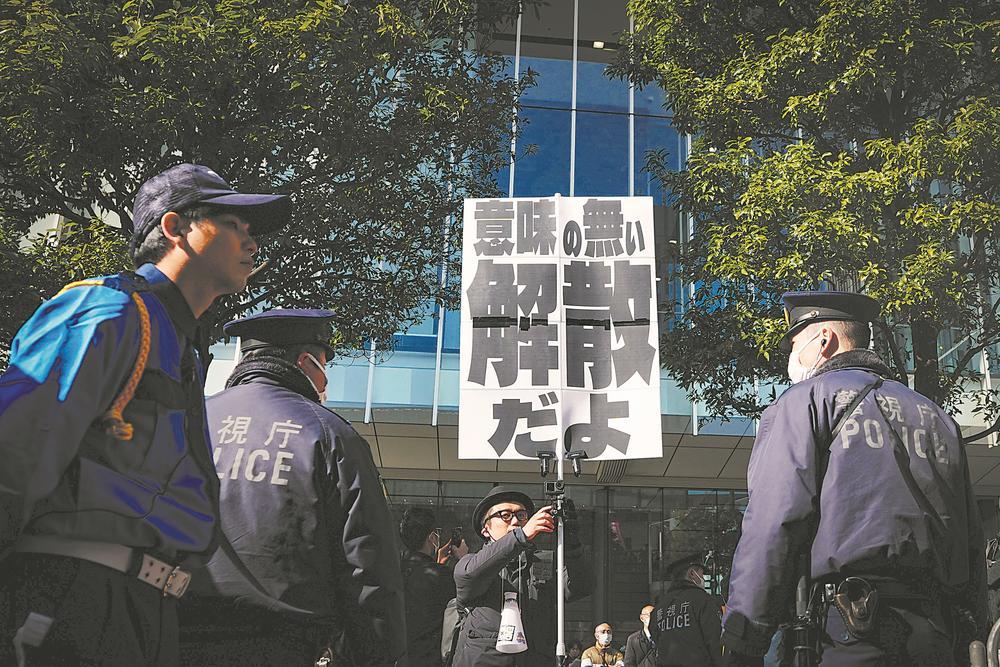
日本大选:两大变量和四种结果
Xin Lang Cai Jing· 2026-02-05 19:12
Group 1 - The core viewpoint of the article indicates that the ruling coalition of the Liberal Democratic Party (LDP) and the Japan Innovation Party is expected to secure a majority in the upcoming House of Representatives election, although uncertainties remain due to undecided voters and the impact of scandals [1][2][3] Group 2 - Polls suggest that the LDP could potentially win more than half of the 465 seats in the House, with estimates indicating the ruling coalition may achieve 261 seats, which would provide them with a stable majority [2] - The main opposition, the "Center Reform Coalition" formed by the Constitutional Democratic Party and Komeito, is projected to perform poorly, possibly securing fewer than 167 seats [2] - Factors influencing voter turnout include weather conditions and the presence of undecided voters, which could significantly affect the election outcome [5][6] Group 3 - Two critical factors identified are voter turnout and the "black money" scandal, which has raised public discontent towards the LDP and could negatively impact their election prospects [5][6] - The "black money" scandal has led to widespread criticism of the LDP, with 45% of respondents in a previous poll indicating they would consider political and financial issues when voting [5] Group 4 - Four possible outcomes of the election are outlined: 1. The ruling coalition secures a majority but the LDP does not achieve a standalone majority, which would maintain the current power structure [6] 2. The LDP wins a majority on its own, strengthening its position within the coalition [7] 3. The ruling coalition fails to secure a majority, but the LDP remains the largest party, leading to potential leadership changes [8] 4. The "Center Reform Coalition" surpasses the LDP, which could lead to a shift in governance, although this scenario is considered unlikely [8]
解散众议院后启用原安倍派参选 专家:高市欲重构其权力基础
Xin Lang Cai Jing· 2026-01-23 20:58
Core Viewpoint - The Japanese government, led by Prime Minister Sanae Takaichi, has decided to retain candidates from the former Abe faction, despite their involvement in a political funding scandal, reflecting a strategic political calculation to strengthen her power base within the ruling Liberal Democratic Party (LDP) [1][3]. Group 1: Political Strategy - Takaichi's decision to include former Abe faction members is aimed at rebuilding her power base within the LDP, as she is seen as the primary heir to Shinzo Abe's political legacy, despite not being a member of the Abe faction herself [3]. - The inclusion of these candidates is also a tactical move to secure votes, as they have strong mobilization capabilities in their constituencies, which may be more beneficial than risking new candidates [5]. - Takaichi aims to establish her own faction, the "Takaichi faction," by transforming these previously scandal-embroiled candidates into loyal supporters if they are successfully elected [6]. Group 2: Election Implications - The upcoming election is characterized by opposition parties framing it as one that protects "black money" politics, which could negatively impact the LDP's electoral prospects [8]. - If public disdain for money politics outweighs the desire for tax cuts, the LDP, under Takaichi's leadership, may face significant electoral defeat, undermining her efforts to consolidate power within the party [8].