投资法则

Search documents
散户赚钱不用慌!林奇13年操盘经验,藏着碾压专业圈的秘诀
Sou Hu Cai Jing· 2025-12-23 15:30
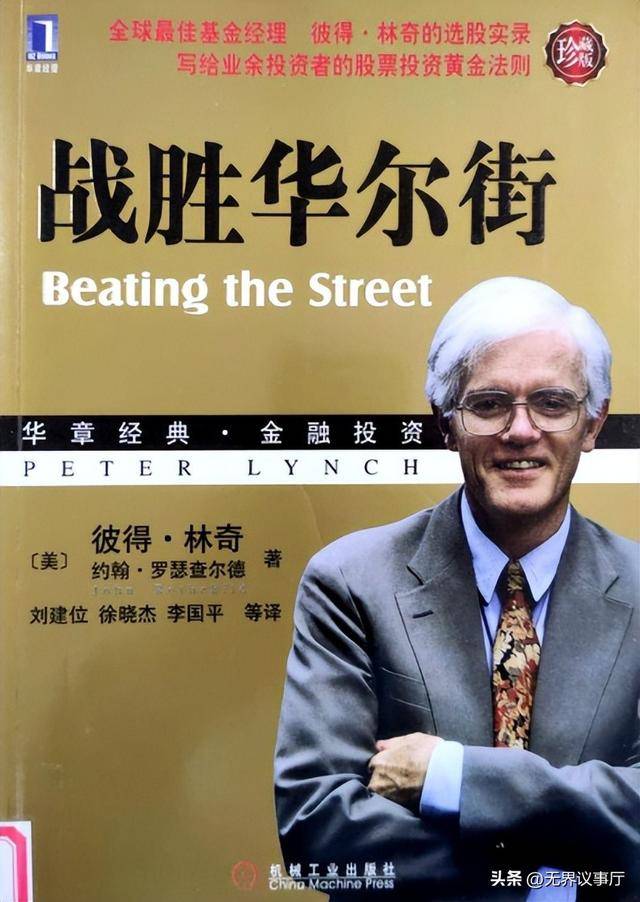
Core Viewpoint - The article challenges the common belief that retail investors are at a disadvantage compared to professional investors, asserting that amateur investors can outperform them, as demonstrated by Peter Lynch's experiences and insights in "Beating the Street" [4][6]. Group 1: Peter Lynch's Investment Philosophy - Peter Lynch argues that amateur investors can succeed by focusing on their own knowledge and avoiding the pitfalls of professional investment strategies [4][6]. - Professional institutions often face constraints such as quarterly performance rankings, which limit their ability to hold onto promising stocks for the long term [6]. - Lynch's journey from a novice to a successful fund manager illustrates the importance of independent research and patience in investing [7][10]. Group 2: Investment Strategies - Lynch emphasizes three core investment strategies for retail investors: 1. "Avoid unfamiliar stocks" - Investors should only invest within their knowledge base and focus on companies they understand [15]. 2. "Five-stock principle" - Limit the investment portfolio to five stocks to avoid spreading resources too thin while allowing one strong performer to drive overall returns [16][18]. 3. "Don't panic" - Emotional resilience is crucial, as many investors sell in fear during market fluctuations rather than holding onto quality stocks [21]. Group 3: Performance Metrics - During Lynch's tenure, he managed to grow the Magellan Fund from $18 million to $14 billion, consistently outperforming the market despite experiencing nine market downturns [12]. - He developed the "72 Rule," which helps investors estimate how long it will take for their investments to double based on their annual return rate [12].

25条工作原则和15条投资法则,让他成就了全球最成功的投资基金
Sou Hu Cai Jing· 2025-10-04 02:48
Core Insights - The article discusses the key principles and investment rules shared by Stephen Schwarzman, co-founder of Blackstone, in his book "What It Takes: Lessons in the Pursuit of Excellence" [3] Group 1: Work Principles - Setting ambitious goals is essential as the difficulty of achieving big and small tasks is similar, thus ensuring that rewards match efforts [1] - Successful executives are not born but made through continuous learning and self-improvement [2] - Building relationships with respected individuals can provide valuable insights and opportunities for personal growth [3] - Understanding others' problems and offering solutions can lead to meaningful connections and ideas [4] - Every business operates as a closed integrated system, and effective management requires knowledge of both individual components and their interrelations [5] Group 2: Investment Rules - Utilizing all available tools is crucial for successful investing [8] - Sudden market reversals or poor investments can significantly impact financial stability [9] - Diversifying business types helps mitigate competition and market fluctuations [10] - Simplifying decision-making for investors can enhance mutual benefits [11] - Managing change effectively is a key indicator of success in a volatile investment environment [12] - Encouraging collective responsibility can help eliminate personal biases in investment processes [13] - Time negatively impacts all transactions, with longer waits increasing the likelihood of unforeseen complications [14] - Insight into patterns and persistent effort can turn ideas into reality [15] - Objective assessment of situations and focusing on key transaction points are essential under pressure [16] - Avoiding individual decision-making and tightening processes can improve investment outcomes [17] - Extra effort often leads to unexpected rewards and becomes a valuable asset in investment [18] - Leveraged buyouts can generate income regardless of economic conditions and improve acquired companies [19] - The success of investments largely depends on the economic cycle, which affects growth trajectories and potential returns [20]