投资误区

Search documents
融资热捧赛道,此刻再靠直觉操作就毁了
Sou Hu Cai Jing· 2026-01-29 07:23
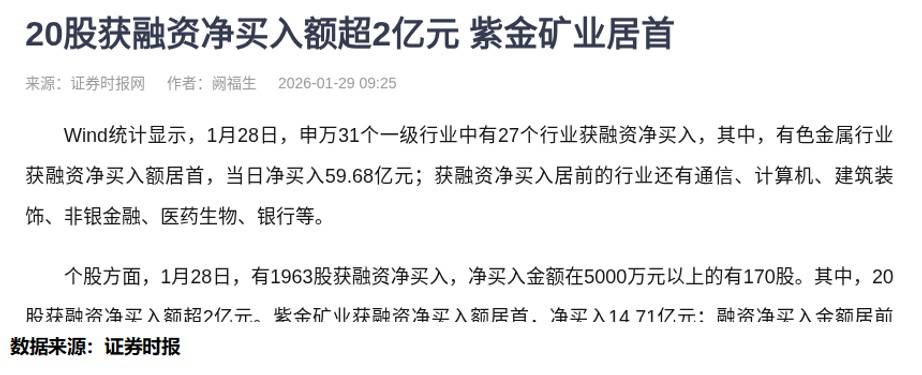
Core Viewpoint - The article emphasizes the importance of using quantitative data to understand institutional investment behavior rather than relying on intuition or public news, which can lead to poor investment decisions. Group 1: Institutional Investment Insights - Recent data from Wind shows that among 31 primary industries, 27 experienced net buying, with the non-ferrous metals sector leading at 5.968 billion yuan [1] - Many investors tend to rely on subjective intuition and delayed information, which can result in significant losses when chasing popular stocks without understanding underlying institutional actions [1][3] - The article highlights the importance of monitoring "institutional inventory" data, which reflects the trading activity of institutional investors, to gauge their interest in specific stocks [6] Group 2: Timing and Market Reactions - Investors often make the mistake of entering the market after a hot news event, believing they are following the trend, but by that time, institutions have already positioned themselves, leaving retail investors to buy at inflated prices [7][9] - Emotional reactions during market downturns, such as panic selling, can lead to missed opportunities, as institutions may continue to accumulate shares during these periods [11] - The article suggests that understanding the timing of institutional investments can help ordinary investors avoid common pitfalls and improve their decision-making process [13]

8 Investment Myths I Ignored to Build a $1M Portfolio in Under a Decade
Medium· 2025-10-29 00:20
Group 1 - The article discusses eight investment myths that hinder individuals from achieving financial success, emphasizing the importance of ignoring these myths to build a substantial portfolio [1][2][3] - The author highlights the average investor's underperformance compared to the market, attributing it to emotional decisions and misinformation, with a statistic indicating a 4-5% annual underperformance [3][6] - The article provides actionable insights and personal experiences to debunk these myths, aiming to guide readers towards better investment practices [2][28] Group 2 - Myth 1 states that a significant amount of money is required to start investing, countered by the author's experience of starting with $200 a month, demonstrating that consistent contributions can lead to substantial growth over time [3][4][5] - Myth 2 addresses the misconception that timing the market is more beneficial than remaining invested over time, supported by data showing that missing the market's best days can drastically reduce returns [6][7][8] - Myth 3 critiques the idea of over-diversification, advocating for a concentrated investment strategy in high-conviction sectors, which can yield better returns [9][10][11] Group 3 - Myth 4 discusses the inevitability of investment fees, revealing how high fees can significantly erode gains, and suggesting low-cost index funds as a solution [12][13] - Myth 5 challenges the belief that real estate is always the best investment, presenting data that shows stocks can outperform real estate in terms of returns [14][15] - Myth 6 highlights the risks of stock-picking, emphasizing the benefits of investing in ETFs instead, which can provide more consistent returns [16][17] Group 4 - Myth 7 addresses the perception of bonds as safe investments, pointing out their underperformance in low-rate environments and advocating for a strategic approach to bond investments [18][19] - Myth 8 focuses on the emotional aspects of investing, recommending disciplined strategies to avoid panic selling and impulsive decisions [20][21] - The article concludes with a summary of the lessons learned from debunking these myths, encouraging readers to take control of their investment journey [28][29]