
授权的艺术

Search documents
为什么有些顶级CEO很闲?
虎嗅APP· 2025-12-10 10:13
Core Viewpoint - The article emphasizes the importance of leadership style in top executives, contrasting effective leadership with mere busyness, and highlights that successful CEOs focus on strategic thinking rather than micromanagement [8][10]. Group 1: Leadership Style - There are two main types of leadership styles: leadership-oriented and management-oriented. The article advocates for a leadership-oriented approach where CEOs focus on strategic work, external relationships, and key talent acquisition, while delegating management tasks to lower levels [11][12]. - A study by Michael Porter and Nitin Nohria indicates that companies led by leadership-oriented CEOs experience significantly higher productivity and profits, with sales potentially increasing by about 7% when other factors are controlled [11][12]. Group 2: Management Traps - Many busy CEOs fall into a "diligence trap," characterized by a lack of trust in middle management and a tendency to micromanage, which ultimately hampers organizational efficiency [14][15]. - The article points out that a culture of "false busyness" can arise from unhealthy organizational structures, leading to inefficiencies where leaders exhaust themselves without adding value [14][15]. Group 3: Effective Time Management - Top CEOs often appear "idle" because they prioritize high-leverage activities and reserve time for strategic thinking and building external connections, which are crucial for the company's survival [19][20]. - The article suggests that CEOs should regularly audit their schedules to ensure that 20%-30% of low-value activities are eliminated, allowing for a focus on strategic and organizational health [23]. Group 4: Organizational Development Stages - The article outlines different stages of company development and the corresponding role of the CEO: - In the startup phase (0-1), the CEO must be hands-on in product and sales [24]. - In the growth phase (1-10), the focus should shift to building systems and organizations [24]. - In the mature or transformation phase (10-100), the emphasis is on redefining direction and upgrading organizational capabilities [24]. Group 5: Cultural Transformation - CEOs are encouraged to shift from a narrative of "hard work" to one of "value creation," ensuring that the organization can operate efficiently without their constant presence [25][26]. - The article concludes that exceptional leaders enable ordinary people to achieve extraordinary results, rather than positioning themselves as the sole heroes of the organization [26].

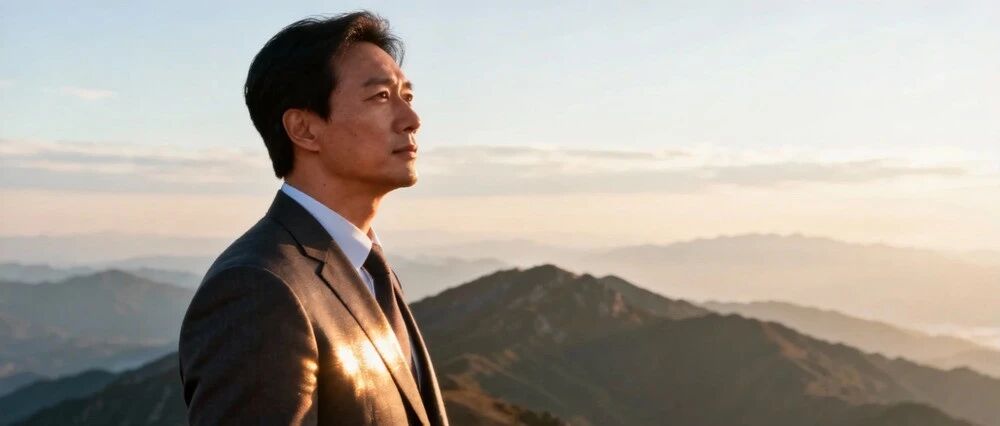
为什么有些顶级CEO很闲?
Sou Hu Cai Jing· 2025-12-09 14:30
前段时间,我参加了一场顶级企业家的闭门研修,与几位颇具声望的大企业掌舵者深度共处一周多。 这次观察让我看到了一种非常向往的领导力风格。 这一位是一家估值数千亿、营收数百亿的行业巨头创始人。在晚饭时,他复盘过去一年的时间分配,他 分享了过去三个季度在尼泊尔静坐、在巴西徒步、在美国登山的经历。我不禁好奇:"那你在办公室的 时间有多少?" 他皱眉盘算了一下,给出的答案令在场所有人错愕:"加起来大概不到一个月吧。" 我的 追问"那你怎么管理如此牛X的企业?" 他回答:"因为我有一个极好的核心团队呀。他们非常清楚我该 做什么,更清楚我不该做什么。我只需要做好我分内那极少、但极关键的事情就够了。" 我也见过更多相反样子的企业家:那些把自己逼疯、同时也把团队逼疯,最终业绩却依然平平的CEO。 记得在另一次出访中,一位同行的企业家几乎每天18个小时都在通话中。大部分时间,他都对着电话咆 哮、责骂。虽然听不清具体细节,但那种焦虑的气场像一团乌云笼罩着整个团队,让同行的其他企业家 们如履薄冰。 这一鲜明的对比揭示了一个残酷的管理真相: 肉眼可见的辛苦,并不等于卓有成效的领导。 分享几个个人思考。 迈克尔·波特(Michael P ...