政府诚信建设

Search documents
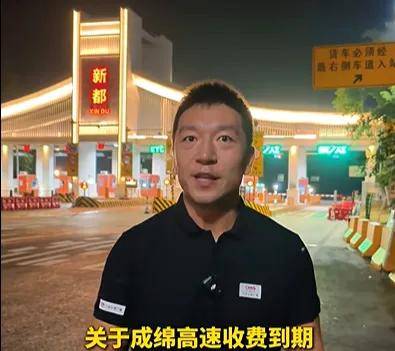
成绵高速逆市免费!为四川点赞!
Sou Hu Cai Jing· 2025-09-07 09:48
Core Viewpoint - The decision to make Chengmian Expressway and Chengdu North Exit Expressway toll-free starting September 4, 2025, marks Sichuan as the first province in the central and western regions of China to implement free passage on major expressways, reflecting a government commitment to public welfare and integrity [1][3][5]. Group 1: Significance of the Decision - The move is significant as it breaks the norm of toll collection on expressways in China, showcasing a government approach that prioritizes the needs of the people [3]. - This decision fulfills a previous commitment made during the construction of the expressway, demonstrating the government's adherence to promises and enhancing public trust [3][5]. - Sichuan's approach contrasts with the common practice in other regions where tolls are extended under various pretexts, highlighting a commendable governance model [3][5]. Group 2: Implications for National Policy - The free passage initiative serves as a model for national expressway toll management, advocating for a shift towards more public-oriented policies and encouraging similar actions across the country [5]. - The expectation is for central authorities to support such initiatives, promoting reforms in the expressway toll system to alleviate travel costs for citizens and foster regional economic integration [5]. - Internationally, the trend is towards viewing expressways as public infrastructure funded by taxes rather than as profit-generating entities, aligning with Sichuan's decision [5]. Group 3: Legal and Social Context - The push for free passage was significantly influenced by lawyer Hu Lei, whose legal actions brought attention to the issue of toll extension and contributed to the eventual decision [6]. - Hu Lei's efforts highlight the importance of civic engagement and the role of individuals in advocating for public rights and services [6]. - Following the implementation of free passage, challenges such as increased traffic volume and road maintenance will need to be addressed by the Sichuan Provincial Transportation Department [6].