
政治收益

Search documents
英伟达356亿投资英特尔,一场各怀心思的“巨头联姻”
3 6 Ke· 2025-09-19 01:58
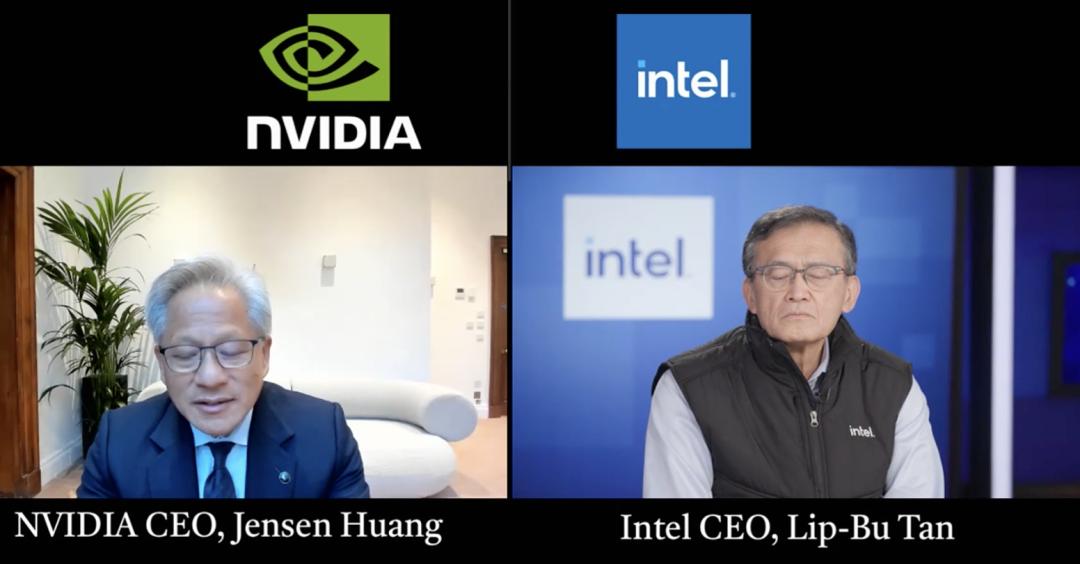
Core Viewpoint - Nvidia announced a significant investment of $5 billion in Intel, aimed at mutual market expansion and collaboration in technology [1][4]. Investment Details - Nvidia will acquire Intel shares at a price of $23.28 per share, totaling an investment of $5 billion [1]. - The investment is seen as a strategic move to strengthen both companies' positions in the semiconductor market [1][4]. Market Opportunities - Nvidia plans to integrate its NVLink technology into Intel's data center offerings, targeting a data center CPU market valued at $30 billion [3]. - Intel aims to incorporate Nvidia's GPUs into its X86 processors, potentially expanding into the integrated graphics laptop market, which has an annual shipment of 150 million units and a market size exceeding $20 billion [3]. Strategic Collaboration - The collaboration has been in discussion for nearly a year, with both companies' technical teams working on solutions and architectural designs [4]. - Intel's CEO emphasized the urgency of this partnership from his first day in office, indicating a cultural shift within Intel to align with Nvidia [4]. Political Context - The partnership may have political implications, as Intel has faced challenges in the semiconductor market and is seen as a key player in the U.S. government's push for domestic manufacturing [7][9]. - Nvidia's investment aligns with the U.S. government's support for Intel, which has received over $10 billion in funding from the government [10]. Financial Position - Nvidia's financial strength is highlighted by its cash reserves of $56.79 billion as of the end of Q2 2026, allowing for this investment without significant strain [13]. - The collaboration is expected to yield substantial returns for Nvidia, as stated by its founder [13].


“普特会”要来了,俄美两国有何考量
Xin Hua She· 2025-08-09 11:58
Group 1 - The core point of the news is that U.S. President Trump and Russian President Putin are set to meet on August 15 in Alaska to discuss the Ukraine crisis, marking their first face-to-face meeting since June 2021 and their second since the G20 summit in 2019 [1][3] - Analysts believe that the agreement to meet reflects both political and strategic considerations from the U.S. and Russia, with significant differences remaining among the U.S., Russia, and Ukraine, making a ceasefire unlikely to be achieved quickly [5][8] - The meeting is expected to focus on a long-term peace solution for Ukraine, although it is anticipated to be a challenging process [3][4] Group 2 - From the U.S. perspective, the Trump administration aims to achieve diplomatic success through the meeting, hoping to boost domestic support by pushing for a ceasefire in Ukraine, despite previous inconsistent statements on the issue [6][10] - For Russia, the economic pressure from U.S. sanctions is significant, and the meeting may serve as an opportunity to break through the sanctions blockade, especially after a recent warning from the Trump administration regarding further sanctions if the conflict is not resolved [7][10] - The differing positions of the U.S. and Russia suggest that a single meeting may not resolve the underlying issues, with both sides maintaining firm stances on key points such as territorial claims and Ukraine's neutrality [9][10]