
政治黑金

Search documents
“原封不动地继承了自民党腐朽的金权政治”,高市早苗涉违法向议员发放礼品被批
Mei Ri Jing Ji Xin Wen· 2026-02-25 02:32
Group 1 - The core issue revolves around Japanese Prime Minister Sanae Takaichi distributing "congratulatory gifts" worth several tens of thousands of yen to members of the Liberal Democratic Party (LDP) following the House of Representatives election on February 8 [1][2] - The act of distributing these gifts raises questions regarding the source of funding and the legality under Japan's Political Funds Control Law, which generally prohibits monetary donations to politicians [2] - Several LDP members have acknowledged receiving the gifts, while some have criticized Takaichi's actions as "reckless" and have refused to accept the gifts [2] Group 2 - The Japanese Communist Party's Secretary-General Akira Koike stated that Takaichi's actions reflect a continuation of the LDP's corrupt political practices [3] - Legal actions have been initiated against Takaichi and other LDP members for alleged violations of the Political Funds Control Law, with accusations of receiving kickbacks amounting to billions of yen [4] - The issue of "political black money" in Japan has been described as systemic and longstanding, with a report indicating that as of October 30, 2025, 85 members of the National Diet had failed to declare taxes, leading to disciplinary actions against 39 of them [4]

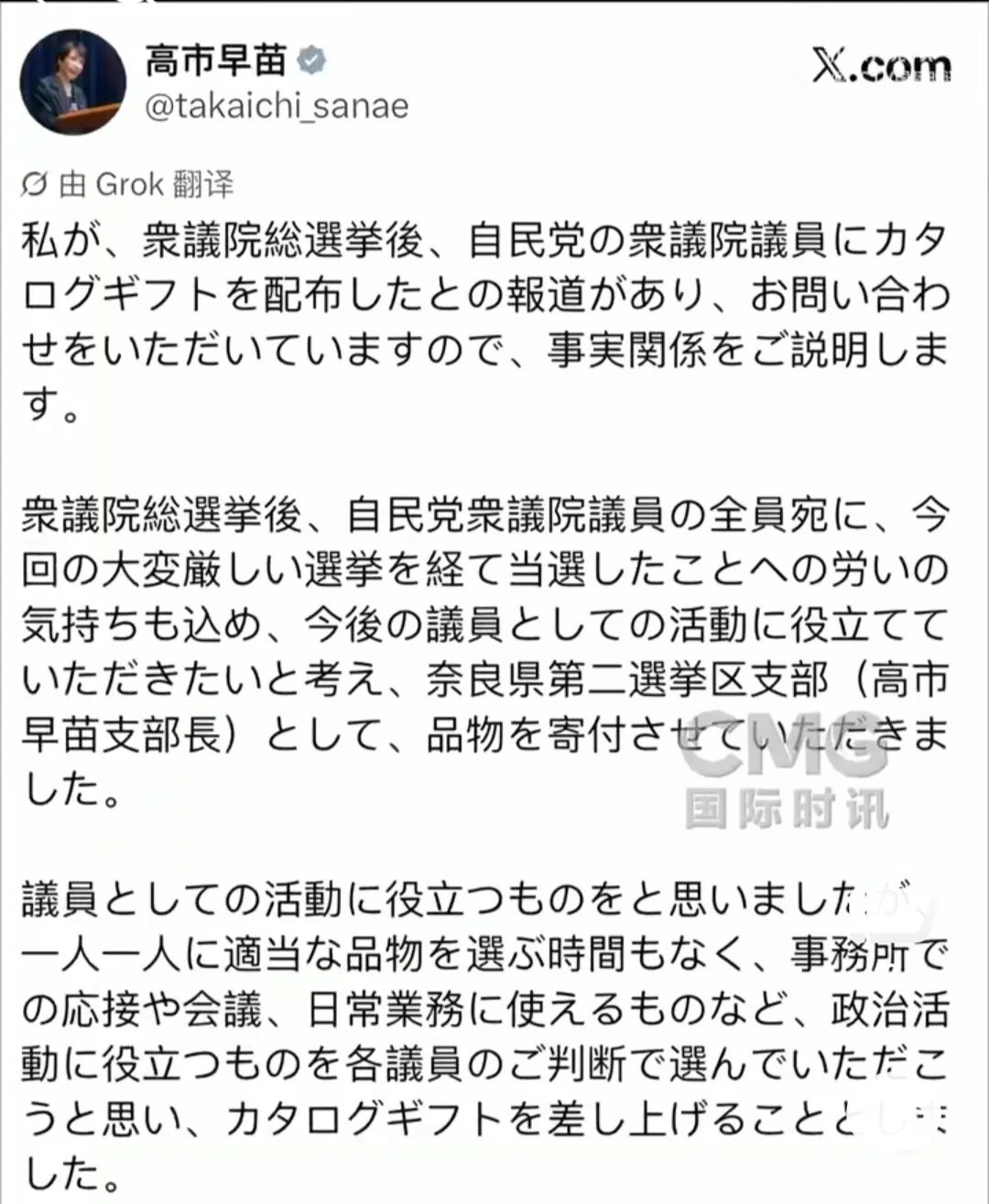
日本众议院改选,高市早苗作“独狼”式豪赌
Xin Lang Cai Jing· 2026-01-24 00:00
Group 1 - The Japanese Prime Minister, Sanna Takashi, submitted a resolution to dissolve the House of Representatives on the first day of the 2026 regular session, marking the first time in 60 years that the House was dissolved immediately after the session began [1] - Takashi has been active since taking office, pushing through an 18 trillion yen supplementary budget and facilitating a 550 billion USD investment from the U.S., resulting in a rare increase in her approval ratings, exceeding 70% overall and over 80% among younger demographics [1] - The dissolution aims to capitalize on her high approval ratings and force a re-election, similar to former Prime Minister Junichiro Koizumi's strategy 20 years ago, which significantly increased the ruling party's seats [1][2] Group 2 - The last election saw the ruling coalition fail to secure a majority, but a successful re-election could allow Takashi to gain control over legislative decisions, solidify her political base, and enhance her standing within the Liberal Democratic Party (LDP) [2] - Takashi's decision to dissolve the House was made without consulting key party figures, indicating a lack of internal support and complicating her position amid ongoing political scandals [2] - The establishment of the "Center Reform Coalition" by the largest opposition party, the Constitutional Democratic Party, in collaboration with the Komeito Party, aims to consolidate middle-ground voters and challenge the ruling party [3]
道歉难掩“丑闻循环”:日本政坛沉疴中的黑金风波与高市内阁
Nan Fang Du Shi Bao· 2025-12-10 05:33
Core Viewpoint - The political scandal involving "black money" continues to plague Japan, with Prime Minister Sanna Takichi apologizing for her party's violations regarding corporate donations, highlighting ongoing issues of corruption within the ruling Liberal Democratic Party (LDP) [1][2]. Group 1: Political Scandal and Reactions - Prime Minister Sanna Takichi's apology was brief, acknowledging the receipt of donations exceeding legal limits and stating that the excess had been returned [2][3]. - The opposition party, Constitutional Democratic Party, has been vocally questioning Takichi about the "black money" issue, indicating a lack of trust among the public [1][2]. - The Komeito party, which recently ended a 26-year alliance with the LDP, has also criticized the government, questioning its integrity [1]. Group 2: Financial Violations - The LDP's Nara Prefecture branch, represented by Takichi, received 2.5 million yen (approximately 110,000 RMB) in donations that exceeded legal limits, raising concerns about the party's financial practices [2][3]. - The political funding management group associated with Takichi reported total income of 200 million yen (approximately 9.03 million RMB) for 2024, making the excess donations seem minor in comparison [3][4]. - The LDP's financial reports revealed significant expenditures on advertising, totaling 83.84 million yen (approximately 3.78 million RMB), raising questions about the transparency of political funding [4]. Group 3: Historical Context and Systemic Issues - The "black money" issue is not new and has been a recurring problem in Japanese politics, with systemic corruption being a significant barrier to political stability [9][10]. - A report indicated that 85 members of the LDP had failed to declare taxes, with some cases dating back over 20 years, suggesting a long-standing culture of financial misconduct [10]. - The recent changes in leadership, with three prime ministers in over a year, reflect the ongoing turmoil and the impact of corruption scandals on political careers [10][11].
组建新内阁,日本新首相将如何“破局”?
Yang Shi Xin Wen· 2025-10-22 03:28
Core Points - The new Japanese Prime Minister, Kishi Sanae, emphasizes strong economic measures to protect national interests, indicating a shift towards more conservative policies [1][2] - The ruling coalition formed by the Liberal Democratic Party (LDP) and the Japan Innovation Party (JIP) is expected to further align with right-wing policies, including military expansion and security legislation [2][3] - The coalition faces challenges due to a lack of majority in the Diet, which may hinder the implementation of their policies [4][6] Group 1: Government Formation and Policies - Kishi Sanae appointed conservative figures to key cabinet positions, aiming to balance party factions and strengthen her governance base [3] - The coalition's agreement includes plans to revise national security strategies and expand military capabilities, reflecting a rightward policy shift [2][3] - A new minister will oversee foreigner policies, indicating a focus on immigration and economic security [3] Group 2: Political Challenges and Public Concerns - The coalition's lack of a majority in both houses of the Diet raises uncertainties about policy implementation, as evidenced by Kishi's need to enter a second round of voting for her election [6][7] - Internal divisions exist within the coalition, particularly regarding campaign finance and electoral reforms, which could threaten its stability [7] - Public opinion is heavily focused on rising prices and political transparency, with experts warning that failure to address these issues could lead to a loss of public trust [8][10]
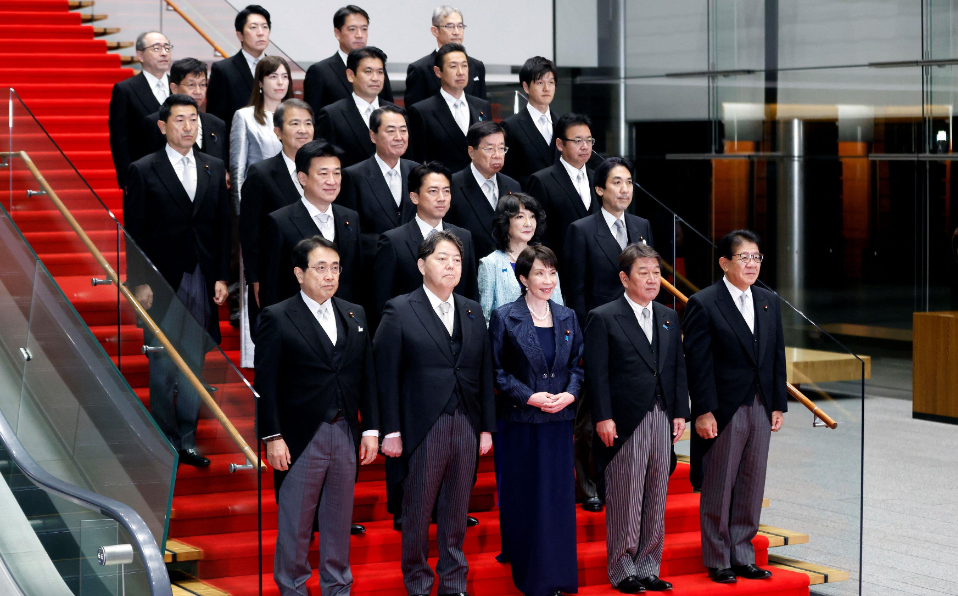
公明党党首:将不会在首相指名选举中把票投给高市早苗
Huan Qiu Wang· 2025-10-10 07:28
Group 1 - The core point of the news is that the Komeito party, led by Saito Tetsuo, has decided to leave the ruling coalition in Japan, indicating a significant political shift [1][3] - Komeito's members of parliament will not support the nomination of the new Liberal Democratic Party (LDP) president, Takashi Saito, in the prime ministerial election, opting instead to vote for their own leader [1][3] - The split is attributed to serious disagreements over the "political money" issue, with Komeito demanding stronger regulations on corporate and group donations, which the LDP has not adequately addressed [3] Group 2 - Analysts suggest that Komeito's departure from the ruling coalition marks a turning point in Japanese politics, leading to intensified political battles surrounding the prime ministerial election [3] - The uncertainty surrounding Takashi Saito's potential appointment as prime minister has increased due to Komeito's withdrawal from the coalition, making the outcome of the prime ministerial election unclear [3]
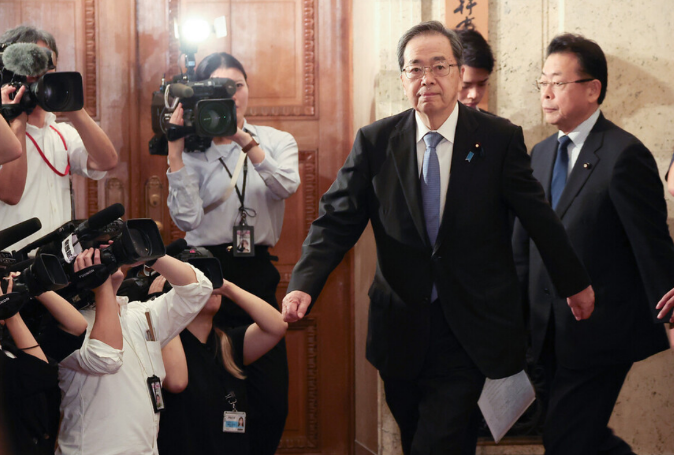
日本政治形势加剧经济不确定性
Jing Ji Ri Bao· 2025-07-24 21:58
Core Viewpoint - The recent Japanese Senate election resulted in a significant loss for the ruling coalition of the Liberal Democratic Party (LDP) and Komeito, leading to a "twisted parliament" situation where the coalition lacks majority control in both houses, raising uncertainties for Japan's economic outlook [1][4]. Group 1: Election Results and Political Implications - The LDP and Komeito coalition failed to secure a majority, winning only 47 out of 125 contested seats, which is below the required 50 seats [1]. - The loss is attributed to three main factors: failure to address economic issues, ongoing "political money" scandals, and rising social tensions leading voters to support emerging parties [2][4]. - The current political landscape indicates a potential shift, with the LDP facing internal pressure to replace Prime Minister Shigeru Ishiba, who has not stabilized the coalition's power [3]. Group 2: Economic Outlook and Policy Challenges - The coalition's loss of majority control complicates the passage of budget and policy measures, as they must now negotiate with opposition parties, which are currently unwilling to collaborate [4]. - The recent U.S.-Japan trade negotiations resulted in a reduction of tariffs from 25% to 15%, with Japan committing to invest $550 billion in the U.S. However, this outcome may alienate agricultural voters and provoke opposition from rival parties [5]. - The rise of nationalist sentiments and anti-foreign rhetoric in the election reflects a societal shift that could hinder Japan's economic growth, particularly in light of its reliance on foreign labor and tourism [6].