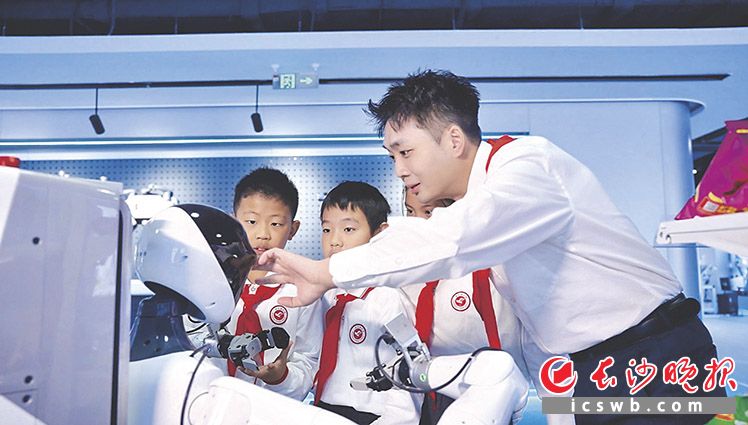
教联体

Search documents
“教联体”密集上线,家校社协同育人
Xin Lang Cai Jing· 2026-01-30 00:01
Core Viewpoint - The establishment of the "Teaching Alliance" in Changsha aims to systematically address the challenges of fragmented educational resources and promote a collaborative educational framework involving schools, families, and communities [3][4]. Policy - The "Teaching Alliance" initiative is defined as a collaborative approach to education that focuses on the healthy and happy growth of middle and primary school students, breaking down traditional barriers between schools, families, and society [4]. - The Ministry of Education and 17 other departments issued a work plan to promote the establishment of "Teaching Alliances" nationwide, with a specific plan for Hunan Province to be fully implemented by 2027 [4][5]. Practice - Changsha's "Teaching Alliance" is transitioning from concept to practice, with various schools and districts actively participating in the initiative, creating a comprehensive and effective educational model [6][10]. - Schools such as Changsha Experimental Middle School and Longjun Middle School have initiated their "Teaching Alliance" projects, integrating resources from over 30 partner organizations to create a holistic educational environment [6][10]. Features - The "Teaching Alliance" is characterized by practical details that enhance the quality of education, such as free dental check-ups for students and the integration of historical education into daily learning [8][9]. - The initiative emphasizes the importance of mental health support, with various institutions collaborating to provide psychological resources to students [9]. Community Engagement - The "Teaching Alliance" encourages active participation from parents, shifting their role from passive cooperation to proactive involvement in their children's education [10]. - The initiative has fostered a sense of community among educational stakeholders, creating a shared commitment to student development and well-being [10].

2026北京两会|市政协委员边玉芳:以教联体为抓手,推动医教体教家校社协同发力
Bei Jing Shang Bao· 2026-01-27 10:23
Core Viewpoint - The article emphasizes the importance of ensuring the physical and mental health of children and adolescents in Beijing, highlighting the need for a collaborative approach involving schools, families, and society to implement effective educational and health strategies [3][4]. Group 1: Policy Initiatives - In 2025, the Beijing Municipal Education Science and Technology Talent Work Leading Group will issue the "Opinions on Promoting the Physical and Mental Health Development of Primary and Secondary School Students," which will include 20 specific measures aimed at integrating various aspects of education and health [3]. - The 20 measures will focus on five areas: integration of education, school leadership, family involvement, social participation, and organizational support, emphasizing the importance of building environments at school, home, and community levels [3]. Group 2: Recommendations for Improvement - There is a persistent issue of "separation of physical and mental health" in current policy practices, leading to fragmented interventions and insufficient collaboration [4]. - The article suggests learning from international experiences, such as the "Comprehensive School Health Program" in the U.S. and the PSHE curriculum in the U.K., to implement a "health first" educational philosophy and to strengthen the integration of physical, health, psychological, and nutritional education [4]. - It is recommended to promote scientific parenting concepts and to enhance public awareness of children's growth patterns, encouraging a holistic view of child development that combines education, physical health, and emotional well-being [4]. Group 3: Collaborative Efforts - The article stresses the necessity for collaboration among families, schools, and society to support the healthy growth of children and adolescents [4]. - Relevant organizations are urged to take on leading responsibilities, with schools promoting a balanced approach to education and society providing a supportive resource network [4].
对话市政协委员李奕:“教联体”推进将聚焦学生营养膳食及身心健康
Xin Lang Cai Jing· 2026-01-26 16:56
Group 1 - The core viewpoint emphasizes the importance of integrating resources from schools, families, and society in the construction of the "Education Alliance" (教联体) in Beijing, aiming for a collaborative educational ecosystem by 2026 [3][4]. - The "Education Alliance" initiative aims to establish a comprehensive framework for collaborative education that focuses on students' physical and mental health, including aspects like nutrition and exercise [3][4]. - The Beijing Municipal Education Commission has already initiated the "Education Alliance" construction, with a plan to implement a standardized model across all districts by 2026 [3][4]. Group 2 - The initiative will focus on specific areas such as children's nutritional meals and physical health, ensuring that schools, families, and society work together to provide balanced nutrition for students [3][4]. - There is a strong emphasis on integrating physical exercise into students' daily routines, combining school activities with family and weekend sports [4]. - The approach to artificial intelligence in education is characterized by a proactive attitude, with a focus on tailored applications for different age groups and subjects to maximize positive impacts while mitigating risks [4][5]. Group 3 - The introduction of artificial intelligence in education is a key strategic direction for Beijing, with plans to enhance educational quality and promote the development of education technology talent [4][5]. - Schools in Beijing are beginning to implement AI literacy courses, with institutions like Tsinghua University Affiliated Primary School planning to integrate AI education into their curriculum starting in the 2025 academic year [5]. - The Beijing Municipal Education Commission is leveraging AI technology to create virtual intelligent entities that provide data resources related to sports, arts education, nutrition, and health for students and parents [5].
“教联体”推进将聚焦学生营养膳食及身心健康
Bei Jing Shang Bao· 2026-01-26 16:37
Group 1 - The core viewpoint emphasizes the importance of integrating resources from schools, families, and society in the construction of the "Education Alliance" (教联体) in Beijing, aiming for a collaborative educational ecosystem by 2026 [3][4]. - The Beijing Municipal Education Commission has already initiated the "Education Alliance" construction, with a focus on establishing a collaborative educational framework that supports students' physical and mental health [3][4]. - Specific areas of focus for the "Education Alliance" include children's nutritional meals and physical health, with schools, families, and society working together to ensure comprehensive support for students [3][4]. Group 2 - The approach towards artificial intelligence (AI) in education is characterized by a proactive and research-oriented attitude, with a commitment to integrating AI across all educational stages [5][6]. - The implementation of AI in education requires careful consideration of different age groups, subjects, and educational directions, necessitating tailored design plans to maximize positive impacts while mitigating negative factors [6]. - Schools in Beijing are beginning to incorporate AI literacy into their curricula, with institutions like Tsinghua University Affiliated Primary School and Luhua Middle School introducing AI courses to provide students with exposure to AI knowledge [6].
北京正探索AI赋能教育,不同学段精细化考虑!市教委详解
Bei Jing Shang Bao· 2026-01-26 14:29
Core Viewpoint - The integration of artificial intelligence in education is a key focus for Beijing, with an emphasis on the "education alliance" model that combines resources from schools, families, and society to enhance student well-being and learning outcomes [3][4][7]. Group 1: Education Alliance ("教联体") Development - Beijing is prioritizing the coordination of resources from schools, families, and society to build a comprehensive "education alliance" by 2026, aiming to create a new educational ecosystem that supports students' holistic growth [4][6]. - The recent implementation plan for the "education alliance" aims to establish a collaborative framework across all districts in Beijing, focusing on specific areas such as children's nutrition and physical health [4][6]. - The initiative includes integrating daily physical activities and promoting arts and technology skills through collaboration between schools, families, and society [6]. Group 2: Embracing Artificial Intelligence - The Beijing government is actively promoting the integration of artificial intelligence in education, with a focus on enhancing educational quality while managing the dual pressures of reducing student workload and improving teaching standards [7][9]. - A cautious approach is being adopted regarding the application of artificial intelligence across different age groups and subjects, ensuring that its implementation is tailored and beneficial [9]. - Schools in Beijing are beginning to incorporate AI literacy into their curricula, with institutions like Tsinghua University Affiliated Primary School and Luhua Middle School introducing AI courses to provide students with foundational knowledge in this area [9].
2026北京两会丨对话市政协委员李奕:“教联体”推进将聚焦学生营养膳食及身心健康
Bei Jing Shang Bao· 2026-01-26 06:49
Group 1 - The core viewpoint emphasizes the importance of integrating resources from schools, families, and society in the construction of the "Education Alliance" (教联体) in Beijing, aiming for a collaborative educational ecosystem by 2026 [1][4] - The Beijing Municipal Education Commission has already initiated the "Education Alliance" construction, with a plan to establish a collaborative education model that meets the capital's standards and characteristics across all districts by 2026 [4][5] - Specific focus areas for the "Education Alliance" include children's nutritional meals and overall health, with schools, families, and society working together to ensure students receive balanced meals and adequate physical activity [4][5] Group 2 - The Beijing government is actively promoting the integration of artificial intelligence (AI) in education, with a focus on enhancing educational quality and supporting the digital transformation of education [7] - The overall attitude towards AI in education is one of proactive engagement and research, with a need for tailored approaches based on different educational stages and subjects [7] - Initiatives include the introduction of AI literacy courses in primary and secondary schools, with institutions like Tsinghua University Affiliated Primary School and Luhua Middle School already implementing such programs [7][8]
新方案发布!推动高校博物馆向中小学生开放
Bei Jing Ri Bao Ke Hu Duan· 2026-01-20 00:40
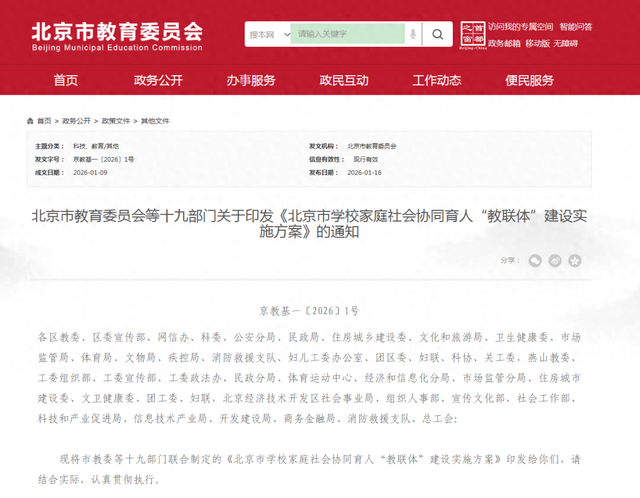
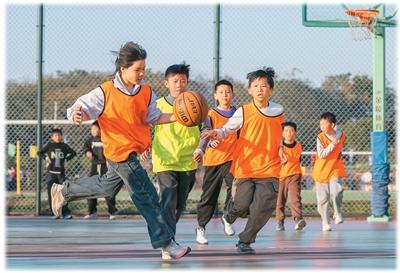
Core Viewpoint - The Beijing Municipal Education Commission and nineteen other departments have jointly developed the "Implementation Plan for the Construction of School-Family-Society Collaborative Education 'Teaching Alliance'" aiming to establish a collaborative education system by 2026 that serves the comprehensive growth of students' physical and mental health [1][15]. Group 1: Objectives and Framework - By 2026, a collaborative education system will be established across all districts in Beijing, focusing on the healthy and happy growth of primary and secondary school students, integrating various resources and responsibilities related to student health and safety [16]. - The plan emphasizes the integration of responsibilities, resources, and spaces, leveraging artificial intelligence to address prominent issues in student development [16]. Group 2: Major Tasks Gathering Social Resources - The plan aims to utilize Beijing's cultural resources to support the development of immersive and experiential educational courses in public service institutions like museums and libraries [4][17]. - It promotes the opening of university museums and laboratories to primary and secondary school students, creating a high-quality social classroom and research curriculum system [5][17]. - The initiative seeks to enhance physical education by integrating sports venues and professional coaches into school activities, promoting innovative sports events that combine cultural transmission and family interaction [18]. Building Consensus Between Home and School - The plan includes optimizing the operation of parent committees and establishing regular communication channels between schools and families to enhance parental involvement in school management [19]. - It introduces a new mechanism for parent meetings and home visits, focusing on key periods such as the start of the school year and exam weeks to provide targeted support for families [20]. Advancing Intelligent Empowerment - The initiative will create a comprehensive intelligent support system for family education, providing 24/7 personalized professional assistance focused on students' health [10][22]. - It aims to develop a digital resource mapping system to connect families with nearby educational resources, facilitating easy access to educational services [10][22]. Group 3: Implementation and Support - The plan calls for strengthening organizational support by including the "Teaching Alliance" construction in the agenda of local education committees, ensuring resource allocation and policy support [23]. - It emphasizes the need for professional support through research and training in collaborative education practices, integrating these capabilities into teacher training programs [23].
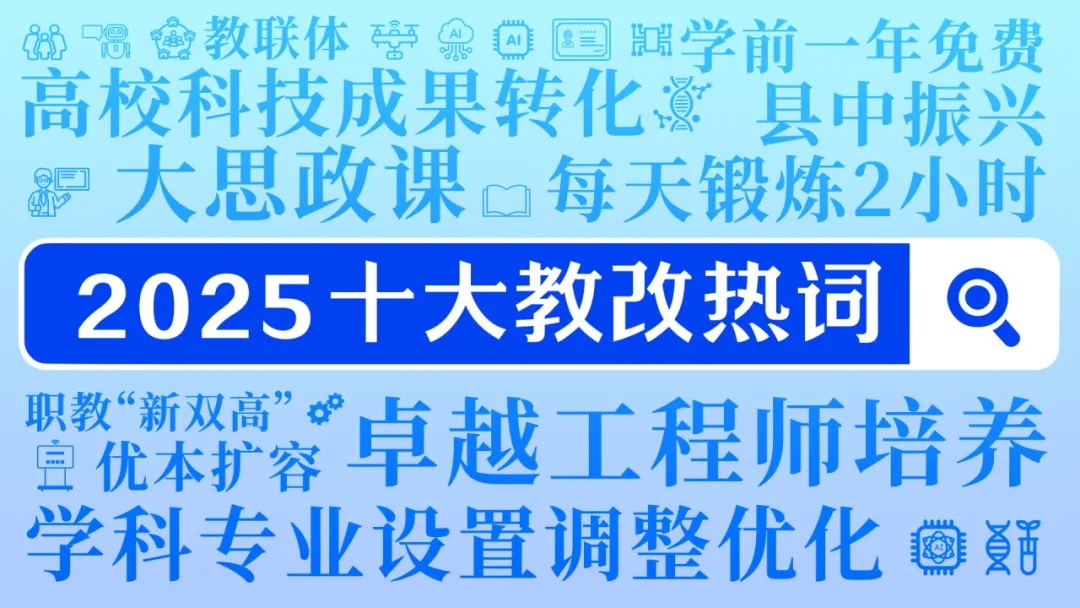
二〇二五十大教改热词发布
Ren Min Ri Bao Hai Wai Ban· 2026-01-11 23:07
Core Viewpoint - The article discusses the implementation of a three-year action plan for building a strong education system in China, highlighting various reforms and initiatives aimed at improving educational quality and accessibility across different levels of education [10]. Group 1: Educational Reforms - The "Big Ideological and Political Course" aims to integrate social resources into education, enhancing the teaching of the Communist Party's stories and promoting national rejuvenation [11]. - The initiative "Daily Exercise for 2 Hours" mandates that primary and secondary school students engage in at least two hours of physical activity daily, as part of a broader effort to reform school sports [12]. - The "Adjustment and Optimization of Academic Programs" focuses on aligning higher education disciplines with national strategic needs, resulting in the establishment of new programs in fields like artificial intelligence and integrated circuits [13]. Group 2: Higher Education Initiatives - "University Technology Transfer" is emphasized as a key reform to enhance the integration of education, technology, and talent, facilitating the conversion of academic research into practical applications [14][15]. - The "Excellence Engineer Training" program aims to cultivate high-level engineering talents through a collaborative education model that integrates industry needs with academic training [16]. - "Expansion of Quality Undergraduate Education" seeks to increase enrollment in top-tier universities while ensuring that the quality of education is maintained, particularly in emerging fields [19][20]. Group 3: Support for Rural Education - The "County High School Revitalization" plan aims to improve the quality of education in rural areas by optimizing resource allocation and enhancing teaching conditions [17]. - The "Free Year Before School" initiative will eliminate fees for the final year of preschool education in public institutions, addressing financial barriers for families [18]. Group 4: Vocational Education - The "New Dual High for Vocational Education" focuses on enhancing the quality of vocational training to better serve industry needs, with a significant proportion of programs aligned with major national industries [21]. Group 5: Collaborative Education Models - The "Education Alliance" initiative promotes collaboration among schools, families, and communities to support student development and address educational challenges [22].
河北隆尧:“教联体”构建家校社协同育人新格局
Xin Lang Cai Jing· 2025-12-30 09:46
Core Viewpoint - The establishment of the "Teaching Alliance" in Longyao County aims to promote effective collaboration among families, schools, and communities to support the healthy growth of students [1][2] Group 1: Overview of the "Teaching Alliance" - The "Teaching Alliance" is designed to facilitate the healthy and happy growth of middle and primary school students, with schools as the focal point and regions as the main body [1] - The initiative has led to the formation of leadership groups in schools, clarifying responsibilities and actively linking social resources to conduct various collaborative activities [1] Group 2: Implementation and Impact - Schools are utilizing the "Teaching Alliance" platform to create a collaborative education model that encourages parental involvement and real-world experiences for students [1] - The establishment of the "Teaching Alliance" has clarified the roles and tasks of participating departments, effectively integrating social resources to empower comprehensive student development [1]
每天锻炼2小时、学前一年免费……2025十大教改热词发布
Ren Min Ri Bao· 2025-12-30 04:57
Core Viewpoint - The Ministry of Education and the National Language Resources Monitoring and Research Center have launched the "Top 10 Education Reform Buzzwords for 2025," highlighting key initiatives aimed at advancing educational reform and quality in China [40]. Group 1: Major Education Reform Buzzwords - "Big Ideological and Political Course" aims to integrate traditional ideological education with real-world examples to enhance students' understanding of socialist values and national stories [40][41]. - "Daily Exercise for 2 Hours" mandates that primary and secondary school students engage in at least 2 hours of physical activity daily, promoting health and fitness [42]. - "Adjustment and Optimization of Subject and Major Settings" focuses on aligning higher education programs with national strategic needs and industry developments, enhancing talent quality and adaptability [43]. - "Transformation of University Scientific Achievements" emphasizes the importance of converting academic research into practical applications to foster economic and social development [44][45]. - "Cultivation of Excellent Engineers" aims to develop high-level engineering talents through a collaborative education model that integrates industry needs with academic training [46]. - "County High School Revitalization" seeks to improve the quality of education in rural areas by optimizing resources and enhancing teaching conditions [47]. - "Free Year of Preschool Education" will eliminate fees for the final year of public kindergarten starting in the 2025 academic year, promoting educational equity [48]. - "Expansion of Quality Undergraduate Education" focuses on increasing enrollment in top-tier universities while ensuring quality through targeted adjustments in program offerings [50]. - "New Dual High Standards in Vocational Education" aims to enhance vocational training by aligning educational programs with industry demands and national strategies [51]. - "Education Collaborative Network" promotes cooperation among schools, families, and communities to support student development and well-being [52].