数据安全与合规

Search documents
海天瑞声:公司逐步构建起了在行业内的竞争壁垒
Zheng Quan Ri Bao· 2026-02-26 13:40
Core Insights - The company has established competitive barriers in the industry through years of development and accumulation, with its core competitiveness reflected in its dual service product model, which significantly contributes to revenue and gross profit [2] Business Model - The company's business model is characterized by a dual service product approach, with a standardized dataset research, production, and sales system that has been developed over years, ensuring scalability and high profit margins [2] Technological Capabilities - The company places a strong emphasis on research and development, increasing investment in recent years to enhance algorithm capabilities, platform capabilities, and engineering capabilities, achieving better human-machine collaboration efficiency [2] Supply Chain Management - The company has built a long-term supply chain system to secure resource acquisition, with plans to further enhance supply chain resource platform capabilities, improving personnel management, resource allocation, quality inspection, and remote work [2] Data Security and Compliance - Data security and compliance capabilities are critical indicators of a brand's comprehensive ability in data services, with the company having developed a mature security and compliance management system through years of data risk identification and management practices [2] Certifications and Compliance - The company has obtained important certifications such as ISO/IEC27001 and ISO27701, and has received administrative licenses from the Beijing Municipal Planning and Natural Resources Commission, establishing a foundation for its intelligent driving data collection business [2]


企查查数据安全体系通过中国信通院泰尔认证
Qi Cha Cha· 2026-02-14 07:08
Core Viewpoint - The company Qichacha has successfully obtained the Data Security Management System Certification from the China Academy of Information and Communications Technology (CAICT), marking its advanced data security management level and official recognition by a national authority [1] Group 1: Certification and Compliance - The certification covers the entire process of enterprise information inquiry and data product services, establishing clear standards for data security management activities [1] - Qichacha's commitment to data security and compliance is a result of its long-term strategy, adhering to laws such as the Data Security Law and the Personal Information Protection Law [2] - The company has accumulated multiple authoritative recognitions, including certifications from the Ministry of Public Security and ISO standards, forming a comprehensive compliance qualification matrix [2] Group 2: Technological Integration and User Service - Qichacha's R&D and technology team constitutes 55.24% of its workforce, with 73 patents and a self-developed big data platform capable of handling PB-level data storage and processing over 30 million enterprise credit data daily [3] - The company has built a comprehensive database covering 365 million market entities, serving over 150 million registered users and numerous financial institutions and government entities [3] - Qichacha's ToC office product has a complaint rate of only 0.00177%, significantly lower than the industry average, reflecting its commitment to user experience and information security [3] Group 3: Industry Impact and Future Prospects - The certification strengthens Qichacha's compliance barriers, providing more reliable and secure enterprise information services, and sets a benchmark for the industry [4] - As a leading enterprise included in Jiangsu Province's first batch of data enterprise cultivation lists, Qichacha is expected to participate in industry standard formulation and promote compliant circulation and efficient use of data elements [4] - The ongoing market-oriented reform of data elements emphasizes the importance of data security and compliance for the high-quality development of the commercial big data industry [4]
构筑数字化转型高地 助推广东金融与实体协同跃迁
Qi Huo Ri Bao Wang· 2026-01-08 01:36
Core Insights - The core viewpoint of the article emphasizes the digital transformation of the futures industry in Guangdong, which is essential for improving service efficiency, risk management, and meeting the needs of the real economy [1][4]. Group 1: Digital Transformation in Futures Industry - The Guangdong futures industry is leveraging digital transformation to address long-standing issues such as inefficient service processes and inadequate risk management tools for small and medium enterprises [1][3]. - Companies like Guangfa Futures are implementing digital solutions such as pre-accounting platforms and online business processing to enhance service transparency and efficiency [1][2]. - The development of intelligent hedging systems using big data analytics has significantly reduced the time required to design hedging strategies from days to hours [1][2]. Group 2: Integration of Technology and Business - Guangfa Futures has created a global market platform that integrates real-time data from major exchanges, enabling clients to capture market dynamics effectively [2]. - The focus on digital capabilities has become a core competency for companies like Guangzhou Futures, which aims to enhance operational efficiency through automation and online services [2][3]. - Huatai Futures' Tianji platform exemplifies the integration of digital technology with industry needs, providing a comprehensive risk management infrastructure [4][5]. Group 3: Product Innovation and Risk Management - The industry is innovating product offerings to simplify complex risk management processes, such as Huatai Futures' "one-click hedging solution" that generates multiple feasible plans based on basic client inputs [5]. - The "Cumulative Treasure" product from Huatai Changcheng Capital has been well-received, providing significant profit support for clients in challenging market conditions [6]. - The Dragon Spring platform from Zhongzhou Futures offers dynamic hedging solutions and custom versions for enterprises, promoting proactive risk management [7]. Group 4: Collaborative Ecosystem Development - The Guangdong futures industry is focusing on building a collaborative digital ecosystem through platform construction, inter-institutional cooperation, and talent cultivation [10][11]. - Zhongzhou Futures is developing a cross-institutional service network to enhance collaboration and provide comprehensive services to enterprises [10]. - The Tianji platform has successfully registered over 20,000 users and generated more than 60,000 hedging plans, demonstrating its broad reach and impact [11]. Group 5: Future Challenges and Directions - Despite progress, the industry faces challenges such as data security, compliance risks, and the need for deeper integration of technology and business [12][13]. - There is a significant demand for talent that combines expertise in futures with knowledge of advanced technologies like AI and big data [13][14]. - The industry aims to continue evolving by focusing on technology-driven solutions and ensuring compliance with regulations to enhance its value in serving the real economy [15].

徐启昌:70%-80%的大模型项目投资回报未达预期
Xin Lang Cai Jing· 2025-12-20 10:13
Core Insights - The industry is undergoing a comprehensive transformation, shifting from a "seller product sales" model to a "buyer advisory" model, focusing on customer lifetime value and comprehensive solutions [2][7] - Customer coverage is expanding from high-net-worth individuals to a broader audience, including middle-aged, younger generations, senior citizens, and rural populations [2][7] - Customer demands are becoming increasingly diverse, encompassing both stable investment needs and high-risk, high-reward aspirations, as well as extending to family inheritance scenarios [3][7] - Product innovation is accelerating, with banks not only enriching their own product systems but also introducing public funds and insurance as part of their ecosystem [3][7] - The logic of technological support is evolving, with AI becoming a core production tool that reconstructs the entire business process [4][7] Industry Challenges - There is a contradiction between conservative regulatory policies and limited application scenarios for technology, as AI is currently not allowed to directly replace human management in trading, which restricts the full release of technological value [4][7] - Approximately 70%-80% of large model project investments have not met expectations, primarily due to discrepancies in model selection, application scenarios, and implementation methods [4][7] - The recommendation for institutions is to adopt a "small steps, quick iterations" approach to enhance investment returns [4][7] Data Security and Compliance - There is an optimistic view regarding balancing data security and compliance, suggesting that technological means can effectively resolve the contradictions between regulatory compliance and innovative development [8] - Techniques such as pre-processing constraints and post-processing checks can prevent data leakage, while privacy computing and data de-identification can achieve data usability without visibility [8]


【锋行链盟】港交所IPO审核工作重点
Sou Hu Cai Jing· 2025-09-21 16:52
Core Principles and Philosophy - The Hong Kong Stock Exchange (HKEX) emphasizes a "disclosure-based" approach, focusing on ensuring companies meet listing qualifications and providing accurate, timely information for investors to assess value and risk [2][5] - The core principles include ensuring suitability for listing, investor protection, and enhancing market quality and reputation [5][8] Specific Review Points - The review process is guided by the Listing Rules, particularly Chapter 8, covering aspects such as entity qualifications, business and industry disclosures, corporate governance, and internal controls [3][4] - Key areas of focus include: - Disclosure of significant information in the prospectus without major omissions or false statements [5] - Assessment of whether the company meets quantitative and qualitative listing thresholds [5] - Protection of shareholder rights, especially for minority shareholders [5] - Evaluation of the company's business sustainability, competitive advantages, and industry outlook [5][8] Financial Information and Compliance - Companies must provide clear and feasible plans for the use of raised funds, avoiding vague statements [6] - Financial statements must comply with Hong Kong Financial Reporting Standards or International Financial Reporting Standards, and significant accounting policies must be reasonable and prudent [9] - Disclosure of all relevant risks, including major litigation, tax compliance, and asset ownership, is required [9] Recent Trends and Additional Focus Areas - There is an increasing emphasis on ESG (Environmental, Social, and Governance) disclosures, particularly for high-impact industries, although not yet mandatory [9] - Data security and compliance are critical for technology and fintech companies, focusing on adherence to relevant laws [9] - Attention is given to supply chain concentration and geopolitical risks, as well as potential market manipulation behaviors [9]

智能体存数据黑箱 用户数据流向何处
2 1 Shi Ji Jing Ji Bao Dao· 2025-07-03 00:46
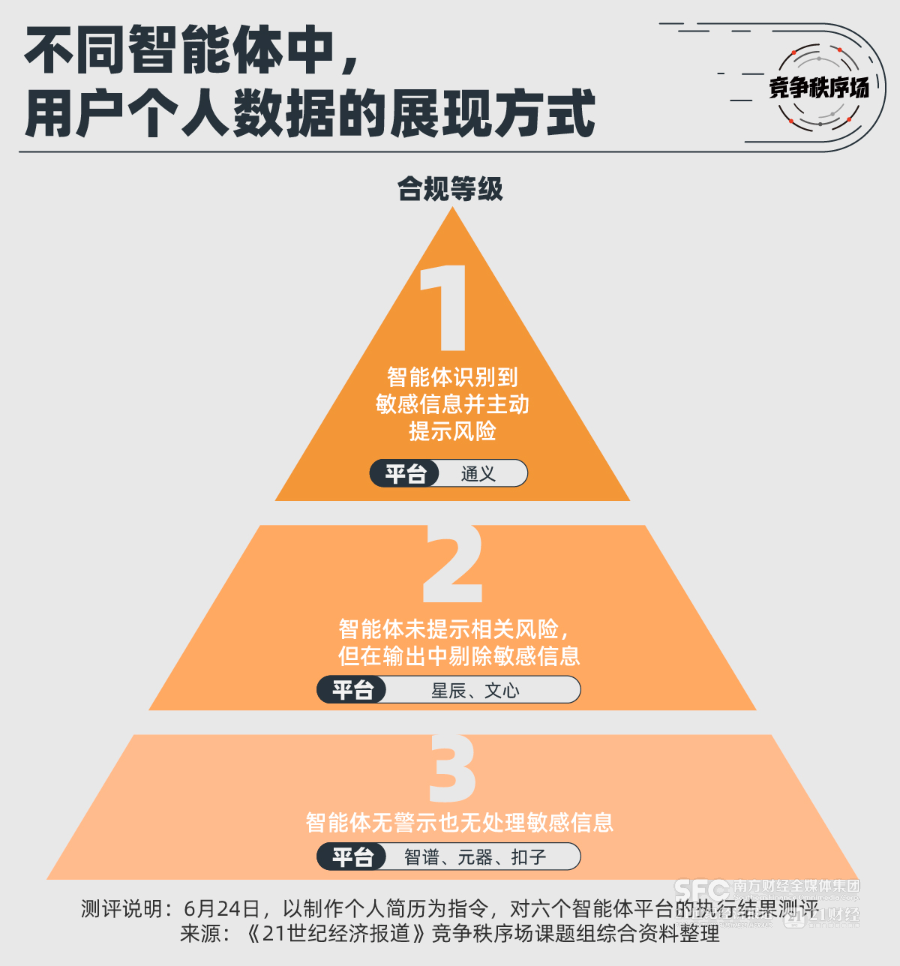
Group 1 - The year 2025 is referred to as the "Year of Intelligent Agents," marking a paradigm shift in AI development from "I say AI responds" to "I say AI does," with intelligent agents becoming a key commercial anchor and the next generation of human-computer interaction [1] - As intelligent agents approach practical application, the associated risks become more tangible, raising concerns about overreach, boundary violations, and potential loss of control [2] - A survey indicates that nearly 80% of industry professionals are worried about the consequences of user data leakage, highlighting the pressing issue of data transparency and compliance in the era of intelligent agents [2] Group 2 - The transparency of data usage varies significantly across platforms, as illustrated by the example of using AI to generate a resume, where some platforms clearly disclose the tools being used while others do not [3][4] - Different platforms adopt varying approaches to handling sensitive personal information, with some providing clear risk warnings and others obscuring sensitive data in outputs without prior notification [7][9][11] - The responsibility for data handling is often obscured, with user agreements typically placing the onus on developers for the data generated during interactions with intelligent agents [12][13]